The key facts
- Four firefighters died and two suffered severe burns — a 12-person team was trapped by smoke and fire in Bromo Tengger Semeru park
- The number of hotspots in Indonesia rose from 372 to 799 in a single day; a strong El Niño has lengthened the dry season
- Singapore topped IQAir's ranking of the most polluted major cities; Malaysia closed hundreds of schools; more than 2,020 flights were affected by the smoke
Firefighter deaths in East Java
According to Indonesia's forestry ministry, four people died and two suffered severe burns while fighting fires in Bromo Tengger Semeru national park in East Java. The victims were part of a 12-person team made up of national park staff, members of a community firefighting brigade and local volunteers, said East Java police spokesperson Jules Abraham Abast. According to the ministry, the people were trapped by thick smoke and fast-spreading fire. 'This incident is a reminder that fighting forest and land fires is a high-risk operation,' the ministry said in a statement, adding that personnel safety remains the top priority.
Rising number of hotspots and the role of El Niño
By Thursday evening the number of hotspots in Indonesia had reached 799, up from 372 the day before. A hotspot is a location where a satellite detects an abnormally high temperature indicating a possible fire. The forestry ministry reported a significant increase in hotspots in six 'priority provinces', where 615 such points were recorded. Fires this year are especially severe due to a strong El Niño event, which has caused drought and lengthened the dry season. According to experts cited by AFP, deforestation and the draining of peatlands have made previously fire-resistant landscapes vulnerable.
Regional smoke crisis
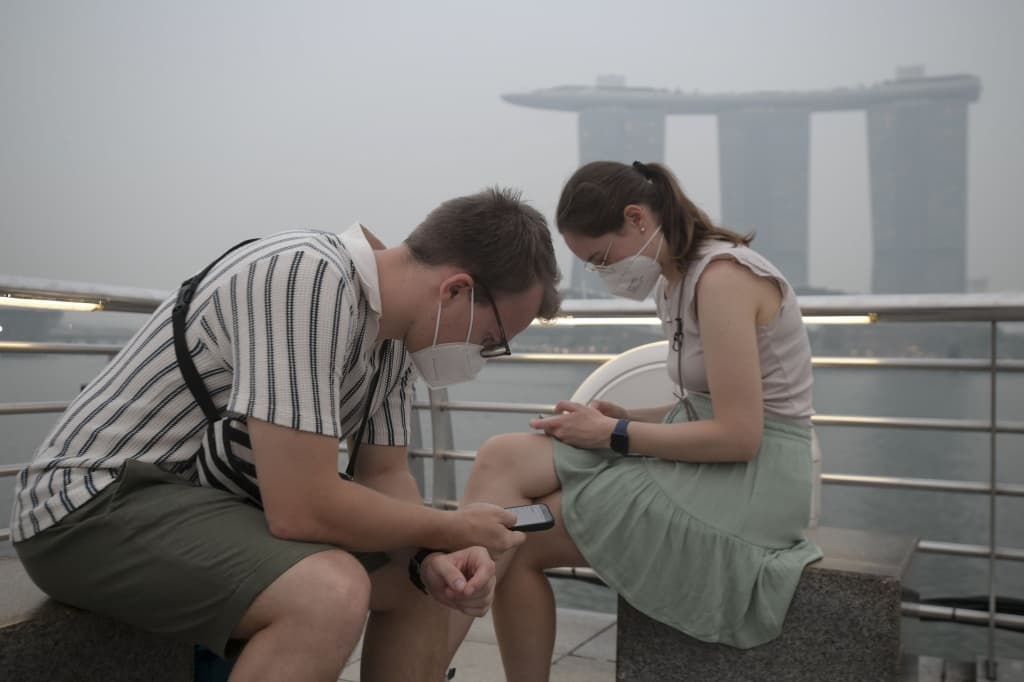
Smoke from the fires has caused a health crisis in neighbouring Southeast Asian countries. Malaysia on Friday ordered the closure of hundreds of schools due to deteriorating air quality. Singapore again topped IQAir's live ranking of the world's most polluted major cities, with Kuala Lumpur second; meanwhile DW listed Jakarta sixth and AFP eighth. At around 04:00 GMT on Friday, pollution levels in Singapore reached roughly 251 on the IQAir air quality index — a 'very unhealthy' level (151–200 is considered unhealthy, 201–300 very unhealthy, and above 300 hazardous). In Palangkaraya, Indonesia (Central Kalimantan), pollution remained in the hazardous zone above 300, yet, according to AFP observations, many residents did not wear masks. Local resident Syhan, 43, said the smoke causes shortness of breath and has reduced attendance at the market.
Impact on aviation
According to the head of Indonesia's civil aviation authority, Lukman F. Laisa, more than 2,020 flights have been affected since 11 August, when the smoke first hit the region: 1,067 cancelled, 919 delayed and 18 diverted to other airports.
Singapore's and Malaysia's response
Singapore's Prime Minister Lawrence Wong said authorities are investigating the activities of companies allegedly linked to the Indonesian fires: 'Where warranted, we will take action under Singapore's transboundary haze pollution law, and we will also look at joint action with other countries.' The 2014 law allows companies whose activities abroad cause or aggravate haze in Singapore to be held liable. Lawyers, however, warn that prosecuting such companies is difficult, since investigations depend on the cooperation of foreign authorities. An investigation into four Indonesian companies over the 2015 haze episode remains open. An Indonesian police spokesperson said on Wednesday that an investigation was underway into companies responsible for the fires, without naming them. 'We cannot control the weather or the winds, or what happens beyond our borders,' Wong said. 'But we will do everything we can to protect Singaporeans, working with our neighbours to address the root causes of the haze.' Malaysia's Foreign Minister Mohamad Hasan rejected calls from some lawmakers to demand compensation from Indonesia, saying the crisis should be addressed through diplomacy and existing mechanisms, and pledged to coordinate assistance with Indonesia and push for closer regional cooperation on combating the haze.