The key facts
- Benchmark partners Eric Vishria, Chetan Puttagunta and Peter Fenton acknowledged that the old venture rule against investing in competing companies is being destroyed by AI
- The Factory — Cognition scandal: advisor Chris Degnan was fired for 'unethical behavior' and moved to Cognition; Vinod Khosla took his side
- Fenton called the problem 'kryptonite,' but Benchmark says it maintains confidentiality and loyalty to founders
Venture's unwritten pact is cracking under the pressure of AI
For decades, an unwritten rule operated in the venture industry: a fund does not invest in two companies that directly compete with each other. At the TechCrunch Disrupt conference, Benchmark partners acknowledged that the AI boom is putting this rule at risk. It had been shaken before: OpenAI and Anthropic labs have dozens of shared investors, and at the end of September a scandal erupted around Factory and Cognition.
The Factory and Cognition case
Factory, which builds an AI agent for writing software, announced the dismissal of board observer and advisor Chris Degnan for 'unethical behavior involving Cognition' — a direct competitor and the developer of the coding agent Devin. According to Factory's CEO, Degnan discussed working at Cognition while having access to board-level discussions. Degnan responded that he had already resigned and denied transferring confidential information; he soon became chief revenue officer at Cognition. Investor Vinod Khosla publicly supported Degnan on X, calling Factory 'a struggling second-tier competitor.' Khosla Ventures invests in both companies.
Benchmark's position: conflicts are a necessity, not a choice
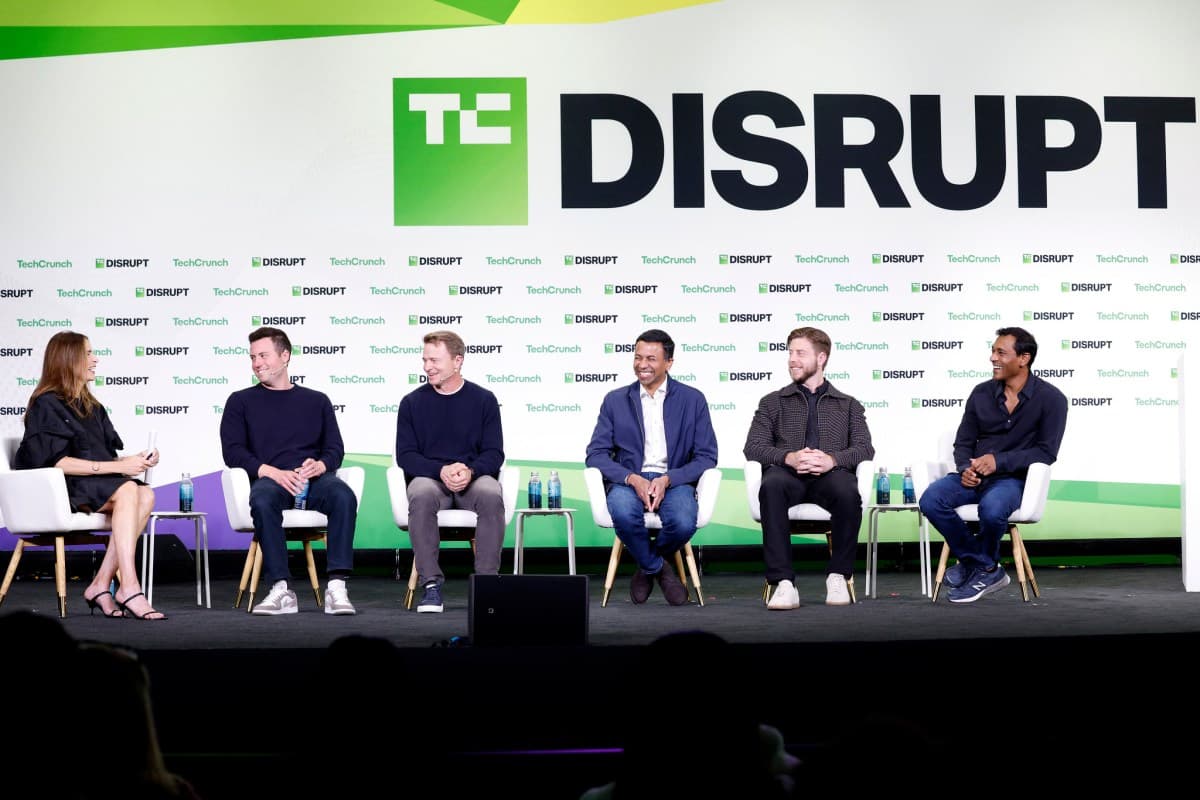
Eric Vishria said that 'the harsh reality of this world is that every company evolves very quickly,' so conflicts are inevitable. According to him, Benchmark remains loyal to every founder and keeps the information it receives secret, and there is not much to leak anyway: 'We are not experts on the product or the technology.' He noted that Benchmark, apparently referring to the Factory and Cognition dispute, has been lucky not to end up in 'a similarly crazy direct conflict.' Exclusivity remains 'really important' at the earliest stage, 'but everything is changing, there is no doubt about that.'
AI accelerates collisions
Chetan Puttagunta believes AI sharpens the problem: since the cost of building software is 'effectively approaching zero,' founders become 'incredibly ambitious,' see a vast 'opportunity space' and want to occupy it entirely — 'this will probably happen more often, and you will start running into each other.' He drew a line between a direct competitor at the start ('the easy answer') and a situation where a portfolio company over time enters someone else's territory: 'That happens.'
'Kryptonite' and the spectrum of relationships with founders
Peter Fenton called the topic 'kryptonite' and the firm's hardest problem. He described a spectrum: at one end is a co-founder who would never work on a competing company; at the other is a public investor who can hold shares in several rivals, since they are merely allocating capital. Benchmark, he said, is closer to the co-founder and considers transparency the golden rule: 'There should be no surprise after the fact,' and a founder facing a conflict should not feel betrayed.
The pact has not been declared dead
Benchmark does not claim the old rule is dead. But TechCrunch notes: when a fund whose reputation is built on loyalty itself speaks of the inevitability of conflicts, founders may wonder who else will be as candid.


