The key facts
- Nordic countries against the Visegrád Four, Italy and Greece on ETS reform at the EU summit in Brussels
- The six countries' plan to delay the launch of ETS2 until 2030 failed to gain support, but an impact assessment was secured
- EU leaders called on the Commission to study short-term interventions and speed up work on the market stability reserve
Split at the Brussels summit
The EU's emissions trading system (ETS) became one of the most contentious topics at the EU leaders' summit in Brussels on Thursday and Friday — just days after environment ministers' talks exposed deep divisions. In lengthy debates that ran late into Thursday night, the leaders of three Nordic countries — Finland, Denmark and Sweden — faced off against the Visegrád Four: Hungary, Slovakia, the Czech Republic and Poland. Italy and Greece also backed the Visegrád group, as the carbon market became a key point of friction: a number of capitals link the current energy price crisis to EU carbon costs.
The parties' positions
The ETS makes companies pay for pollution in order to cut emissions and incentivise investment in sustainable alternatives. According to the European Commission, emissions from covered sectors have fallen by 51% since 2005. The system covers heavy industry, power plants, aviation and shipping; the Commission's summer review suggests including additional sectors, including international aviation, landfills and waste incineration plants. Finland, Denmark and Sweden warned that weakening the ETS would undermine the predictability on which investment decisions depend, slow the decarbonisation of industry and shift the burden of emission reductions onto other sectors where reduction options are harder. In a letter from the three countries, seen by Euronews, it says: 'Any weakening of the ETS would undermine the predictability on which investment decisions depend and risks slowing the pace of industrial decarbonisation.'
Babiš's criticism
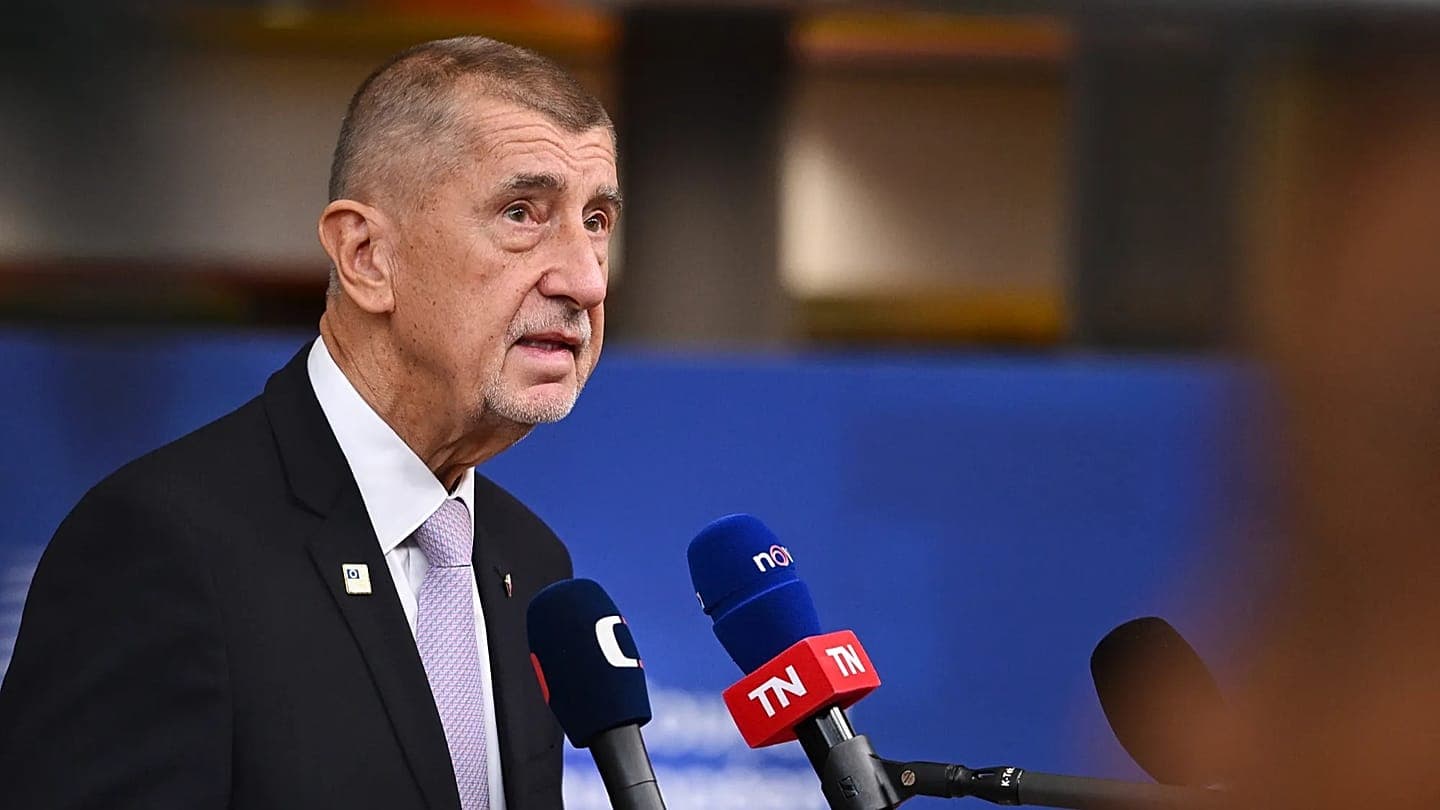
Czech Prime Minister Andrej Babiš sharply criticised the ETS and carbon taxes, blaming carbon market speculators who, he said, are destroying Europe's competitiveness. 'Someone is earning billions at the expense of European industry, which is in decline and which, of course, has serious problems,' Babiš told journalists on Thursday. He called EU climate policy 'ideological clichés' that ignore economic realities, and noted that allowance prices have soared far beyond initial forecasts, while the system rewards financial players, punishing traditional manufacturing and ordinary citizens. Babiš and Italian Prime Minister Giorgia Meloni recently called on Brussels to provide immediate economic support to European factories.
Summit decisions
Countries are using the geopolitical shock as leverage to revisit carbon market rules depending on national energy mixes: countries with a high share of fossil fuels demand lower price pressure, while 'greens' insist on keeping the transition timeline unchanged. Diplomats note that the issue is not new, but the current situation has given the debate a new urgency. Supporters of the ETS see it as a decarbonisation tool through revenues and incentives for industry. 'We must preserve the price signal and ensure the scheme works by introducing corrective measures,' said one diplomat, adding that structural mechanisms must be preserved while giving short-term flexibility to the most affected countries. EU leaders proposed that the Commission study further short-term interventions and called on legislators to speed up work on the Market Stability Reserve — a mechanism regulating the supply of allowances to limit price volatility.
The battle over ETS2
The plan of the four Visegrád group countries, backed by Italy and Greece, to delay the launch of the new ETS2 system until 2030 failed on Thursday evening. The six countries argued that households and small businesses would inevitably face rising costs, and that 'the price difference between regions and EU countries is huge', especially in Eastern Europe. ETS2 is a new carbon market that will cover fuel for road transport and buildings from 2029; it has already been delayed once due to concerns about the social impact on the most vulnerable groups. According to one diplomat, the proposed amendments 'would never have received the required unanimity'; another noted that there is little support, which is why the issue was brought to the European Council rather than the Environment Council, where there is no majority for it. Nevertheless, the six countries managed to secure a request for an impact assessment to determine the design and safeguards of the system, to be carried out by the Commission, according to the Council's conclusions.


