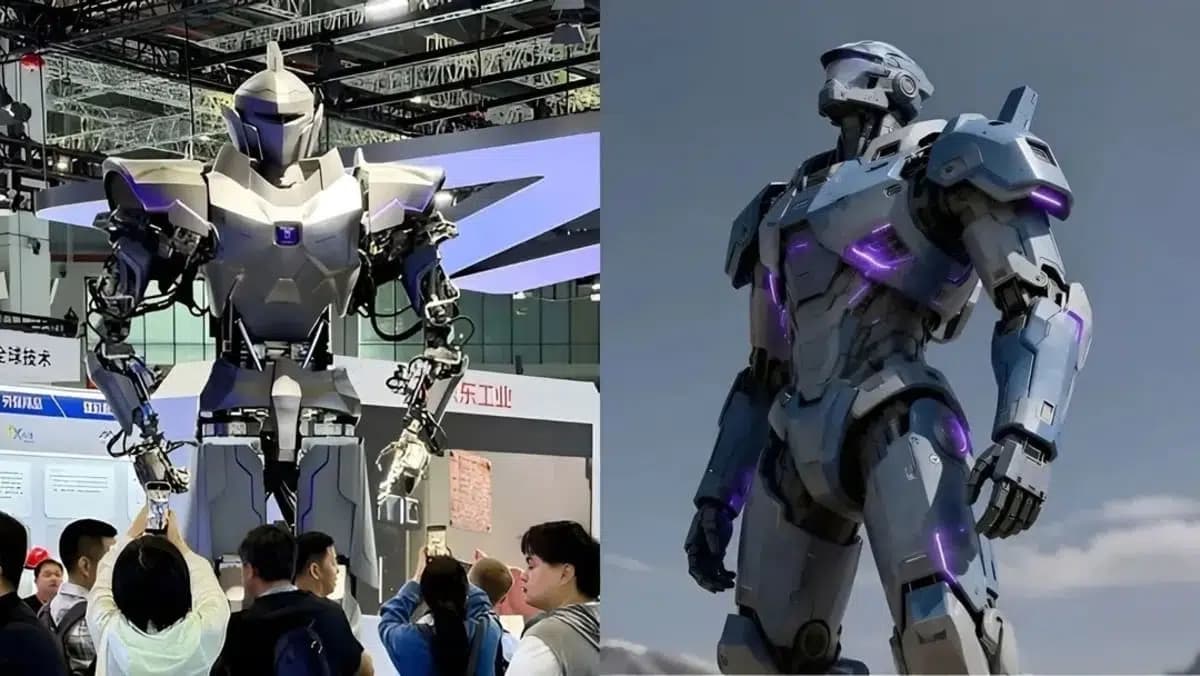
The key facts
- The Neo1 robot was shown at the CIIF 2026 exhibition in partnership with JD Industrial
- 41 degrees of freedom; 39 joints with hydraulic actuators, two rotating wrist joints are electric
- Declared two-hand payload capacity is 500 kg; application areas remain planned
Presentation at CIIF 2026
The Neo1 robot was demonstrated at the international industrial exhibition CIIF 2026 in China in cooperation with JD Industrial. To ensure high strength and precision of movement, the design combines hydraulic mechanisms and electric actuators.
Design and Specifications
The robot has 41 active degrees of freedom, allowing it to perform complex movements in different directions. According to the company, 39 joints are equipped with compact digital hydraulic actuators of its own design, while two rotating joints in the wrist area use electric actuators. Each hydraulic actuator weighs about one kilogram and is capable of generating a force of several tons. This figure differs from the robot's overall payload capacity: the declared total load for two hands is 500 kilograms.
Planned Application Areas
The manufacturer is considering the use of Neo1 for assembling heavy equipment components, loading operations in ports, as well as working at high temperatures and in other adverse conditions. One possible area named is the nuclear industry: the company stated that radiation-resistant hydraulic modules could allow the robot to be used for handling nuclear fuel and servicing equipment, but for this, the compliance of the entire system with the necessary safety requirements must be confirmed. Also mentioned were possibilities of adapting the robot for underwater technical work, mining, dismantling structures into parts, and clearing debris.
Development Status
The listed areas are still planned fields of application. According to the publication, Neo1's ability to operate for extended periods in real industrial conditions, as well as its durability and efficiency, still need to be confirmed in additional tests.