The key facts
- North Korea tested two types of submarine-launched cruise missiles off its east coast
- South Korea conducted a test of its first domestically developed hypersonic missile in the presence of President Lee Jae-myung
- Experts believe hypersonic weapons do not change the balance of power but increase overall danger
Tests and Visits
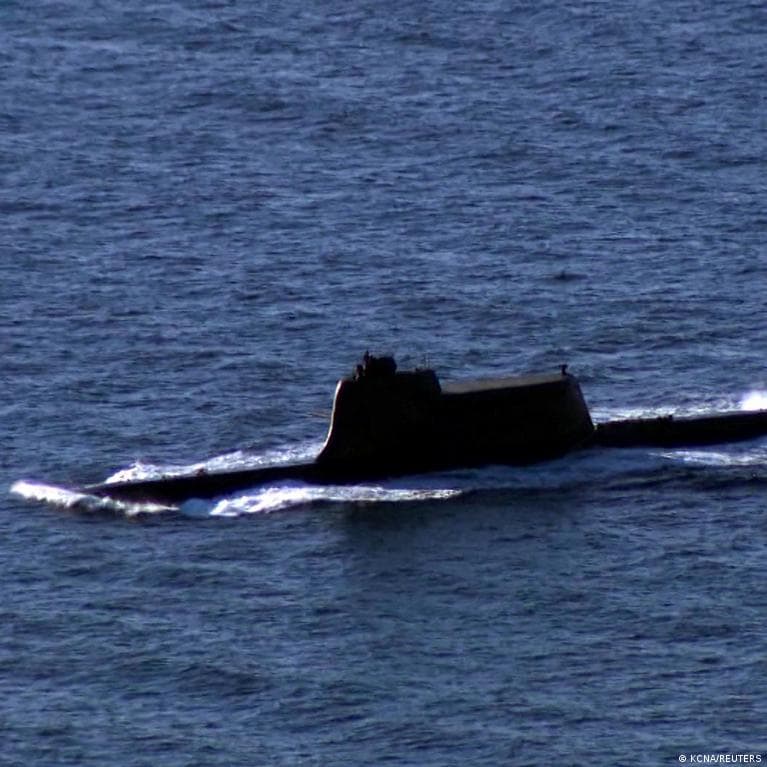
North Korea announced that on Wednesday it conducted a test of two types of submarine-launched cruise missiles off its east coast. A day earlier, the state agency KCNA reported that North Korean leader Kim Jong Un visited a new defense industry museum, where he inspected an intercontinental ballistic missile that, according to reports, is capable of striking targets on the continental territory of the United States. The visit took place five days after South Korean President Lee Jae-myung observed the test launch of the first hypersonic missile developed independently in the country. Earlier, on October 3, Pyongyang announced the test of a medium-range hypersonic missile that, according to its data, flew 350 kilometers to the target.
What Is Hypersonic Weapons
Hypersonic missiles travel at a speed of at least five times the speed of sound (Mach 5), that is, over 6,100 km/h. Their speed makes detection, tracking, and interception difficult, and the ability to sharply change course, descend, and maneuver in flight makes interception significantly harder. Such missiles can carry conventional or nuclear warheads. Both Koreas are developing hypersonic technologies as a means of building up offensive potential amid rising tensions in the Indo-Pacific region.
Expert Assessments
Christopher Green, senior adviser on the Korean Peninsula at the International Crisis Group, noted in a comment to DW that the arms race on the peninsula has been going on for many years, and hypersonic weapons are merely its latest manifestation. According to him, hypersonic weapons have become a priority for the South against the backdrop of the North's buildup of capabilities and its military and economic ties with Russia. Green also said that the DPRK has nuclear weapons, but their use 'would not be viable,' since the threat has always been that the US would 'turn the country into glass.' For the North, he believes, it is natural that the geopolitics of the region pushes it toward developing advanced conventional weapons.
Should Pyongyang Be Underestimated
Green emphasized that it is impossible to reliably confirm the weapon characteristics claimed by the DPRK, but underestimating Pyongyang would be a mistake: 'We don't know their capabilities, and it's possible it's all propaganda, but many times the North's capabilities have been underestimated, and then it turned out they really could do what they claimed.' Retired South Korean general Chun In-bum, senior fellow at the National Institute for Deterrence Studies, agrees: the truthfulness of the claims — 'who knows,' but any cautious military planner must proceed from the worst-case scenario. In his opinion, the DPRK likely obtained the technology 'by illegal means,' conducting reconnaissance on companies in the US, South Korea, and Japan, as well as 'friends.' He added that if the North acquires missiles that are harder to shoot down, this could increase the temptation to use them, and, as far as he understands, 'there is no good answer right now.'
Does This Change the Balance of Power
Green believes that the operational systems of both sides may mutually neutralize each other as a combat advantage: 'I don't think this changes the balance of power. The North retains nuclear deterrence and the hedgehog strategy — being prickly to keep everyone at a distance. And for the south of the demilitarized zone, this is also not a turning point.' However, according to him, if the North continues to develop offensive systems and is able to deploy them in large quantities, it will be necessary to discuss strengthening missile defense — not only in the South but also in Japan, which will raise 'very difficult questions.'