The key facts
- Universal Cart is available to users in the US; the preview took place at Google I/O in May
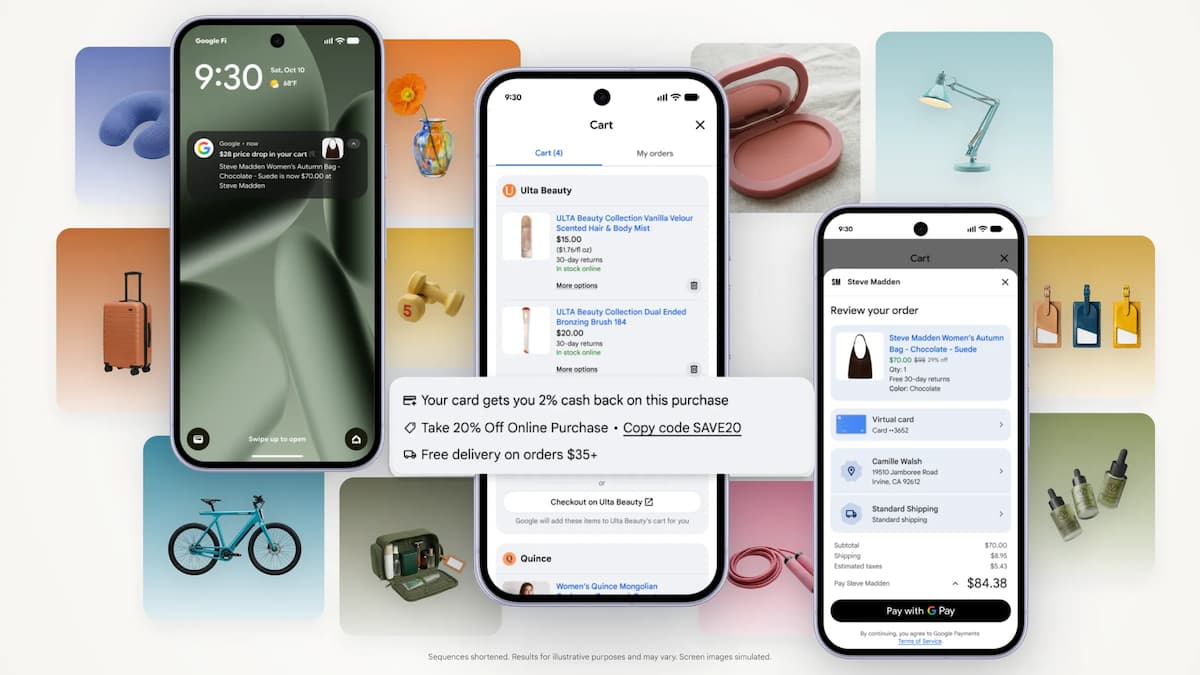
- The cart collects items from different retailers, notifies about price drops and items coming back in stock
- Checkout works via the open Universal Commerce Protocol (UCP) standard
What Google launched
Google announced on Thursday that the Universal Cart tool is now available to users in the US. The feature allows users to collect and track items found through Search and in the Gemini app. The company first showed the tool at the Google I/O conference in May.
How the tool works
The idea is to simplify managing online purchases: the user saves a desired item to the cart and returns to it later without searching again. Universal Cart collects items from different retailers and serves as a single hub for viewing and tracking potential purchases. The tool also notifies when the price of a saved item drops or when an item that was out of stock becomes available for sale again.
Payment assistance and checkout
According to Google, the tool takes credit card rewards into account when choosing a payment method and shows applicable promo codes. Checkout is tied to the Universal Commerce Protocol (UCP) — an open standard introduced by the company earlier this year. UCP is designed so that AI agents and retailers can interact at different stages of the shopping journey, including checkout.
Context: AI in e-commerce
Universal Cart is Google's latest step in AI-powered shopping. It complements features such as conversational product search in Search's AI Mode and the "Let Google Call" tool, in which an AI agent calls nearby stores and checks item availability. Google is not the only company bringing AI into e-commerce: Amazon, OpenAI and other competitors are adding agentic commerce features, seeking to make chatbots more useful beyond answering questions.


