The key facts
- The EIB allocated EUR 900 million to Kyrgyzstan, Kazakhstan and Uzbekistan for water management and power grids, including the Kambar-Ata-1 HPP (commissioning ~2035, 5.6 billion kWh per year).
- Kazakhstan received loans: EUR 150 million to KazAvtoZhol and EUR 200 million to the Development Bank of Kazakhstan, increased by a letter of intent by a further EUR 120 million.
- The EIB excludes coal and gas projects, is interested in green technologies and discussed with the transport minister the idea of roads for autonomous trucks.
EIB expands financing of cross-border projects in the region
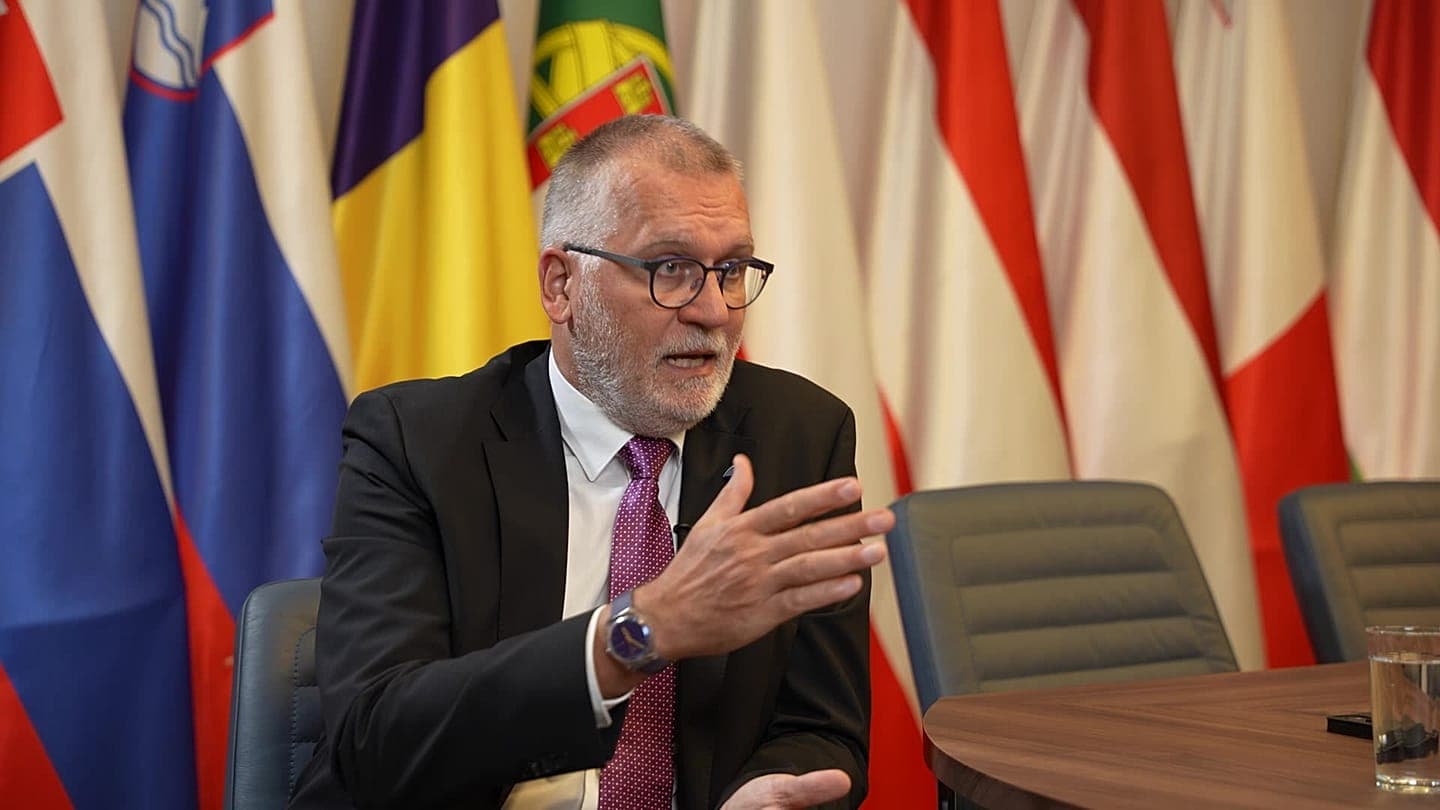
The European Investment Bank (EIB) intends to expand financing of cross-border infrastructure projects in Central Asia to support the region's economic development. The bank's Vice-President Marek Mora, in an interview with Euronews during a visit to Astana, said that interstate projects are even more attractive to the EIB than projects in individual countries, since they carry the development potential of the entire region. In June, the EIB opened a representative office in Tashkent, which, according to the outlet, underscores the region's strategic importance for the bank.
Kambar-Ata-1 HPP and water management
One of the main examples of interstate cooperation with EIB support is the construction of the Kambar-Ata-1 HPP in the mountains of Kyrgyzstan. The project is being implemented jointly by Kyrgyzstan, Kazakhstan and Uzbekistan; the EIB allocated EUR 900 million to the three countries for water management projects and the construction of power grids. The station is expected to be commissioned around 2035, with a capacity of 5.6 billion kWh of electricity per year, which should strengthen the region's energy security. Mora noted that ideas for an electrical interconnector between Kazakhstan and Azerbaijan under the Caspian Sea, with a possible continuation to Europe, were discussed. The HPP on the Naryn — Kyrgyzstan's largest river — will regulate seasonal flow, accumulating water during the melting of snow and glaciers and releasing it in dry months, ensuring a more stable inflow into the Syr Darya, which supplies Uzbekistan and Kazakhstan with water for irrigation and drinking.
Transport projects and Kazakhstan's potential
The EIB attaches great importance to Central Asia's role as a transport corridor between Asia and Europe. Mora emphasized that Kazakhstan can build its own industry — logistics and services — around transit flows. The bank has already provided a EUR 150 million loan to the national road operator KazAvtoZhol for road modernization: the project covers approaches to international border crossings, the Caspian route, corridors to China, the southern transit route and interregional highways. Another loan of EUR 200 million went to the Development Bank of Kazakhstan for transport and energy projects; according to Mora, it was increased by a letter of intent by a further EUR 120 million.
Financing conditions and green technologies
According to Mora, to receive EIB financing a project must be predictable, have clear goals and transparent procurement procedures. The bank distinguishes two groups of conditions: environmental and social standards — projects related to the coal industry, coal and gas technologies are excluded from consideration — and a 'win-win situation', that is, benefit both for Kazakhstan and for the European economy and industry. The bank is interested in green technologies: during the visit, Mora discussed with Kazakhstan's Minister of Transport Nurlan Sauranbayev a possible project of special roads for autonomous trucks, which could cross the country, be electric and, possibly, of European manufacture. Mora also called water resource management a global public good, noting that water in Kazakhstan is already scarce and will become scarcer everywhere in the future.


