The key facts
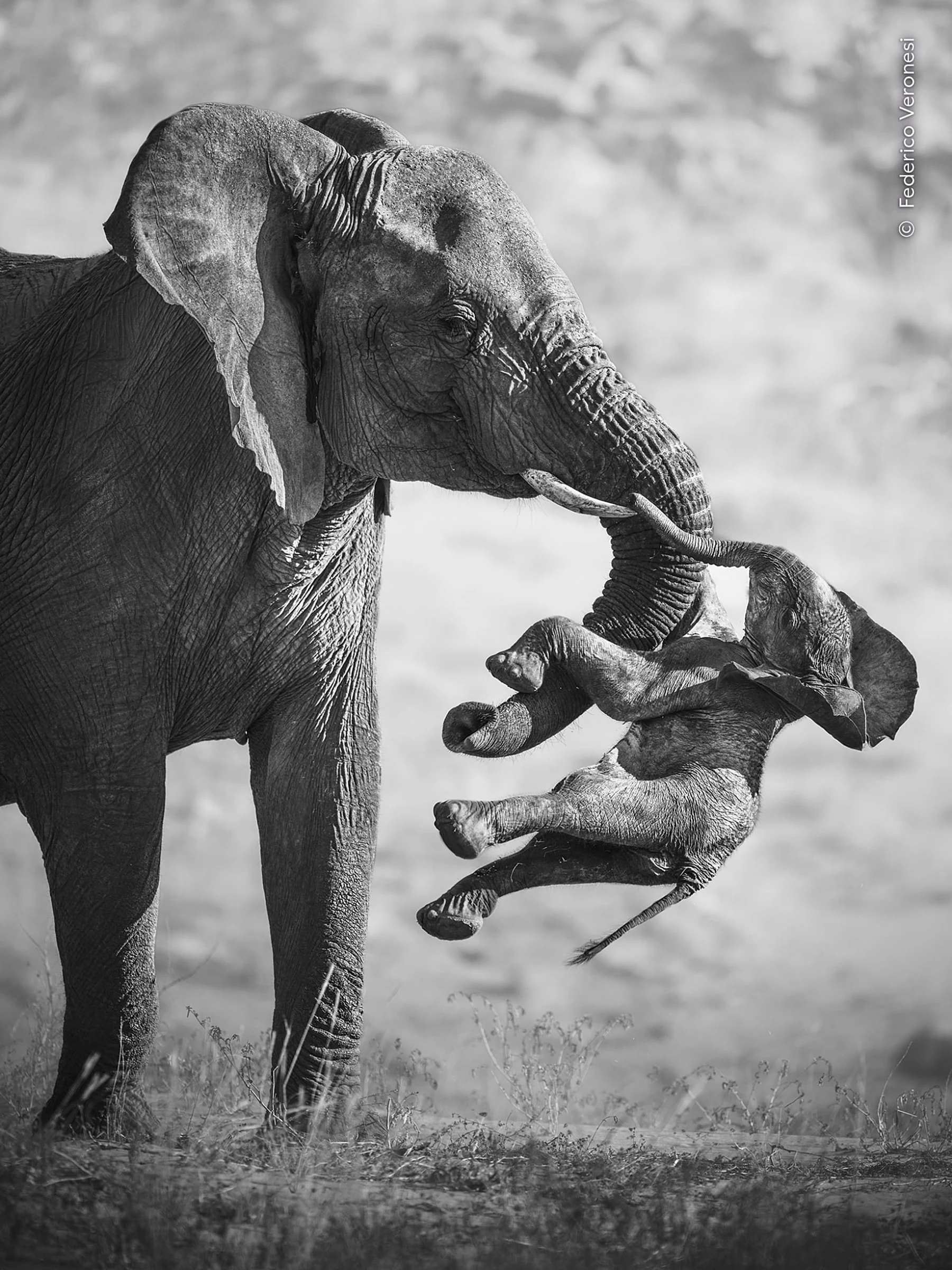
- Grand prize: 'The Aftermath' by Federico Veronesi — elephant with her dead calf, Namibia
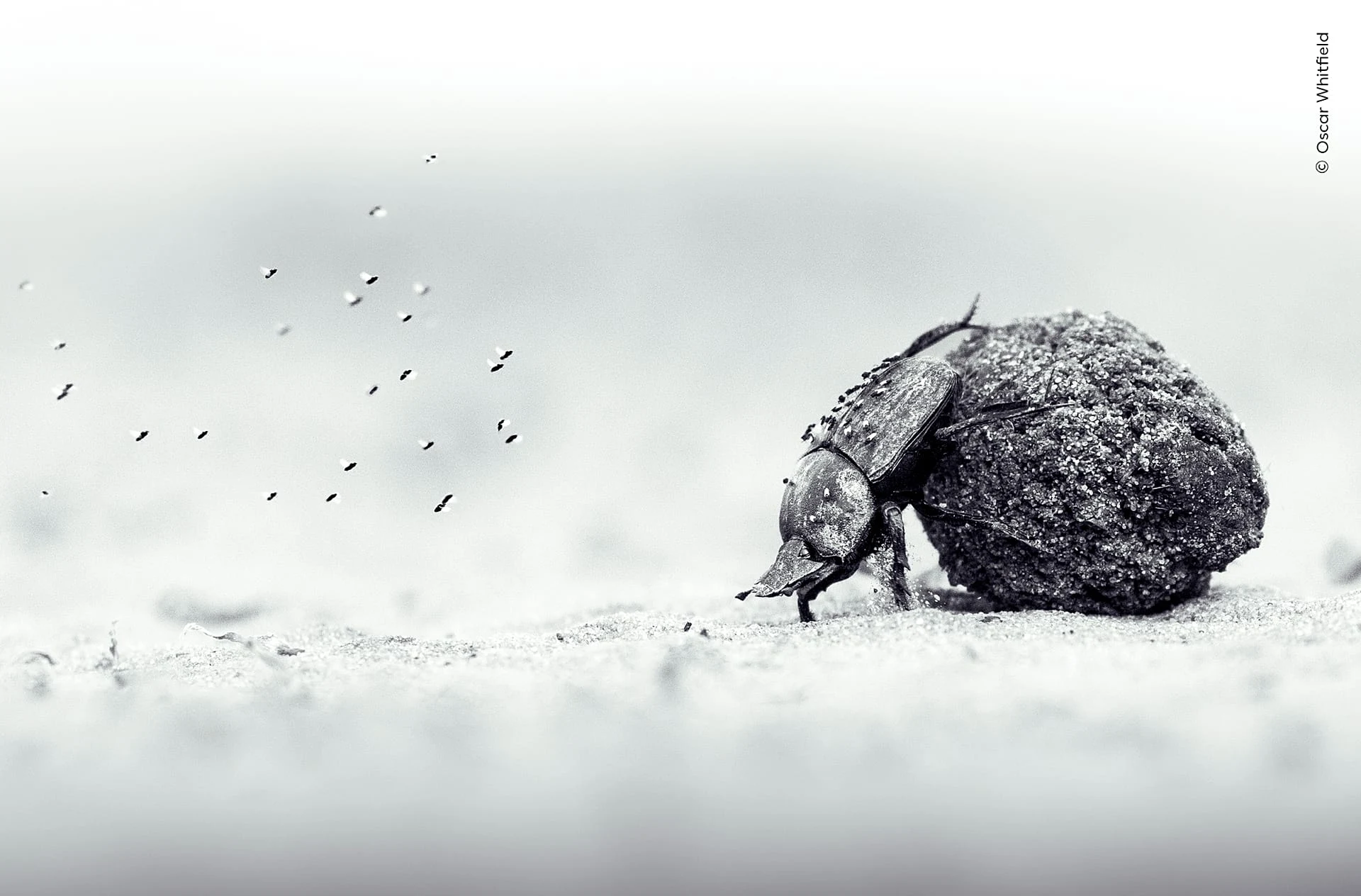
- Youth award: Oscar Wheatfield, 14, photo of a dung beetle in Zimbabwe
- 20 winners out of 65,403 entries from 121 countries; exhibition in London from 16 October 2026 to July 2027
Grand prize of the contest
The winner of Wildlife Photographer of the Year 2026 was the photograph 'The Aftermath' by Italian nature photographer Federico Veronesi. The shot was taken in the Huab River valley in Namibia: after noticing unusual drag marks in the sand of a dried-up riverbed, Veronesi caught up with a family group of elephants, one of which was carrying her dead calf wedged between her tusk and trunk. The black-and-white photograph was called by jury chair Kathy Moran an emotional 'gut punch' and 'heartbreaking' proof of animal consciousness. The publication notes that possible manifestations of grief in elephants had been recorded before: loud vocalizations, 'guarding' of the dead body, and inspecting and moving bones.
Scale of the contest and the young winner
Besides the young winner, the jury selected 19 more laureates in individual categories from a record 65,403 entries submitted from 121 countries and territories. The main youth award went to Oscar Wheatfield, who was 14 at the time of shooting: his frame 'Labour of Love' captured a dung beetle at work in Zambezi National Park in Zimbabwe. Oscar lay on the ground to photograph the beetle at eye level; the sun and heat raised dry dust, giving the title a double meaning. According to the publication, dung beetles help curb greenhouse gases by breaking up and burying dung, which prevents methane formation and speeds up decomposition; more than 5,000 of their species are known worldwide.
Urban wildlife
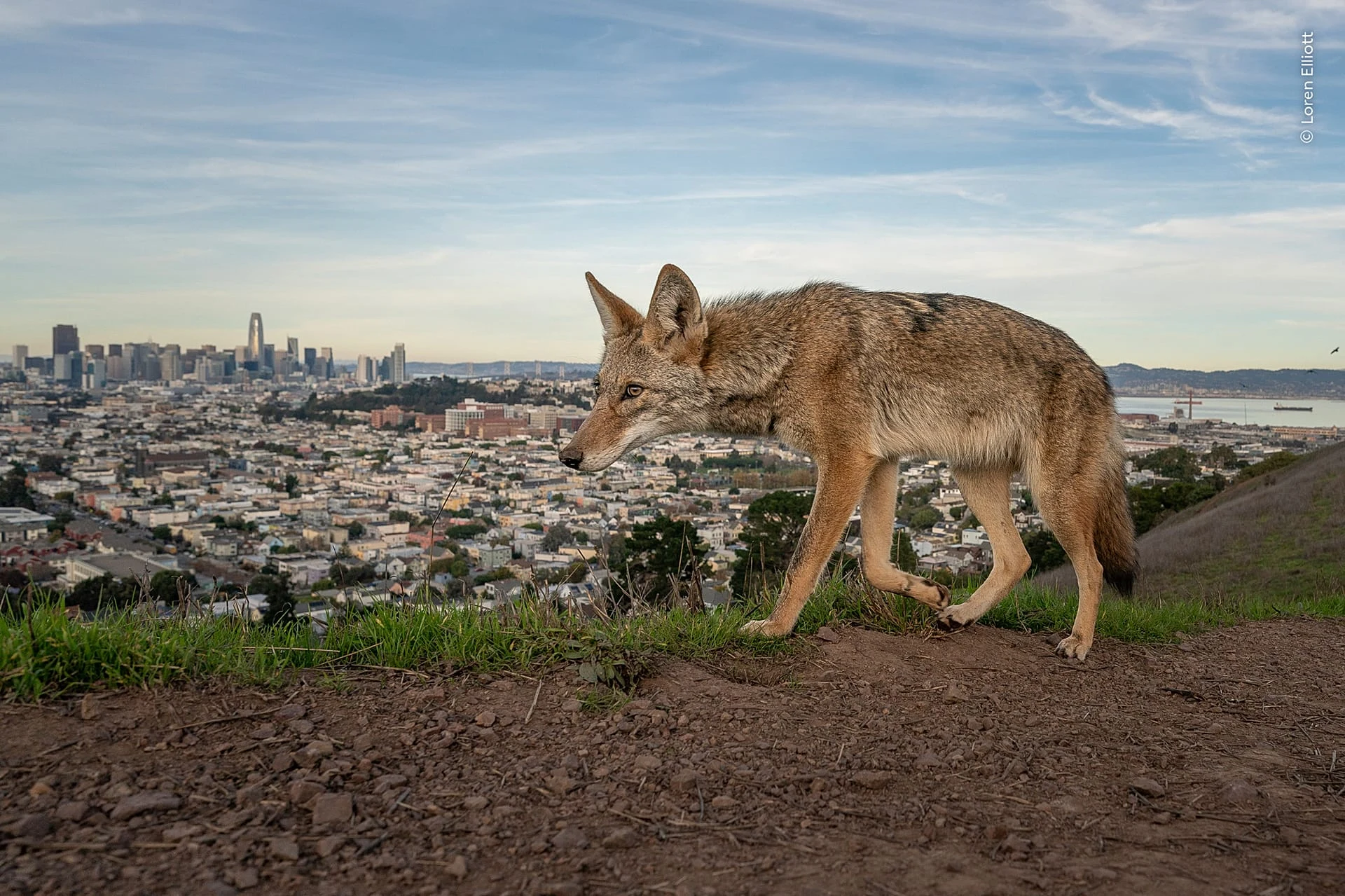
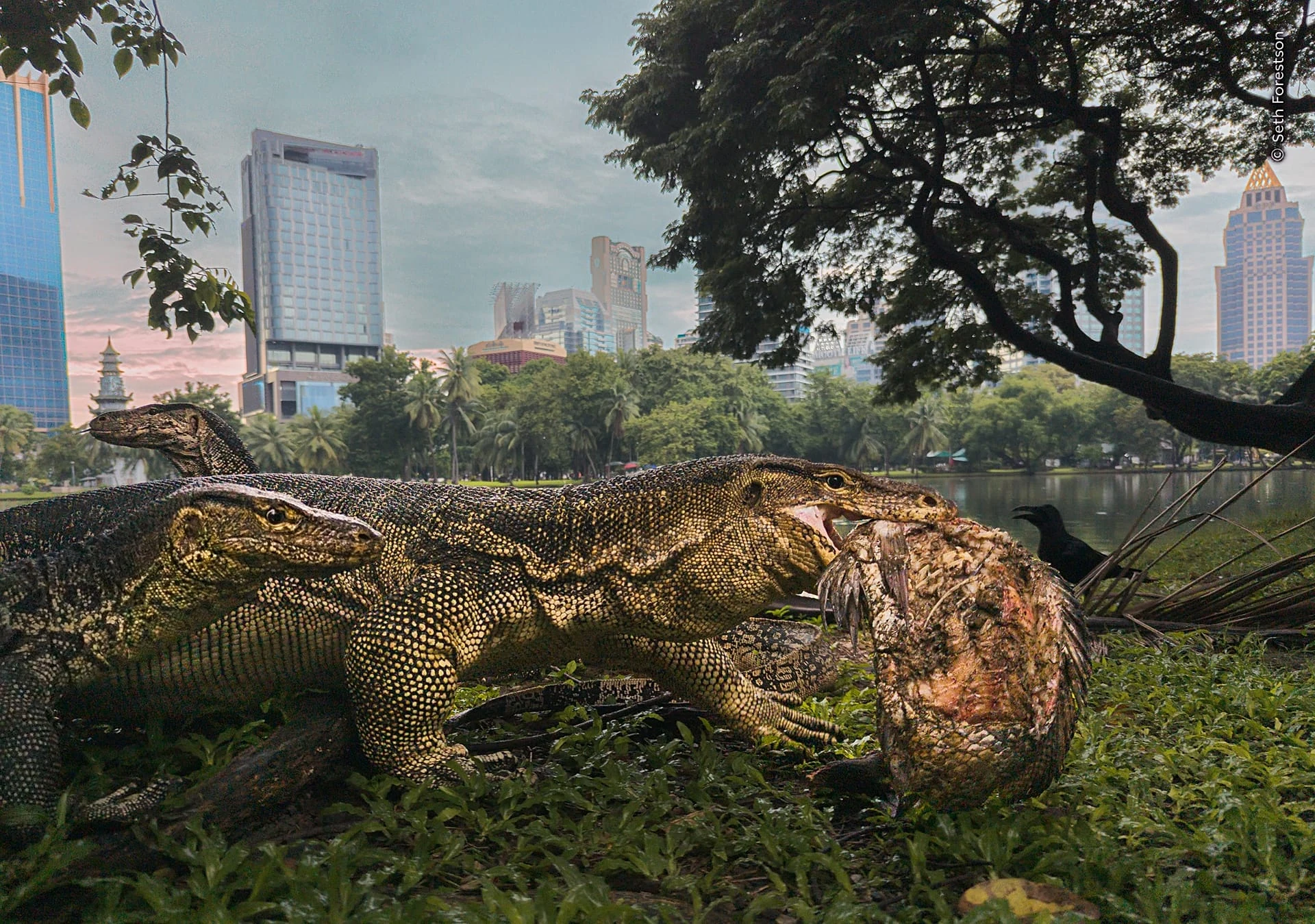
A number of winning works are devoted to animals adapting to life alongside people. American Lauren Elliott, in the portfolio 'On the Outskirts' ('The Cunning Coyotes of San Francisco'), which received the Photojournalist Story Award, tells of a pack of coyotes among more than 800,000 city residents: by estimates, about a hundred coyotes live in San Francisco, and attitudes toward them are mixed — they sometimes hunt pets, but help keep down the numbers of disease-carrying rodents. The win in the Urban Wildlife category went to Briton Seth Forrestson for the shot 'Urban Jungle' showing an Asian water monitor carrying prey through Lumpini Park in Bangkok; these lizards have mastered the urban environment, feeding on catfish and koi carp in the park's lakes.
Underwater stories
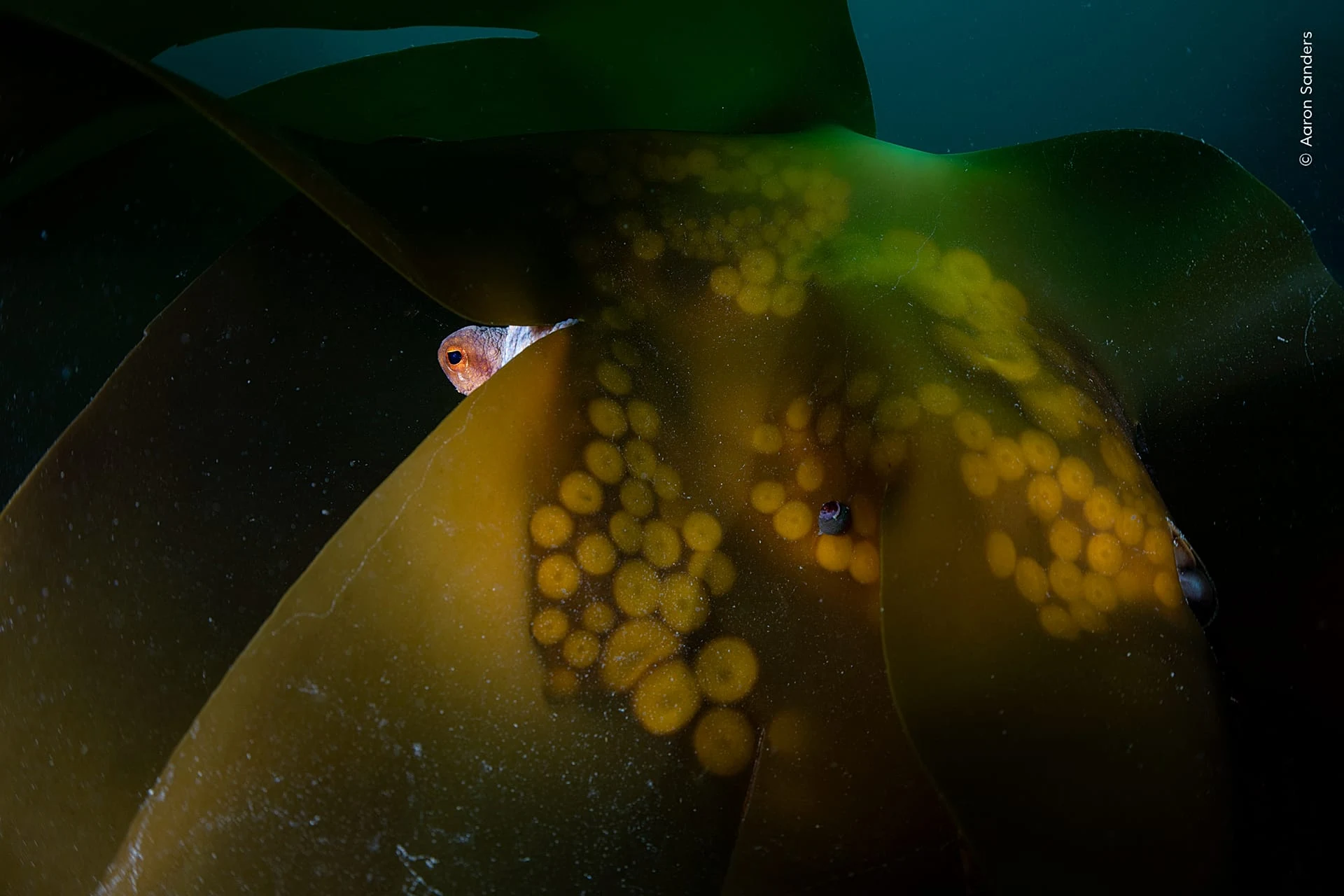
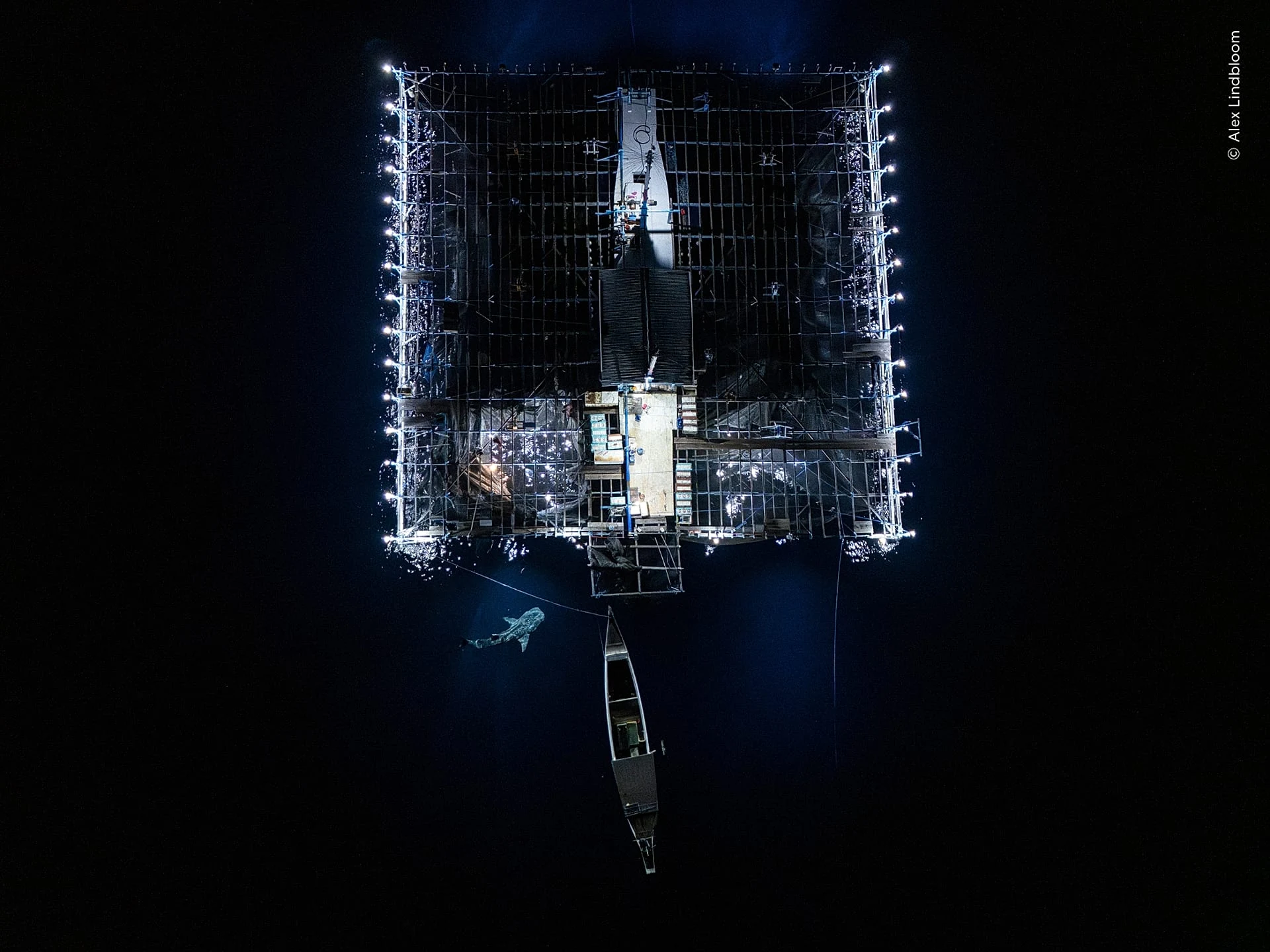
Aaron Sanders, winner of the 'Animal Portraits' nomination, photographed an octopus off Portkeris Beach in Cornwall (UK): after noticing sucker prints on a kelp blade, he froze when an octopus eye emerged from its hiding place. The publication links the shot to a broader story: off the south-west coast of England there has been a sharp rise in sightings of common octopuses — above-normal spring sea temperatures have expanded their range, which, according to the publication, is harming local fisheries. In the 'Oceans: The Bigger Picture' category, American Alex Lindbloom won with the shot 'Night-Time Catch': a whale shark investigates the catch of a 'bagang' — a mobile net fishing platform — off the coast of Papua in Indonesia. Over the past 75 years, whale shark numbers have declined sharply, mainly due to ship strikes, entanglement in fishing gear, and illegal fishing.
Watering hole and exhibition
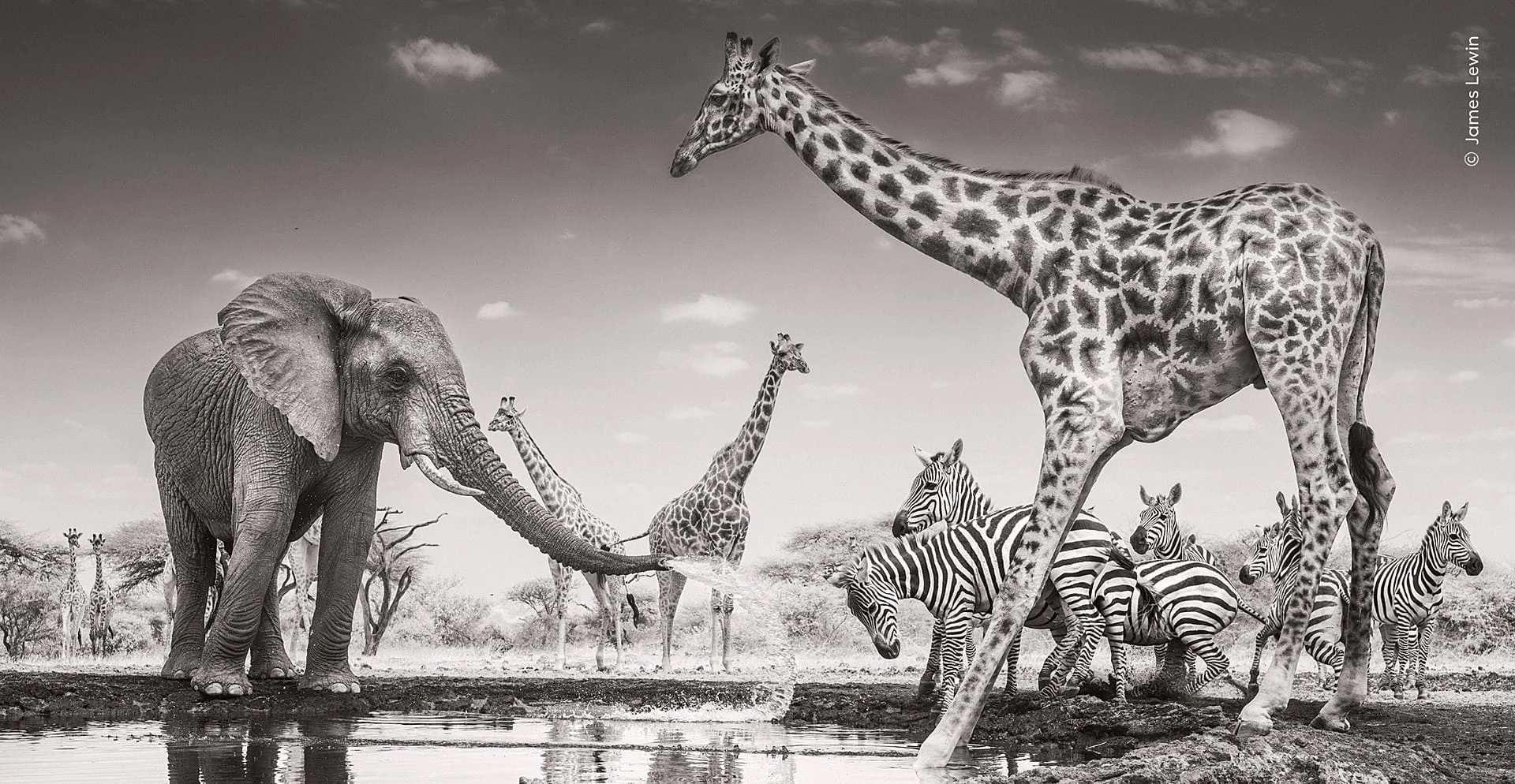
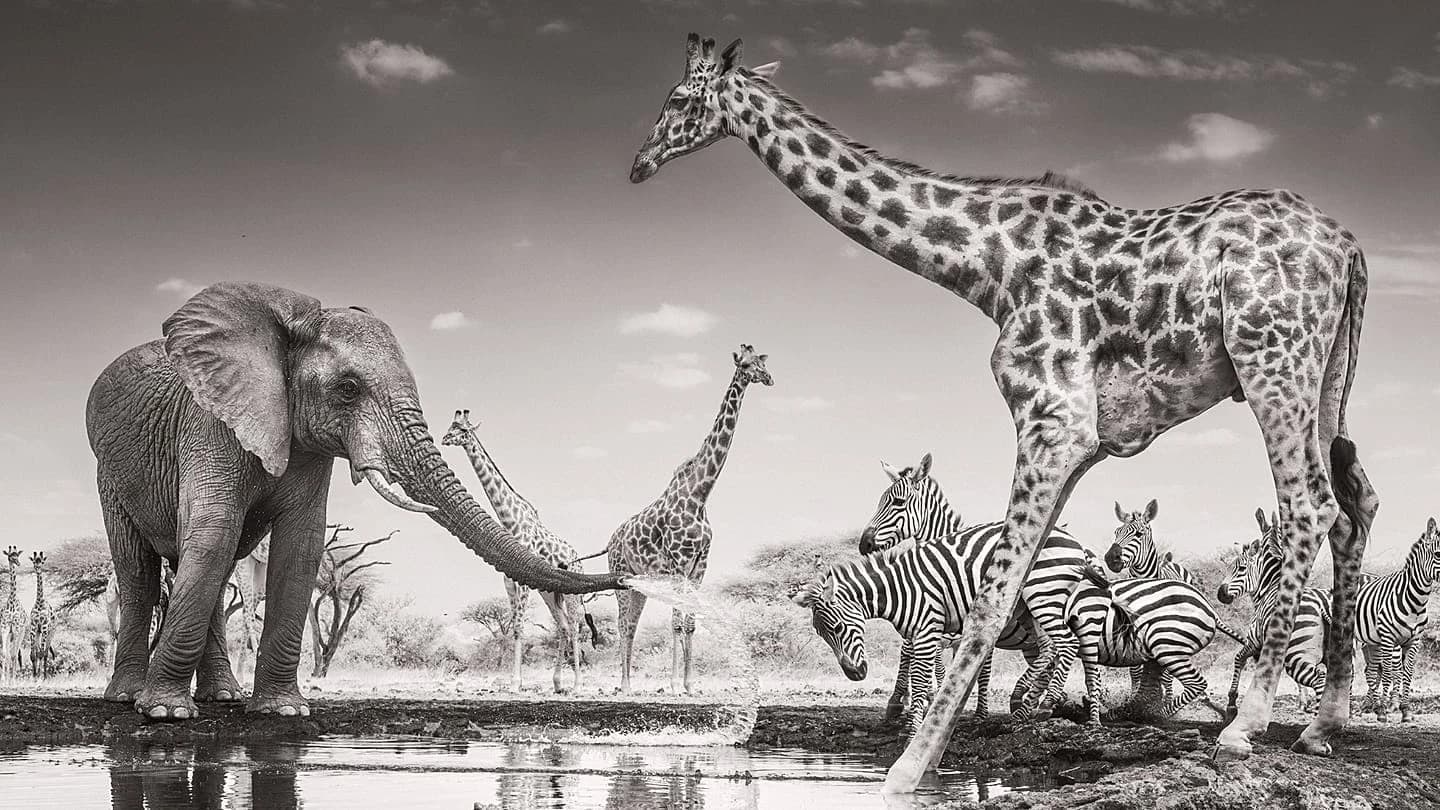
Briton James Lewin received the Animals in their Environment award for the shot 'The Meeting Place': a young bull elephant sprays water over zebras at a watering hole in the Chyulu Hills in Kenya. Lewin used a camera converted for infrared photography to soften the harsh light. During severe droughts, watering holes bring together animals that usually keep their distance from one another. The Wildlife Photographer of the Year contest is run by the Natural History Museum in London; the winning photographs will be exhibited there from 16 October 2026 to July 2027.