The key facts
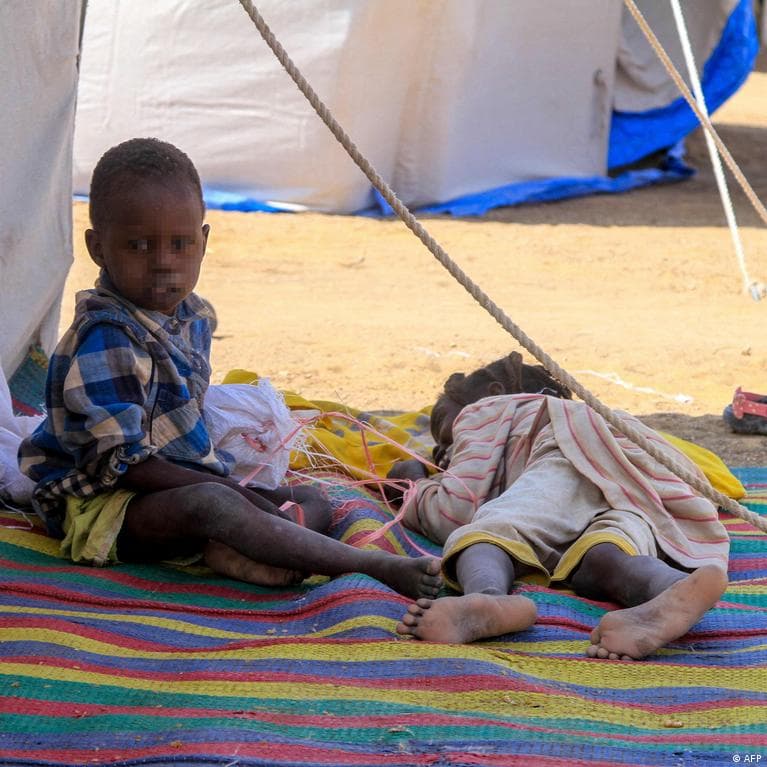
- 24.6 million Sudanese suffer from acute food shortages; 825,000 children under 5 — from severe acute malnutrition (Action Against Hunger)
- The UN humanitarian response plan for 2026 ($2.9 billion) is only 41% funded
- In October, the UN Security Council extended the arms embargo only for Darfur until December 11, rejecting a nationwide one
Fighting intensifies the exodus of the population
Clashes between the Sudanese Armed Forces (SAF) and the Rapid Support Forces (RSF) have intensified in North Kordofan and part of Blue Nile State, forcing thousands of civilians to flee in the middle of the planting season. The war between the two groups and their allied militias has been going on since April 2023, and neither side has been able to establish control over the entire country. The regular army holds the north and center of the country, including Khartoum, while the RSF maintain a presence in the western region of Darfur and part of the south. According to UN and international humanitarian organizations' estimates, the death toll ranges from 40,000 to 250,000 — exact figures are difficult to obtain. More than 12.4 million Sudanese have been displaced within the country and to neighboring states.
Famine reaches catastrophic levels
Action Against Hunger reported that 24.6 million people are experiencing high levels of acute food shortage. According to the executive director of the organization's German branch, Jan Sebastian Friedrich-Rust, in 2026 about 825,000 children under the age of five suffer from severe acute malnutrition, while acute malnutrition overall affects 4.2 million children, pregnant and breastfeeding women. In October, the Famine Early Warning Systems Network (FEWS NET) warned that a number of areas, including camps for displaced persons in Greater Darfur and Greater Kordofan, are expected to reach the 'Catastrophe' level (IPC 5) — the highest degree of acute food shortage. Fabrizia Falcone, a representative of the UN Population Fund, told DW that after visiting the Tawila camp she found it hard to find words: a population exceeding the size of Frankfurt was forced to flee to one place in less than three years. More than 700,000 people there rely on the only hospital capable of performing cesarean sections.
Funding shortfall
The humanitarian response plan for 2026, requiring $2.9 billion (€2.59 billion), is only 41% funded — $1.2 billion (€1.07 billion) has been received from international donors. 'The situation in Sudan continues to deteriorate, humanitarian needs are growing, and resources for response are shrinking,' Falcone said.
Climate shocks and supply shortages
The UN Office for the Coordination of Humanitarian Affairs (OCHA) warned that extreme heat and severe floods are exacerbating the crisis. Sudanese-born researcher Hager Ali from the German institute GIGA told DW that the heatwave has led to power outages of up to 12 hours a day in some regions, while dried-up riverbeds and fields suffer in addition to the damage from fighting and the RSF's scorched-earth tactics. Drought covers roughly half of the country, while in other areas heavy rains and localized floods worsen conditions. Sudan depends on imports of fertilizer and diesel from the Persian Gulf through the Strait of Hormuz and the Bab el-Mandeb Strait; however, amid the war involving Iran, Tehran is blocking shipping in the Strait of Hormuz, and the Iran-backed Houthis in Yemen threaten and periodically disrupt shipping through Bab el-Mandeb. According to Ali, fertilizer supplies in 2026 collapsed from 450,000 to about 50,000 metric tons; the diesel shortage and rising prices make both agricultural machinery and the transport of humanitarian and agricultural goods more expensive. In October, the International Food Policy Research Institute reported a sharp rise in prices for basic foodstuffs and fuel in September 2026.
Limited arms embargo
Observers have long pointed out that the war will not end until foreign patrons stop supplying weapons. The army is officially supported by Egypt, Turkey, Russia and Iran, while the main sponsor of the RSF, it is claimed, is the UAE — Abu Dhabi denies this. In October, the UN Security Council extended the existing arms embargo only for the Darfur region until December 11, rejecting calls for a nationwide embargo. Hager Ali noted that expanding the embargo would primarily affect drones: Sudan is one of the largest theaters of drone warfare, and as of 2026 drone strikes are the leading cause of civilian casualties. According to her, Sudan's Permanent Representative to the UN, Al-Harith Idris Al-Harith Mohamed, spoke out against expanding the embargo, fearing it would disproportionately restrict the armed forces on the battlefield. The embargo would alienate potential patrons of the army, whereas the RSF do not necessarily procure weapons through official channels — the group relies on trade with other militias, private military contractors and traders in the region, making it difficult to influence it with a single embargo.