The key facts
- Qatar's Emir called Iran's attack a violation of sovereignty and said the country will emerge from the crisis stronger
- Qatar's revenues fell 42% in the first half of the year, spending fell 14%; non-oil sectors account for about 80% of real GDP
- Qatar will continue the North Field expansion, the Golden Pass LNG project in the US, and mediation in regional conflicts
The Emir on the crisis and sovereignty
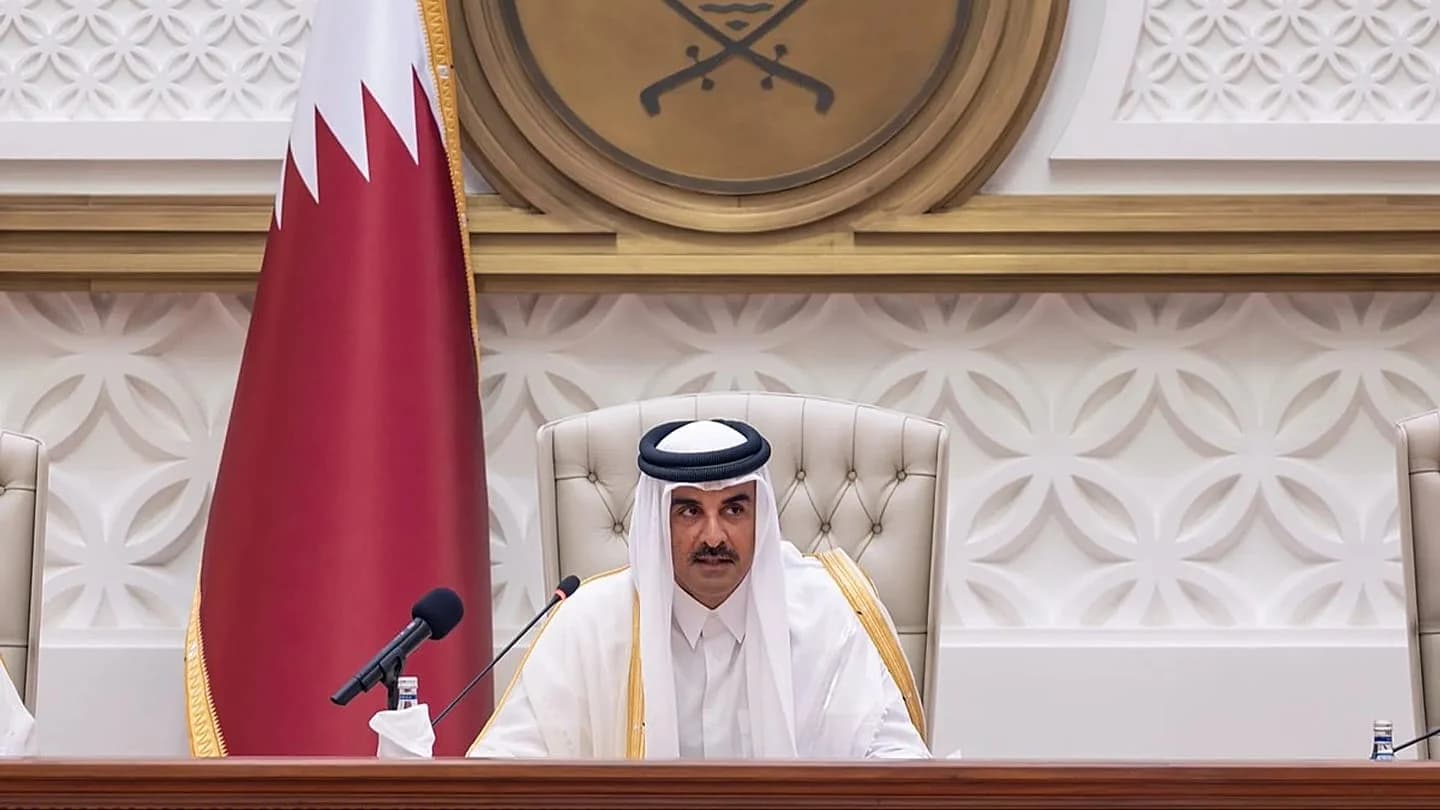
Qatar's Emir Sheikh Tamim bin Hamad Al Thani spoke on Tuesday at the opening of the annual session of the Consultative Assembly (Shura) in Doha. He said that Qatar was subjected to an attack on its territory by Iran, in a flagrant violation of its sovereignty, international law and the principles of good neighbourliness. According to him, Qatar has always preferred to settle disputes through negotiations and diplomatic means, but readiness for dialogue does not mean abandoning the defence of the country: the right to defend sovereignty, the Emir stressed, does not contradict the desire to prevent a wider war. Iran, as Euronews notes, has consistently claimed that during the war it attacked only US interests among its neighbours.
Four elements of the strategy
The Emir said that during the crisis Qatar bore three responsibilities simultaneously: defending sovereignty, fulfilling its role in energy security and the global economy, and keeping its doors open for diplomacy. On this basis, according to him, four key elements of the strategy rest: firm defence of the country without being drawn into war; maintaining basic services, supply chains and economic activity; facilitating a ceasefire and the opening of waterways; and calling for negotiations and seeking opportunities to return to a peaceful settlement of the conflict. He stressed that resilience is not born at the moment of crisis, but is the result of prior planning.
Regional security
Against the backdrop of expanding conflicts in the region, the Emir stated that the security of the Gulf Cooperation Council (GCC) countries, the protection of their sovereignty and stability are not subject to discussion. He called for redoubled efforts to ensure shipping in the Persian Gulf and the Strait of Hormuz, as well as to protect energy and water facilities and civilian infrastructure.
Economy: shock and adaptation
The Emir recalled that Qatar supplies about one fifth of the world's LNG, and any disruption to supplies quickly affects markets and consumers. The closure of the Strait of Hormuz, together with direct damage to a number of energy facilities in the industrial city of Ras Laffan, according to him, disrupted a significant part of the country's exports. He reported that total revenues in the first half of the year fell by 42%, and government spending by 14%, while basic services and development priorities were unaffected. Non-oil and gas sectors continued to grow, reaching about 80% of real GDP, and the volume of foreign direct investment continued to rise. The Emir noted that pre-crisis policies — strengthening reserves, reducing public debt, budgeting based on conservative oil prices and developing non-oil revenues — have so far allowed the consequences of the crisis to be absorbed.
Plans for the future
Qatar's goal, according to the Emir, is not to return to the pre-crisis state, but to use the recovery as a springboard to accelerate economic diversification. In energy, the plans include expanding the North Field gas project to increase LNG capacity, advancing the Golden Pass project in the US, growing QatarEnergy investments and international partnerships, as well as developing petrochemicals, solar energy and strengthening water security. The Emir also named food security, agriculture, technology, institutional efficiency, investment in education and digital transformation as priorities.
The Palestinian question and mediation
The Emir stated that the Palestinian question remains a priority for Qatar, and said that what happened in the Gaza Strip is, without doubt, genocide, and the perpetrators must not escape accountability. He warned of the dangers associated with Israeli settler attacks on Palestinians in the West Bank, repeated raids on the Al-Aqsa Mosque and, according to him, numerous violations of international law, the UN Charter and international humanitarian law. As Euronews notes, Israeli Prime Minister Benjamin Netanyahu has repeatedly sharply criticised Qatar, calling it a hostile state. The Emir also confirmed that Qatar will continue mediating in the resolution of crises in Sudan, Libya, Yemen and Somalia.


