The key facts
- The EU space programme for 2021–2027 (€14.8 billion) ends in 2027; for 2028–2034 the Commission proposes €131 billion for defence and space from the Competitiveness Fund
- In May the Commission proposed a single EU licence for mobile satellite connectivity in the 2 GHz band with a reserve for European operators and IRIS²
- Sateliot launched 5 satellites on SpaceX (11 in total), the next launch is with SpaceX in July 2027, then on the European Miura 5 rocket of PLD Space at the end of 2027
Brussels meeting: frequencies and money will decide who controls the orbit
On Tuesday, national telecom regulators, EU politicians and Barcelona-based satellite company Sateliot, which organised the event, met at the European Parliament in Brussels. They discussed how radio frequency allocation and new funding will determine control over the satellite connectivity that Europe relies on — against the backdrop of the bloc's seven-year space budget expiring in 2027. Sateliot's satellites operate as 'base stations in space', connecting internet of things devices (sensors, trackers) where terrestrial networks are unavailable.
Funding: the old budget is expiring, the new one is under discussion
The EU space programme for 2021–2027 worth €14.8 billion, which funds the Galileo navigation system and the Copernicus Earth observation service, will end next year along with the EU's seven-year budget (MFF). For the 2028–2034 period, the European Commission proposes funding space from the new European Competitiveness Fund — a single fund for strategic sectors, where €131 billion is earmarked for defence and space. EU leaders will discuss the next budget at the European Council meeting on Thursday and Friday. In addition, the Commission department DG DEFIS closed applications on 29 September for a four-year framework contract worth €55 million for management and legal support in three areas: the secure IRIS² constellation, space situational awareness and space economy analysis. New Horizon Europe calls are expected in 2027; EUSPA and ESA continue to run tenders.
Spectrum: a single licence for 2 GHz
A significant part of the discussion concerned radio frequency spectrum. In May, the Commission proposed a single EU-wide licence for mobile satellite services (direct connection of satellites to phones and devices) in the 2 GHz band, whose rights expire in May 2027. The proposal provides for reserving part of the band for European operators and the secure system linked to IRIS². The meeting was chaired by European Parliament Vice-President Javier López, and DG CONNECT was represented by the head of its spectrum policy unit, Gerasimos Sofianatos. 'A Europe that controls its own network and data is a Europe capable of acting independently,' López said. 'Satellite connectivity is a prime example of an area where we must achieve strategic control.'
Sateliot: European champions and participation in IRIS²
Sateliot CEO and co-founder Jaume Sanpera told Euronews that 'we must create and support European champions capable of competing at the global level in the space sector,' adding that 'today half the world wants to work with European companies in defence and space because we are more predictable.' In September, ESA selected Sateliot to participate in the low-orbit layer of IRIS² — a testing ground where new government services are tested before being incorporated into the main system; test missions in orbit are planned for 2027–2029. Under the RESCUE-NET project, Sateliot will study how 5G connectivity from space can support government structures when terrestrial networks fail; for this phase ESA signed 18 contracts worth a total of €20 million with almost 80 companies.
Launches: SpaceX for now, then PLD Space
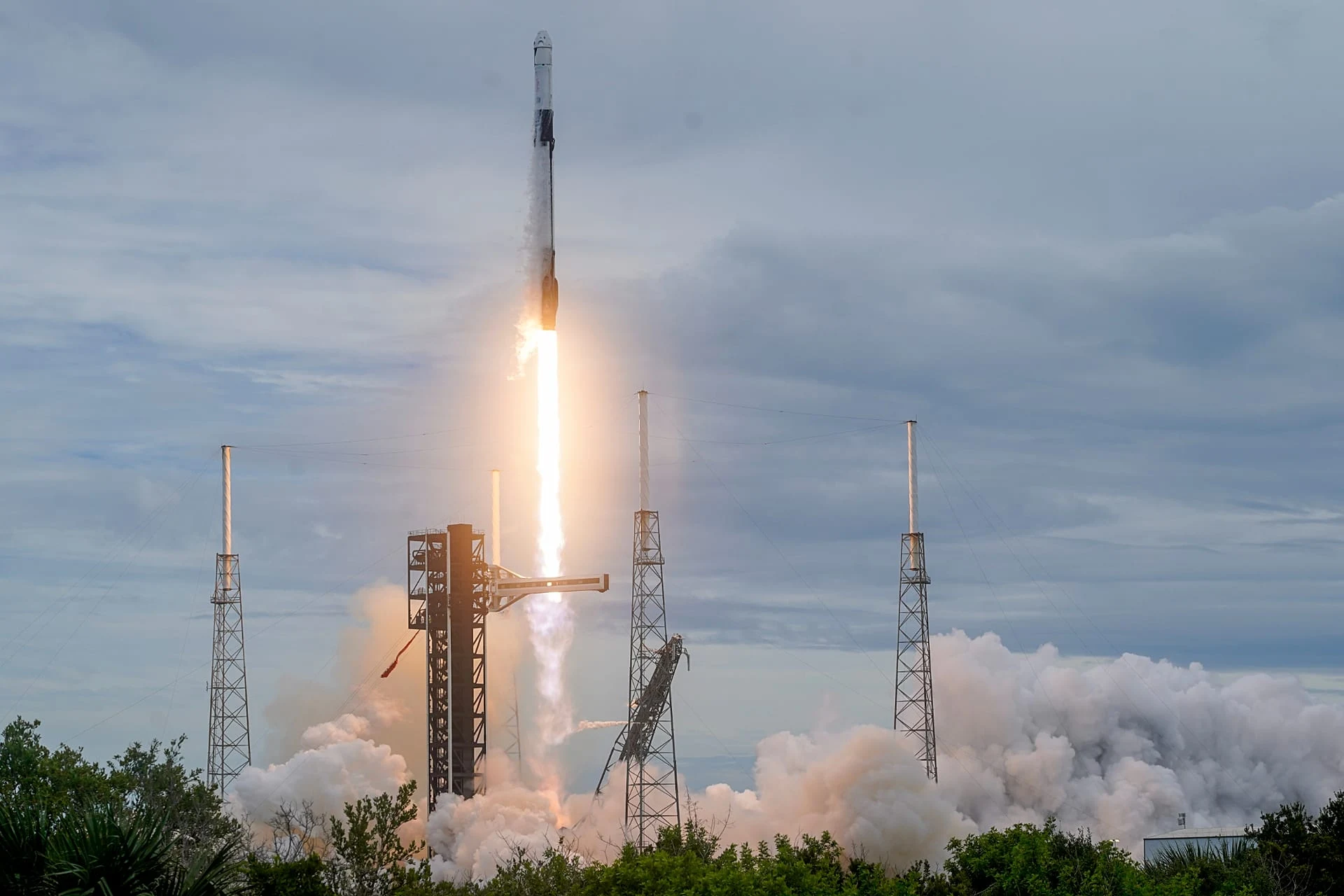
For small satellites, access to orbit still mostly means American rockets. On 1 October, Sateliot put five satellites made by Spain's Alén Space into orbit as part of SpaceX's Transporter-18 mission, bringing the total number of spacecraft to 11; according to the company, this doubles the number of daily passes over any given point. Asked whether Europe can build up constellations without non-European rockets, Sanpera expressed optimism, noting that four or five companies are competing in this race. Sateliot's next launch is planned for July 2027 — again with SpaceX — while the following one, at the end of 2027, will be fully European: the first two larger next-generation Tritó satellites for 5G direct-to-device will fly on PLD Space's Miura 5 rocket from Elche (which has not yet flown). In August, PLD Space received a conditional contract worth €158.9 million under the ESA European Launcher Challenge programme and plans a debut launch from the spaceport in French Guiana by the end of this year. Sateliot itself is raising €150 million (€100 million in equity and up to €50 million in debt) and intends to grow its constellation to more than 500 satellites.