The key facts
- Cameras monitor 6 km of dedicated lanes on Fergana yuli in both directions
- Violations are recorded from 6:00 to 23:00; at night, since May 2025, all vehicles may use the lanes
- The Road Traffic Organization Center promises a phased installation of cameras on other streets of Tashkent
Cameras have started operating on Fergana yuli
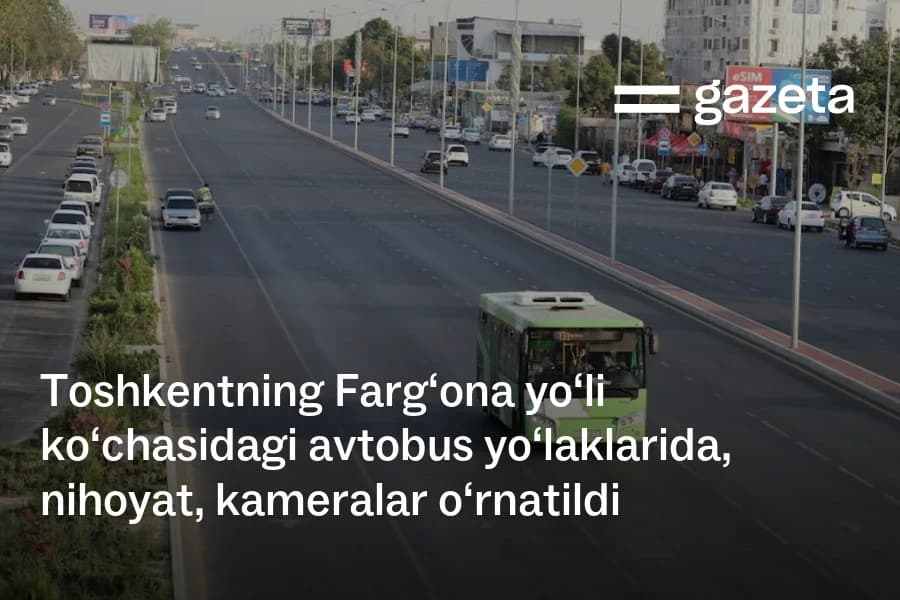
In Tashkent, cameras controlling traffic on dedicated public transport lanes have been installed on Fergana yuli (Fergana highway). This was reported by the capital's Road Traffic Organization Center (RTOC). A section 6 km long in both directions is equipped with cameras. Violations are recorded from 6:00 to 23:00 — at night, since May 2025, any vehicle is allowed to drive in the dedicated lanes.
Plans for other streets
According to the RTOC, to ensure priority for public transport, cameras will be installed in stages on other streets of the capital as well. The center reminded: «A single bus can carry more than 50 passengers at a time. When a car enters a dedicated lane and obstructs the movement of a bus, it delays not just one vehicle, but dozens of people who are hurrying to work, to study, home, or on other important errands».
A long-standing problem and its context
Back in February 2022, the Tashkent transport administration promised to «make» the dedicated lanes on Fergana yuli work, yet until now ordinary cars have been driving along them. According to «Gazeta», the problem also remains of lanes being blocked by Road Safety Service (UBDD) officers, who stop cars there to check documents and process violations; the publication has repeatedly pointed this out and sent a request to the RTOC.
The deputy khokim's position
In the spring, the deputy khokim of the capital for transport and road infrastructure, Abdurakhmon Bakhtiev, spoke to «Gazeta» about the non-functioning dedicated lanes. According to him, «without cameras we will not be able to make the lanes work». He also emphasized that the lanes must be organized properly: in many places in the city they were marked without calculations or a review of traffic organization. «You cannot simply mark a lane and expect it to work», noted the first deputy khokim. In addition, there were reports of a project to install cameras on buses to control entry into dedicated lanes and record other violations.