The key facts
- Asan Shakil opened a workshop at the Bhabra Bazaar market in Rawalpindi in 1980 and remains one of the country's last restorers of antique metalware
- Restored items sell for $100–$1,000, mostly to collectors, including foreign ones
- The craftsmen note rising antique prices alongside a shrinking customer base and a shift to online trading
A workshop in the old quarters of Rawalpindi
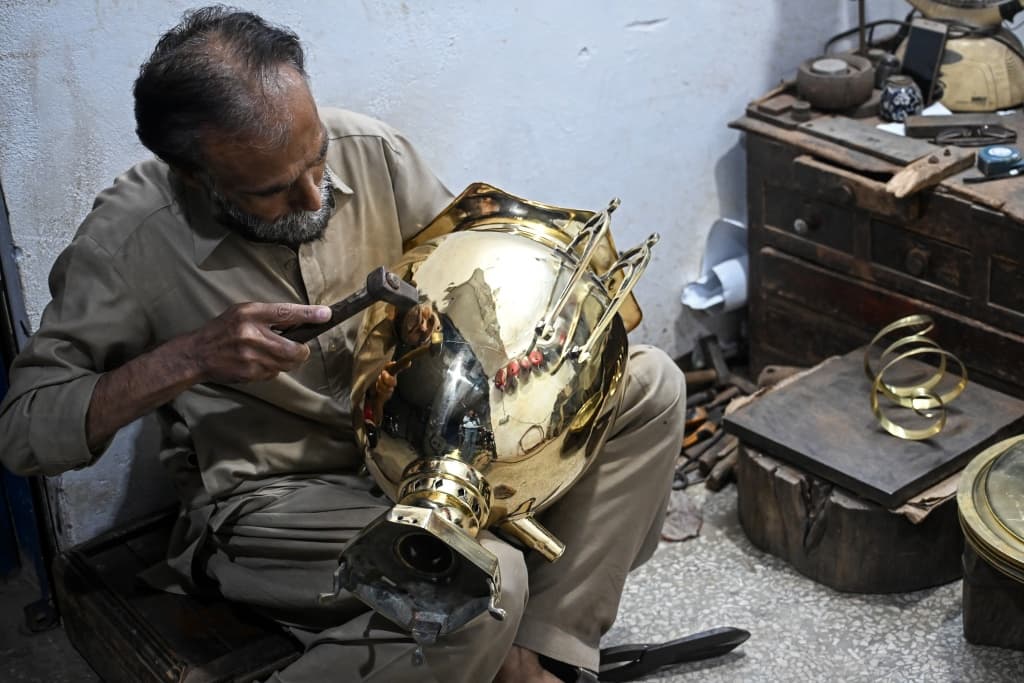
In the maze of alleys of the ancient Pakistani city of Rawalpindi, 72-year-old restorer Asan Shakil polishes an antique brass vessel on a motorized wheel. “We have removed all the dents, but it still needs to be polished,” he told the AFP news agency, as the spinning polishing wheel raised a fine cloud of metal dust into the air.
The craftsman's path and the fate of the trade
Shakil quit his job as a hotel cook and followed in his father's footsteps, opening a workshop at the Bhabra Bazaar market in densely populated Rawalpindi in 1980. Today he is one of the last craftsmen preserving antique metalware in Pakistan. The city's roots go back to prehistoric settlements; over the centuries the garrison town grew into a major trading hub where the metal crafts of the Mughal era and the British colonial period intersected.
How the work and the trade operate
In his shop, shelves stretch from wall to wall, holding jugs, samovars, platters, jars and teapots several centuries old — mostly made of copper or brass. Such items are increasingly rare: they have been displaced by stainless steel kitchenware and plastic. Shakil used to travel to Lahore, Gujranwala and Karachi in search of antiques, but now travels less due to his health and relies mainly on online platforms and messengers. He most often acquires items at scrap metal dumps, at ports or during house clearances — often in such a state that no one would have bought them.
Restoration and a shrinking market
Shakil and his colleague, 56-year-old Shakil Ahmed, hammer out dents, re-tin the inner surfaces over coal fires and polish the metal; a badly damaged piece can require several days of work. After restoration, an item sells for $100–$1,000, with buyers mostly collectors and antique enthusiasts, including foreigners. According to Shakil, prices for antiques are rising, but the number of customers has declined over time: “Money doesn't turn over quickly in this business. It is a very slow trade.” Ahmed sees a different meaning in the work: “What we do is like bringing the dead back to life,” he said as he smoothed out dents with a small hammer on a large brass hookah pipe.