The key facts
- The strait between Rothschild Island and Alexander Island in West Antarctica has been named Amos Channel after former BBC science correspondent Jonathan Amos.
- The strait appeared after the ice mass connecting the islands broke apart.
- Amos worked at the BBC from 1986 to 2024 and called the naming 'an extraordinary honour'.
A strait that appeared after ice broke apart has been named after a journalist
A part of Antarctica has been named after former BBC science correspondent Jonathan Amos. The strait between Rothschild Island and Alexander Island in the west of the continent is now called Amos Channel, BBC News reported citing the naming committee. According to the outlet, this is a new geographical feature: it formed when a piece of ice connecting Rothschild Island and Alexander Island broke apart.
The reason for the honour and Amos's reaction
The committee noted Amos's 'exceptional and influential role' in making Antarctic research understandable to a wide audienceover his 38 years working at BBC News. The journalist himself called it an 'absolutely incredible' honour and added that, despite his long-standing interest in the South Pole, he has never yet visited the continent: 'I have written about it so often, but always from my desk — this is a great incentive to go there.' In his words, Antarctica is 'the front line of the biggest story on the planet — climate change.'
How the decision was made and what Amos covered
Names for geographical features in Antarctica are assigned under strict rules. Amos Channel was recommended by the Place-names Committee of the British Antarctic Territory,which is responsible for features in the British Antarctic Territory as well as South Georgia and the South Sandwich Islands. Athena Dinar of the British Antarctic Survey called the naming 'well-deserved recognition' of Amos's contribution to popularising Antarctic research. Over the years he covered giant icebergs, the fate of penguin colonies and the BBC exclusive on the discovery of Ernest Shackleton's lost ship Endurance. Amos joined the BBC in 1986 as a local radio reporter in Cambridge, took part in the launch of the BBC News website in 1997, ran the online science desk for many years, worked as a science correspondent on TV, radio and online, and left the organisation in 2024.
Why it matters
The event is remarkable in two ways: a journalist's name has been attached to a feature that physically came into being because of ice breaking apart — the very process to which Amos devoted a significant part of his career. For readers, it is a reminder that changes in Antarctica are noticeable and are documented, among other things, through the appearance of new geographical features. The practical consequence is that the new official name Amos Channel will now be used by cartographers and researchers within the British Antarctic jurisdiction.
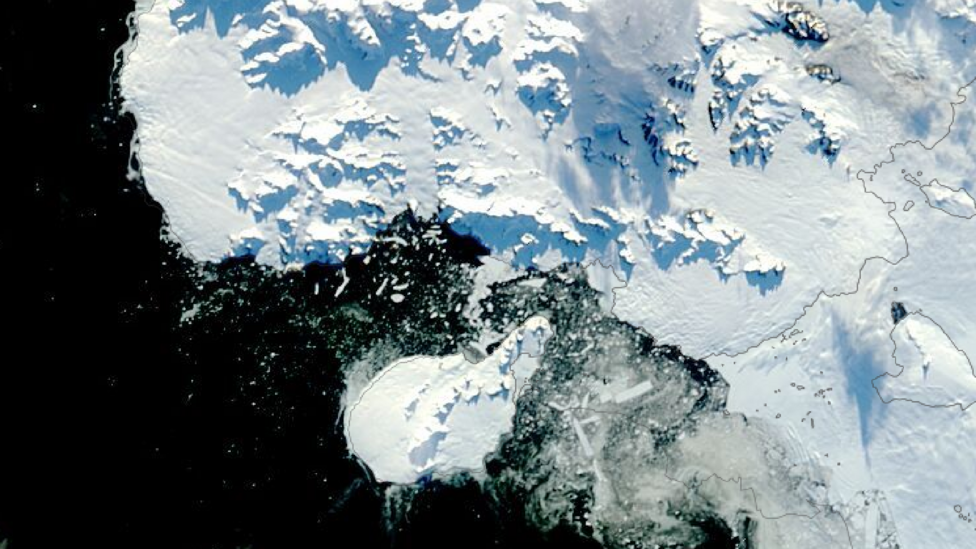 Image source, MODIS
The Amos Channel sits between Rothschild Island (bottom centre) and Alexander Island, which is the larger landmass to the right
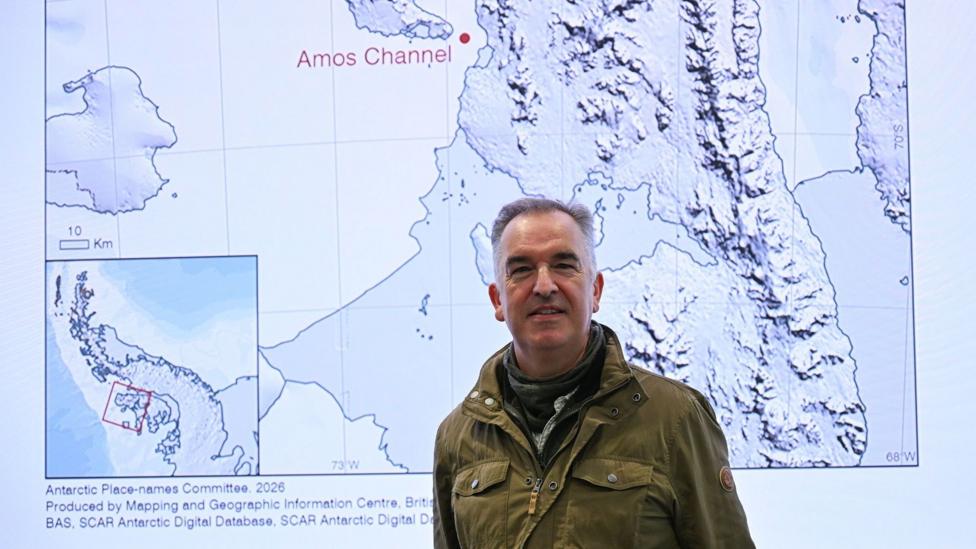 Image source, BAS
Jonathan Amos reported on science at the BBC for many years