The key facts
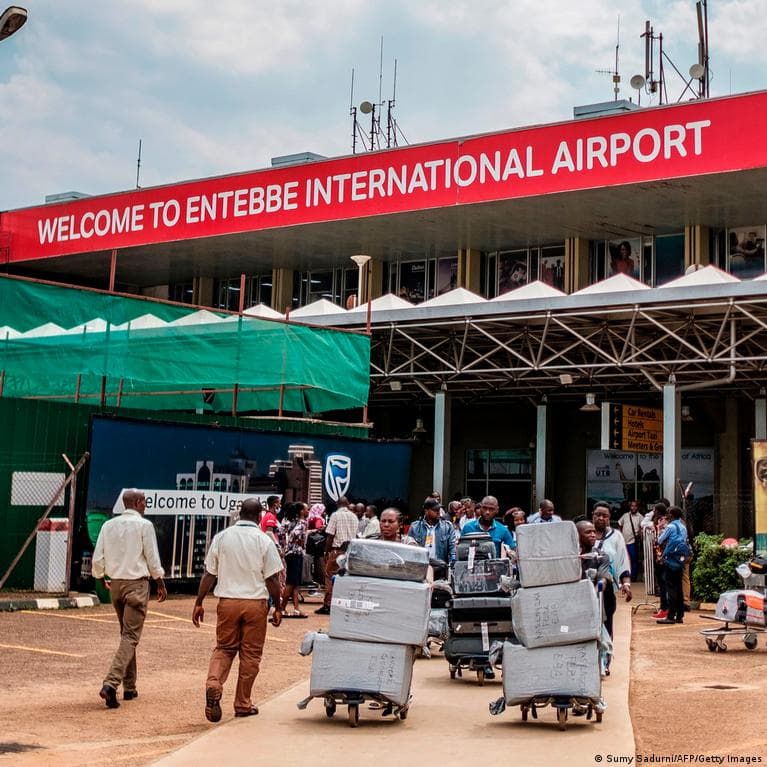
- Both first patients in Kenya and Nigeria passed through Entebbe airport on October 3, said Wessam Mankoula of Africa CDC
- Uganda insists there are no active cases; Switzerland denies the Nigerian patient's trip to DR Congo
- Africa CDC is convening an emergency virtual meeting of national health officials on October 28
Two patients, one airport
The first confirmed Ebola patients in Kenya and Nigeria, according to Wessam Mankoula, head of the emergency preparedness department at Africa CDC, both passed through Uganda's Entebbe International Airport on October 3. Investigators are determining whether they were there at the same time and whether their routes crossed. It has not yet been established whether they met and whether virus transmission occurred at the airport. Uganda, which claims to have no active cases, has become the center of investigations into cases separated by thousands of kilometers.
Imported case in Nigeria
Nigeria's health minister Muhammad Ali Pate confirmed an imported Ebola case in Abuja in a woman who had recently traveled through East Africa, including Uganda. Symptoms appeared on October 7; on October 11 she went to a private clinic, laboratory tests confirmed Ebola, after which she was isolated. According to the minister, the patient's condition is stable, and 41 contacts have been identified — healthcare workers, caregivers, patients, and people possibly encountered during her travels. Uganda's health ministry said in an October 20 statement that preliminary data indicate the patient traveled to eastern DR Congo on business, then transited through Uganda without symptoms and returned to Nigeria: 'Passing through Uganda does not prove that infection occurred here. The place of infection remains under investigation.'
Switzerland disputes Uganda's version
On Friday, Switzerland's Federal Department of Foreign Affairs told the Reuters agency that the woman and her husband did not travel to DR Congo. According to Swiss authorities, the patient is a Swiss citizen of Ugandan origin, the wife of a Swiss diplomat in Abuja. On Thursday, the Swiss government told Reuters that, in their assessment, she contracted Ebola while traveling with her husband in Uganda, although this assessment has not been independently confirmed. The WHO and Africa CDC said on Thursday that they had not received confirmed information about the woman's trip to DR Congo. The conflicting versions raise the question of where the infection occurred and how accurately her movements were reconstructed, but do not prove infection in Uganda. Uganda maintains its position that there are no confirmed active cases and is awaiting more detailed information from Nigeria.
Kenyan investigation and an unfound contact
In Kenya, the first confirmed patient died in Nairobi on October 5; he was traveling from DR Congo through Uganda and passed through Entebbe on October 3 — the same day as the woman later diagnosed in Nigeria. Kenyan authorities reported additional infections linked to the first case. According to Daily Nation, medics are searching for a Ugandan citizen listed as a contact of the deceased. Kenya's health department director Patrick Amoth told the outlet: 'We know his name, passport number and phone number, but we cannot reach him.' According to the newspaper, he uses a South Sudanese number, which complicates the search. The mere fact that a contact has not been found does not mean infection, but identifying potentially exposed persons is important for preventing transmission.
Border control difficulties and alarm in Nigeria
Uganda has a long border with DR Congo, where Ebola outbreaks regularly occur; cross-border trade and movement make it difficult to determine the place of infection. According to the WHO, symptoms appear 2–21 days after infection, and people are considered contagious only after symptoms appear — so even functioning border screening does not detect all infected individuals. Uganda is strengthening screening at points of entry, and Nigeria is intensifying contact tracing and infection control measures. In Abuja, the confirmed case caused alarm: resident Peace Kolawole told DW she is 'very worried,' keeping sanitizer at hand, while resident Jonathan Steven fears the healthcare system may not cope, since 'people are now thinking more about survival than about illness.'
Open questions
Uganda's position between DR Congo and other regional destinations explains its appearance in both investigations, but two key questions remain: whether the patients crossed paths in Entebbe on October 3, and where the Nigerian woman was infected if, as Switzerland insists, she was not in DR Congo. The absence of confirmed active cases in Uganda does not rule out all infections, but the travel routes also do not prove a hidden outbreak. Africa CDC will convene an 'emergency virtual meeting' of national health officials on October 28 amid an ongoing outbreak that has already spread across four countries: DR Congo, Uganda, Kenya and Nigeria.