The key facts
- Musk supports a Tesla–SpaceX merger but says the deal is not guaranteed and requires shareholder approval
- Special committees of independent directors have been formed in both companies; Musk is not participating due to a conflict of interest
- SpaceX reported a quarterly profit for the first time: $4.4 billion, revenue up 161% to $14.6 billion thanks to the AI division
Musk backed the merger idea but does not call it inevitable
Elon Musk on Tuesday, October 20, 2026, during a call with analysts on SpaceX's quarterly results, said that a merger of Tesla and SpaceX is 'a good idea' and that this option is 'being actively considered.' In his words, treating the merger as a done deal would be an exaggeration: special committees at both companies 'have not reached agreement on the terms of any deal, and there is no guarantee that they will.' 'Ultimately, shareholders have to approve this,' he added. Answering a question about a possible combination, Musk compared his position to 'a tap dance on a minefield.'
Special committees and conflict of interest
The boards of SpaceX and Tesla formed special committees of independent directors to study a possible merger — according to Musk, at shareholders' request. Musk himself, who heads both companies, is not taking part in the discussions because he is an 'interested party.' He called the situation 'a strange kabuki dance' where 'two groups of people are talking, and I can't be in the conversation.' TechCrunch notes that Musk did not name the committees' membership. According to the outlet, Tesla's independent directors include, among others, Robyn Denholm, Ira Ehrenpreis, JB Straubel, Joe Gebbia, Jack Hartung, James Murdoch and Kathleen Wilson-Thompson; at SpaceX, the independent directors are considered to be Ehrenpreis, Randy Glein, Donald Harrison, Steve Jurvetson, Luke Nosek and Roelof Botha. Musk and his brother Kimbal are not independent at Tesla.
What approval will be required
According to the BBC, approving the merger would require support from at least 50% of Tesla shareholders, which Musk called 'a pretty high bar.' TechCrunch clarifies: this means 50% of all Tesla shares, not only of votes cast. At SpaceX, according to TechCrunch, Musk controls more than 50% of the votes, which makes obtaining shareholder support easier. AFP cites regulatory filings: as of June 30, Musk owned 48.4% of SpaceX and, through super-voting shares, controlled more than 82% of the votes; at Tesla he owns roughly 20%. Company valuations: Tesla — about $1.5 trillion, SpaceX — $2 trillion; a combination would be one of the largest deals in history.
Motives: AI, robotics and chip manufacturing
Musk, according to TechCrunch, said he sees 'great benefit' in combining the companies because 'we are practically at the singularity of superintelligence.' He named potential areas of cooperation: AI software development, robotics, SpaceX's orbital AI datacenter called Starmind, and Terafab — a joint Tesla–SpaceX chip manufacturing project.
SpaceX's first profitable quarter since the IPO
Musk's statement came on the day SpaceX reported a quarterly profit for the first time since going public. According to AFP, net profit for July–September was $4.4 billion versus a loss of $1.1 billion a year earlier, and revenue grew 161% to $14.6 billion. SpaceX shares rose almost 5% in after-hours trading. The company listed on Nasdaq on June 12 with an IPO at $135 per share that raised about $85.7 billion; its first report showed revenue of $7.8 billion and a loss of $541 million.
The AI division became the main source of revenue
The turnaround to profit was driven by the AI division, which SpaceX now calls 'Super Intelligence' — according to AFP, a term favored by US President Donald Trump to refer to AI. The division's revenue grew more than ninefold to $7.6 billion, overtaking the Starlink satellite internet business. The company attributed the growth to new cloud contracts, the spread of the Grok chatbot and the acquisition of the startup Cursor. Among the cloud customers are Anthropic, which agreed in May to pay nearly $45 billion over three years for computing capacity at the Colossus datacenters, and Google, which since June has agreed to pay $920 million per month until June 2029. The division posted operating profit of $431 million versus a loss of $1.7 billion a year earlier. Costs remain high: for the quarter SpaceX invested $19.6 billion, of which $16.4 billion in AI; capital expenditures over nine months reached $48 billion. Computing capacity grew to 1.7 GW from 0.6 GW a year earlier. Musk said he is 'fairly confident' it is possible to add another 10 GW in 2027 on top of the expected 2.5–3 GW by the end of this year, noting that power supply, cooling and electrical equipment are 'to some extent a limiting factor.' Starlink revenue grew 69% to $5.2 billion, consumer subscribers reached 13.6 million, but average monthly revenue per consumer fell from $83 to $69. SpaceX also conducted the first revenue-generating Starship flight, delivering 26 next-generation Starlink satellites to orbit.
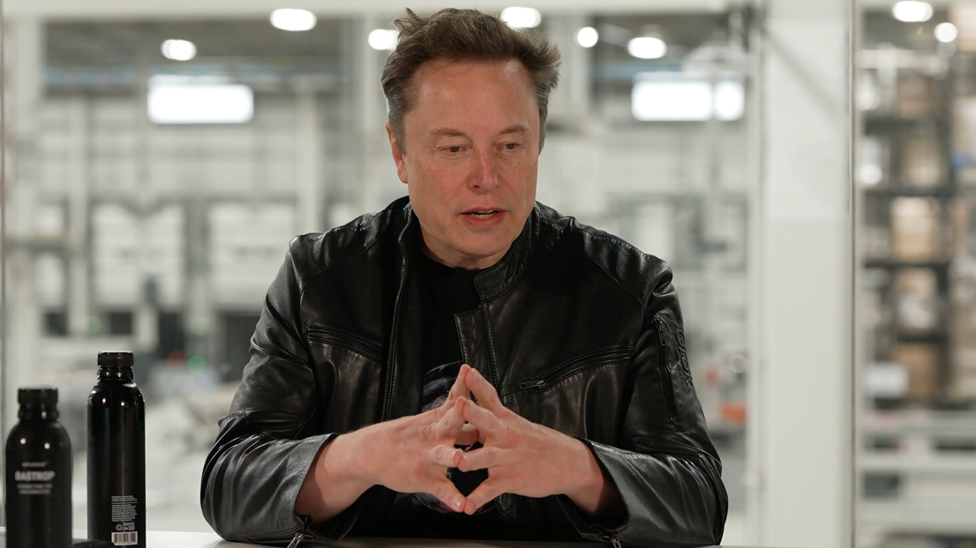 Image source, Courtesy/X
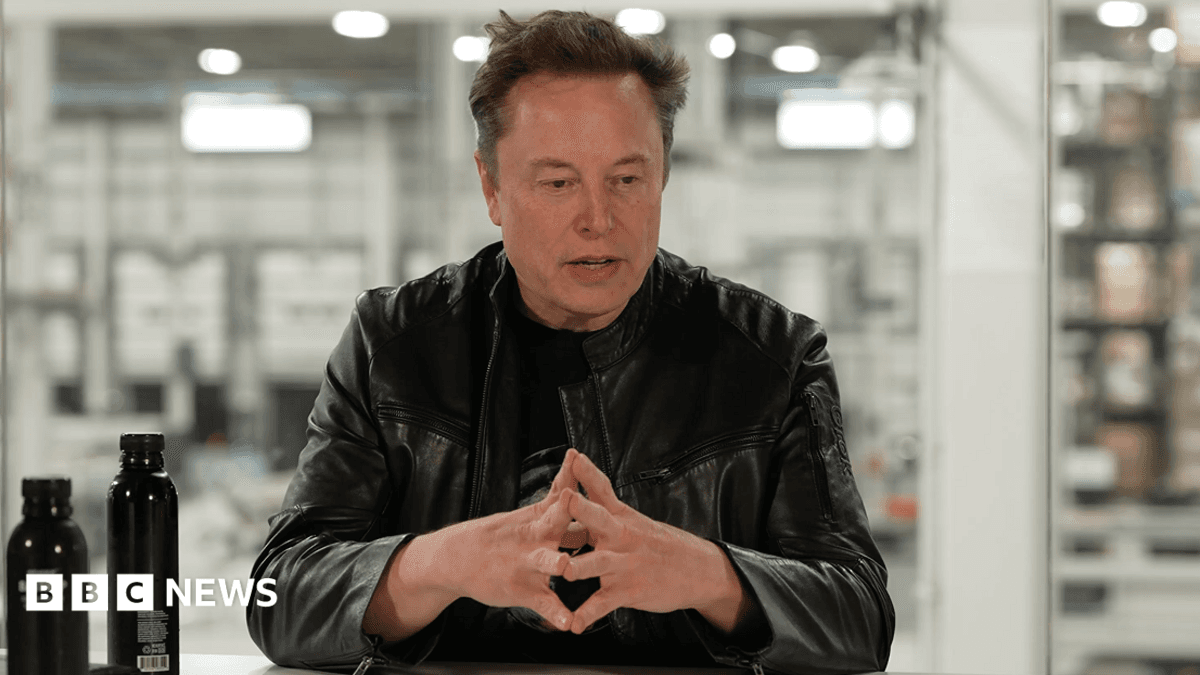
Elon Musk is the top executive of both Tesla and SpaceX