The key facts
- Manoa Duwai convinced the village in 2009 to create a protected zone, later expanded to 280×240 m
- The youth group planted 18,000 corals and 10,000 mangroves in 2023
- After water heated to 39°C, about 20% of the corals survived — heat-resistant 'super-corals'
Sharks return after decades of absence
Sharks have returned to the reef off the Fijian village of Naidiri for the first time in decades after the community placed its traditional fishing grounds under protection and planted thousands of corals. According to AFP, Manoa Duwai, who witnessed the return of the predators, admitted he was moved to tears. 'When everything started coming back — different species of fish, invertebrates, everything came back — I was the happiest person in the whole village,' he said.
The beginning: a protected zone since 2009
In 2009, Duwai convinced his fellow villagers to create a protected zone in the traditional fishing grounds on Fiji's Coral Coast. The impetus was alarming catches: according to him, he rarely managed to catch a fish the size of a palm. The initial zone covered 30 by 40 meters inside the reef. Results appeared quickly: large fish settled in the protected zone and began spreading into neighboring waters. Later, the village expanded the zone to 280 by 240 meters and created a nearby area called the 'refrigerator' — a temporarily closed fishing area for stock recovery.
Youth plant corals and mangroves
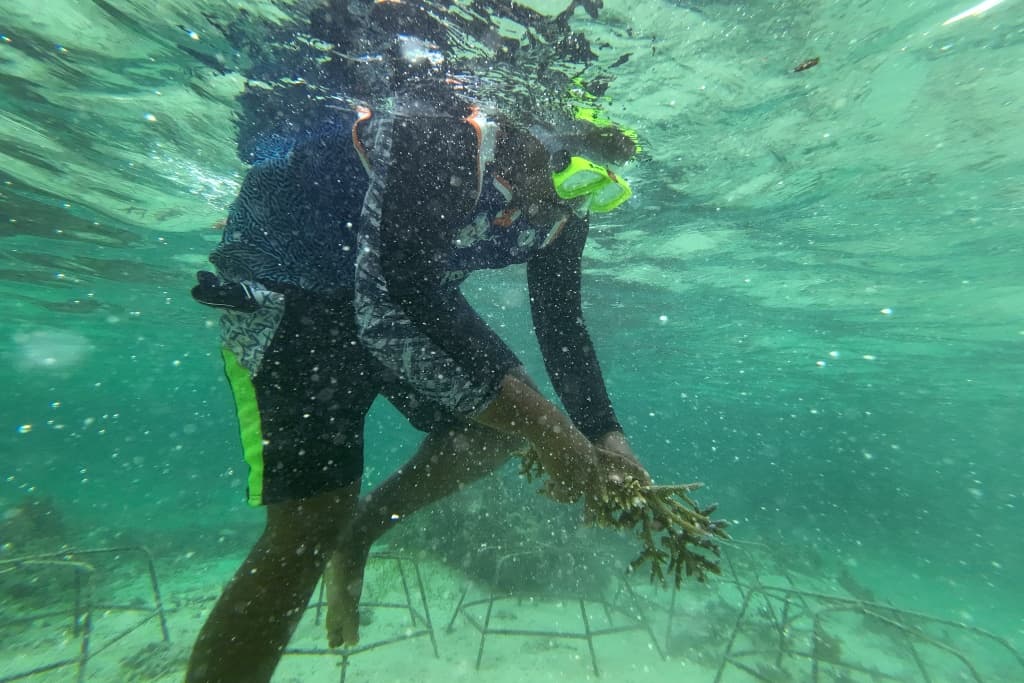
In 2011, the village, home to 147 people, created a youth group to manage the so-called 'tabu zone.' It is led by 21-year-old Joseva Kunagado. In 2023 alone, the group planted 18,000 corals and 10,000 mangroves. 'When we started, we were little children,' Kunagado said. 'We took barrels, cut them in half, tied a rope and pulled them. We had to walk for about twenty minutes to get corals, come back and plant them.' According to him, the changes have become noticeable, and tourists, researchers and university students now come to the village.
'Super-corals' survived heating to 39°C
According to Duwai, during a heat wave at the beginning of this year, the water temperature reached 39°C, and most of the thousands of planted corals bleached. At such temperatures, AFP notes, corals would normally have died, but according to Duwai, about 20% survived — they are called 'super-corals.' 'The only corals we have here now are those that survived those 38, 39 degrees,' he said. The protected zone is now home to hundreds of such heat-resistant corals, which can protect the village from the effects of further ocean warming.
Transplanting into deeper waters
Duwai said Naidiri is now transplanting the heat-resistant corals into deeper, cooler waters near the capital Suva to protect them from future heat waves. The village's experience has received international recognition: it is being studied by scientists and charitable organizations interested both in the model of marine ecosystem conservation and in the properties of heat-resistant corals.


