The key facts
- 93% of Gen Z and 95% of millennials use AI at work — Deloitte survey
- NITI Aayog: more than 60% of formal-sector jobs may be exposed to automation by 2030
- Employers value critical thinking and verification of AI results, says recruiter Dimple Khubchandani
AI as a work tool
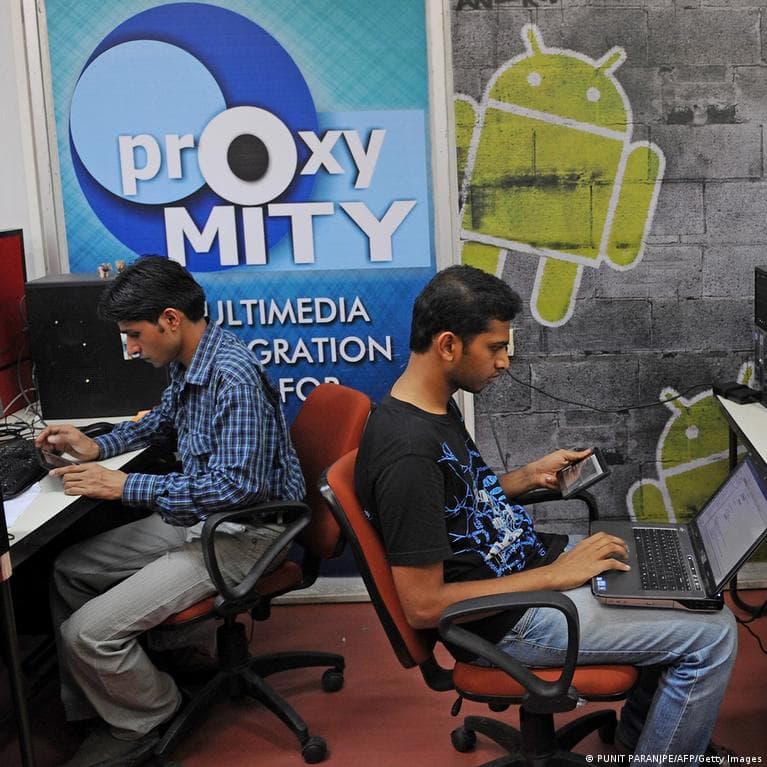
Young workers in India are increasingly using artificial intelligence to speed up routine tasks: searching for information, translating texts, analyzing business data, and sorting legal documents. At the same time, as Deutsche Welle notes, the technology can make mistakes, and over-reliance on it carries risks.
Experience of a journalist and a manager
28-year-old journalist Farah Kazmi from a news portal in New Delhi uses AI to search for Supreme Court orders, previous rulings, and cases of dog bites while preparing a story about stray animals. She says AI provides better contextual translation work than Google Translate, but cites an example where the model translated the name 'Suraj' as 'sun,' changing the meaning of the phrase. According to her, AI has not fundamentally changed journalism: verification and reporting remain with humans. Yajatt Misra, 28, a business strategy manager at Kanoria Chemicals and Industries, uses AI for data analysis, preparing drafts, and presentations, but emphasizes that the figures, logic, and conclusions of AI require verification, as the model may miss business context.
Lawyers: AI as a 'junior colleague'
30-year-old lawyer Rakshanda Deka uses AI to sort client documents by chronology and topic and to compile initial lists of important dates; some systems link information to the original documents. She compares AI to a 'conscientious junior colleague' when used sensibly, but warns: 'AI often produces false information confidently presented as fact, so everything must be double-checked.' Deka is concerned that some young lawyers are beginning to use AI as a replacement for their own thinking.
Scale of adoption
According to a Deloitte survey this year, 93% of Gen Z respondents and 95% of millennials use AI in their daily work. An Emeritus survey showed that 82% of respondents aged 15–28 use AI tools at least weekly for learning and skill development. Dimple Khubchandani, founder of the recruiting firm Synoverge Consultants, told DW that employers increasingly seek specialists capable of critical thinking and verifying AI work. According to her, a marketing agency that previously hired four junior copywriters can now hire one who uses AI for drafts. 'AI raises the baseline level of expectations for employees from day one,' she noted.
Changes in the labor market
Tata Consultancy Services reported in its annual report for 2025–26 on scaling its 'Human+AI' operating model and implementing AI in services and software development. Shrijay Sheth, co-founder of LegalWiz.in, stated that AI's impact on professions is 'already a reality': developers spend less time writing code from scratch and more time monitoring and refining AI results, while business skills are valued more than proficiency in a specific programming language. 'Both productivity growth and job losses are real,' he said.
Data and projections from official reports
A 2025 NITI Aayog report, citing data from the Center of Advanced Study in India, indicates that more than 60% of formal-sector jobs may be exposed to automation by 2030, especially in IT and business process services; it also notes a slowdown in hiring of junior engineers and the vulnerability of junior QA and first-level support positions. The World Bank, in its October India Development Update 2026, concluded that the long-term impact of AI on India's labor market remains uncertain: the country could benefit thanks to its technical workforce, IT sector, and digital infrastructure, but a broader distribution of gains will require stronger workforce skills and wider access to AI capabilities.


