The key facts
- Austrian Chancellor Christian Stocker threatened to veto the EU budget for 2028–2034 without specifying where the country's 'pain threshold' lies
- Stocker called the European Commission's demand for 2,500 additional civil service positions 'completely unjustified,' noting that Austria itself is cutting 2,600 administrative positions
- The European Commission proposed a budget of €1.985 trillion over seven years; Germany, the Netherlands, Finland, Sweden and Denmark are also opposed to the plan
Austrian Chancellor threatens veto over EU budget proposal
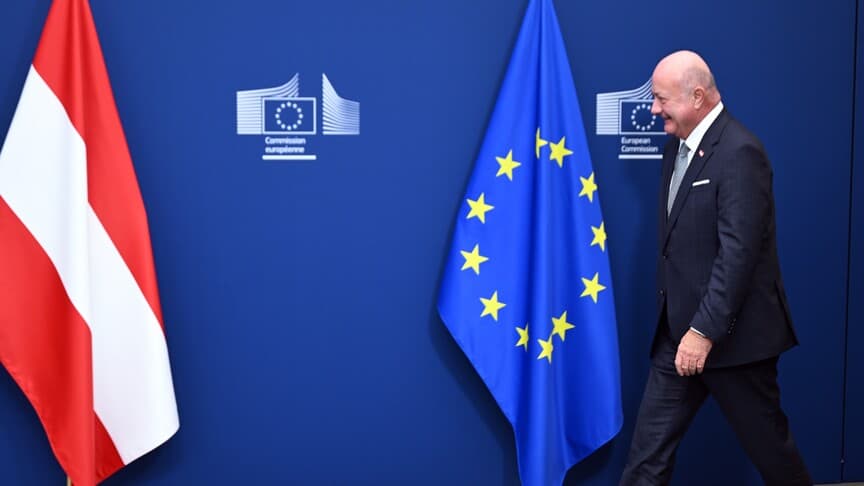
Austrian Chancellor Christian Stocker of the Austrian People's Party (ÖVP) on Monday threatened to veto the EU budget proposal. In an interview with the German newspaper Die Welt, he said that Austria has a 'pain threshold,' and if it is exceeded, the chancellor will not give his consent to the financial plan. Stocker did not specify exactly where this threshold lies, noting only that 'a compromise is possible only if the new proposal is realistic' (Anadolu).
Complaints about spending and bureaucracy
The chancellor was particularly critical of the European Commission's demand to create 2,500 additional civil service positions, which he called 'completely unjustified and detached from reality'. According to Stocker, Austria is cutting 2,600 administrative positions, and he expects the same from EU institutions: reducing bureaucracy through future staff reductions would fully suit him (Anadolu). He also stressed that Austria is currently under the EU's budget deficit procedure and is forced to consolidate its own finances, so it expects fiscal discipline and efficient use of resources from Brussels (Anadolu).
Conditions for approval and positions of other countries
The EU's multiannual financial framework for 2028–2034 must be approved unanimously by the member states, which gives individual capitals the ability to block the decision. The European Commission has proposed an overall budget of €1.985 trillion ($2.226 trillion) for the next seven years. Opposing this financial plan are not only Austria, but also Germany, the Netherlands, Finland, Sweden and Denmark (Anadolu).
Why it matters
Because of the unanimity principle, a veto threat from a single country can block the entire seven-year EU budget, and six states, including Austria, are already opposed to the plan. For citizens and the budgets of member states, this directly determines the volume of funding for 2028–2034. In practice, negotiators will have to take into account the spending and staffing reduction demands put forward by Vienna before the plan can be agreed.