The key facts
- Five diplomats who worked in Russia after 2022 told the BBC about constant surveillance and isolation
- Former US Ambassador Lynne Tracy called the Moscow posting the hardest of her 30-year career
- Sanctions created everyday problems: embassies faced shortages of cash rubles and staff
Surveillance and pressure on diplomats
The BBC spoke with five diplomats who worked in Russia after the start of the full-scale invasion of Ukraine in 2022. They describe conditions comparable to the Cold War: physical surveillance, listening devices, 'spy dust' for tracking movements. Lynne Tracy, who headed the US embassy in Moscow from 2023 to 2025, called this posting probably the hardest of her 30-year career — even compared with Peshawar, where she survived an armed attack in 2008. According to her, in Moscow the main difficulty was the high degree of uncertainty caused by constant counterintelligence pressure.
Recruitment and intimidation
One former European diplomat said that before leaving for Moscow he was warned about listening devices and cameras 'in every room of the house'. Another ex-ambassador said he was forced to dismiss two Russian employees after the FSB tried to recruit them, demanding they report on what was happening in the embassy. Instead, they reported it to the embassy and were dismissed — otherwise, according to the diplomat, they faced possible criminal liability. Russian figures in science and culture, according to the diplomats, are intimidated to avoid contact with Western representatives: guests of one ambassador were 'escorted' to the embassy door by the FSB.
Incident at the British ambassador's reception
In June 2026, guests at a reception at the British ambassador's residence in Moscow held to mark the King's birthday said they were followed by pro-government activists and state media journalists, and then questioned by police. One guest said that since then he has declined several invitations to events at Western embassies out of fear. According to one former ambassador, 'constant paranoia' forced a number of employees to resign; even after leaving Russia, he himself kept looking over his shoulder for months.
Working amid severed ties
Former French Ambassador Pierre Levy recalled that immediately after the invasion, the recall of ambassadors was discussed in Europe, but he convinced Paris that this would be a mistake: the worse the relations, the more important the diplomats. After 2022, hundreds of Russian diplomats were expelled from Europe and the US, and Moscow responded in kind, leaving embassies without staff. A ban on hiring foreigners, in place since 2021, complicated the work: even a burst pipe became a problem. Sanctions added difficulties: after banks were cut off from Swift and Visa and Mastercard left, one former ambassador recalled that the embassy was left without cash and could not pay employees until another diplomat, who was selling his car before being expelled, brought rubles in a suitcase.
Isolation and the importance of diplomacy
Russian authorities openly accuse diplomats of 'unfriendly countries' of espionage. According to journalist Alexei Venediktov, Moscow has in fact forbidden most officials from contact with Western embassies, which, in his view, only worsens relations: 'You are misunderstood precisely because of your own actions — because ambassadors cannot do their job.' One ex-ambassador notes that today Moscow has almost no contacts with many Western governments — 'no phone calls, no meetings at ministerial level' — which makes diplomats even more important. 'Generals prove what they are capable of in war. The same is true for diplomats.'
Outcomes of the mission
Tracy left Moscow in 2025, believing she had accomplished the main task — the US embassy had held firm. She is also proud of her work maintaining ties between Americans and ordinary Russians: 'At some point, relations between governments will get a chance to improve — and people-to-people ties will help accelerate that improvement.' Russian diplomats in the West, for their part, also complain of unfair treatment, but according to the BBC's interlocutors, the scale and tactics of Moscow's security services are significantly broader.
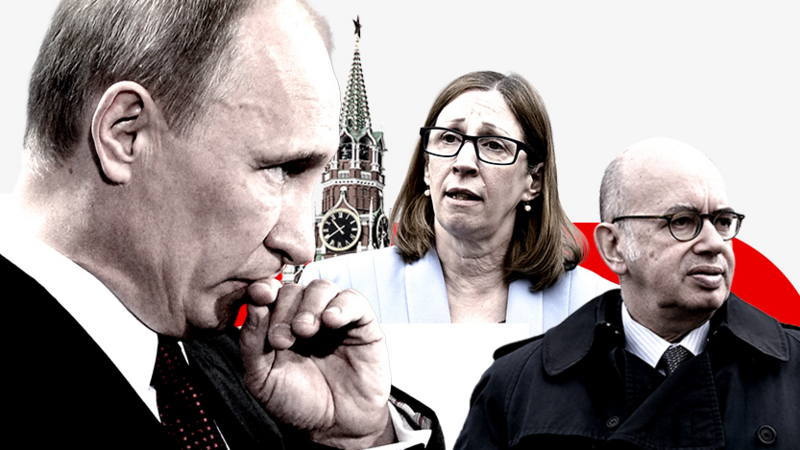 Image source, BBC/Getty Images
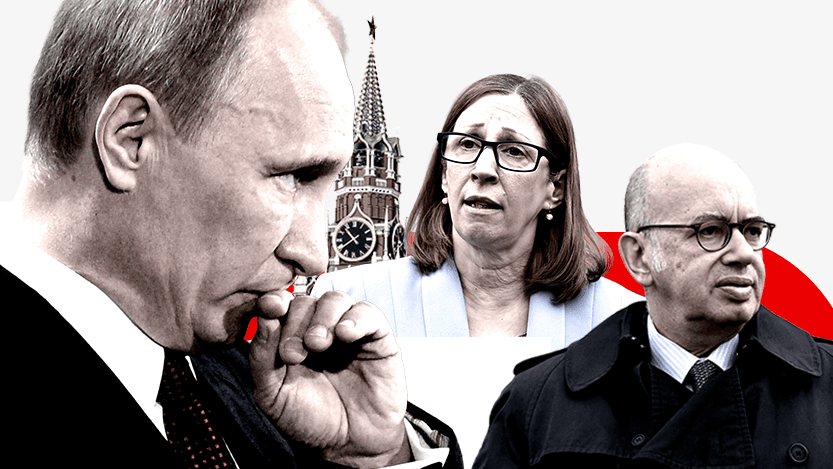
Ex-US and French ambassadors Lynne Tracy and Pierre Lévy were among those to speak to the BBC of their time in Moscow
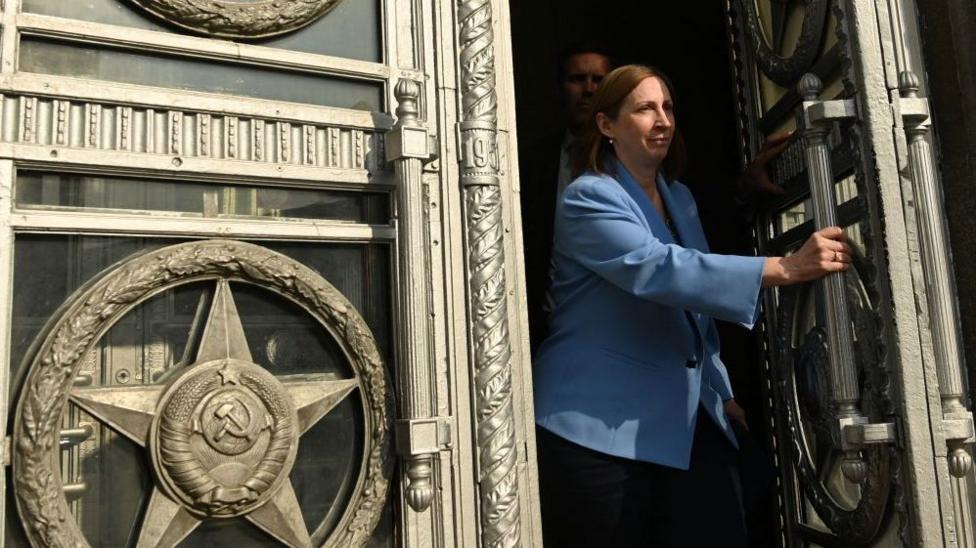 Image source, AFP via Getty Images
Tracy pictured leaving Russia's Foreign Ministry after being summoned by Moscow in 2023
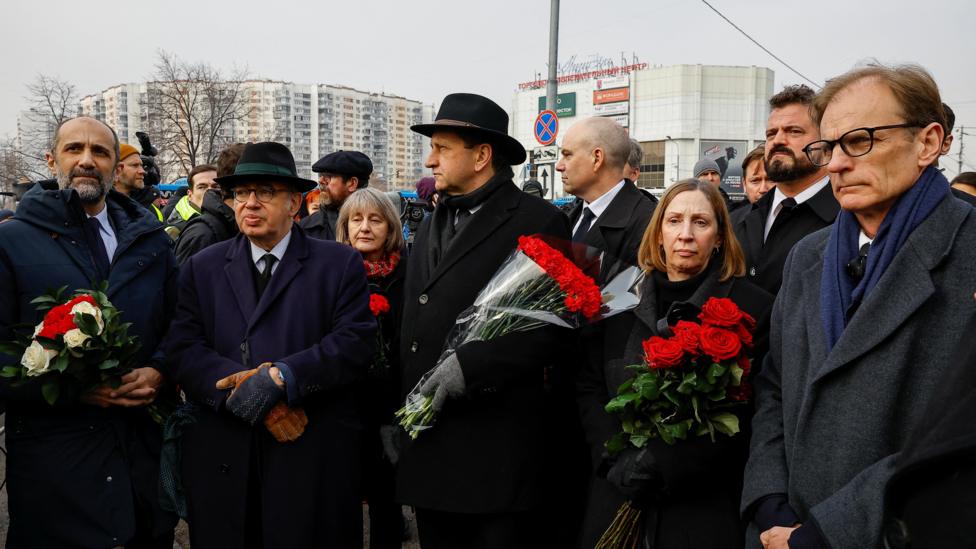 Image source, Reuters
Pierre Lévy (second from the left) and Lynne Tracy (second from the right) pictured at the funeral service for opposition leader Alexei Navalny in March 2024
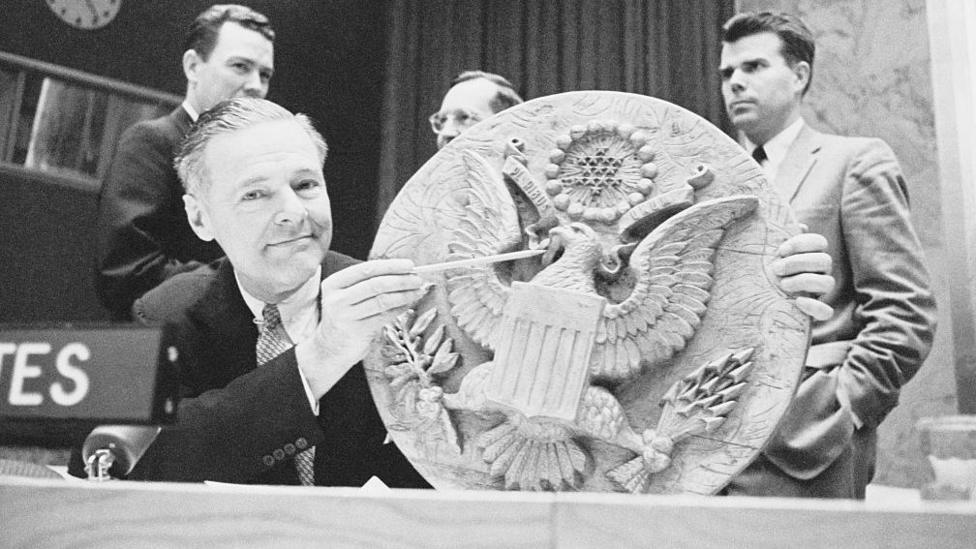 Image source, Getty Images
A wooden replica of the Great Seal of the US was given to the American ambassador to Russia as a gift in 1945 - it was later found to contain a listening device