The key facts
- Trump on Truth Social called on companies to pay 'dividends' to communities and generate their own electricity, selling surplus power to the grid
- According to Gallup, 71% of Americans oppose data center construction near their homes over fears of rising utility rates; in 2026, at least 47 major projects have been delayed
- The practice of 'Community Benefits Agreements' (CBA) is already in use: Meta in El Paso, the Lancaster AI Hub in Pennsylvania, and Digital Realty in Kansas
Trump's Call to Data Center Operators
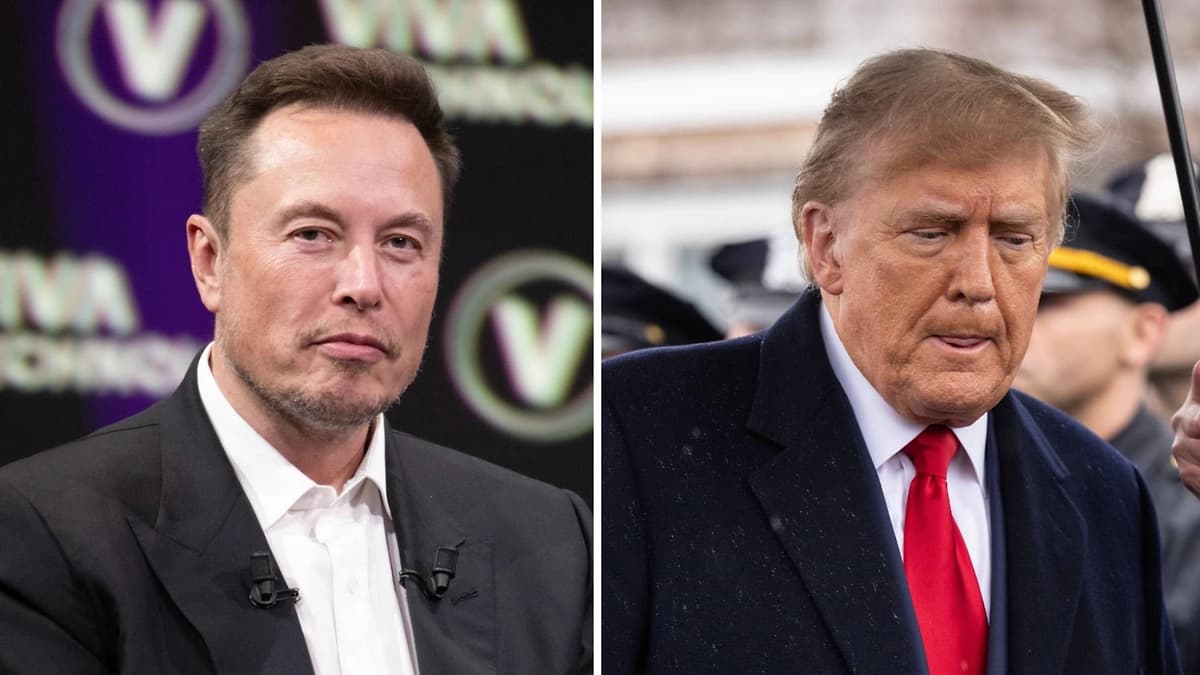
US President Donald Trump on Wednesday called on operators of large AI data centers to enter into financial agreements with local communities and pay them 'dividends' in order to reduce public resistance driven by rising electricity prices. 'If companies want to make their data centers popular, pay the community and/or individual people in the community'
Context: Resistance and the Scale of the Industry
The statement came amid escalating disputes over the energy consumption of AI infrastructure ahead of the 2026 midterm elections. According to Gallup, 71% of Americans oppose local projects over fears that they will lead to higher utility rates. According to the US Department of Commerce, there are more than 5,000 data centers in the country, and their number is projected to grow by roughly 9% per year through 2030. According to the financial website Investing Live, in 2026 alone at least 47 large-scale projects have been delayed, and more than 1,000 local communities have officially proposed or are seeking moratoriums, zoning restrictions, or strict environmental regulations. Meanwhile, according to Investing Live analysts, US spending on AI infrastructure in 2025–2032 will exceed $10 trillion (about €8.9 trillion) — roughly 3.6% of GDP annually. The new initiative builds on the voluntary Ratepayer Protection Pledge announced by Trump in March, which called on technology companies to cover all costs of electricity generation and transmission.
Examples of Agreements in the US
The practice of 'Community Benefits Agreements' (CBA) is already in use, although, as euronews notes, it does not always change public opinion. This summer, Meta reached an agreement with Texas Governor Greg Abbott on a contentious project in El Paso, financed by BlackRock: the investment, planned in 2023 at $1.5 billion, grew into a $14 billion mega-campus, drawing sharp criticism. In June, the city council voted 5–3 against terminating the deal. The governor negotiated restrictive conditions: Meta must pay for its own power grid infrastructure, reuse water, and forgo 'outdated taxpayer-funded incentives.' Meta commented on the agreement but not on its specific parameters; critics, including Texas Democratic gubernatorial candidate Gina Hinojosa, argue that the deal contains no legally binding conditions. Meta expects to complete construction in two years. In September, the Lancaster (Pennsylvania) city council signed the first fully formalized CBA in the US — for the $6–10 billion Lancaster AI Hub cloud computing and AI complex. It includes a $10 million economic development fund, another $10 million for sustainability and clean energy, a $250,000 planning fund, and a $10 million line of credit to protect the city in case of failure to meet environmental and financial obligations. In October, developer Digital Realty received preliminary approval for a 280-acre data center campus project in De Soto (Kansas), bypassing some local rules and offering residents $1,000 each in utility and property tax credits over 10 years as part of an overall $20 million package.
European Experience with 'Money for Communities'
In Europe, 'cash for communities' approaches are spreading. In Ireland, home to one of the largest data center clusters in Europe, OpenAI stated in October that future data centers could be accompanied by cash payments to local communities to ease citizens' concerns. The country already has strict requirements, including an obligation to supply electricity to the shared grid. In Germany, there are strict reciprocity norms regarding energy consumption: in major hubs such as Dietzenbach, where Google is building a multi-billion-dollar campus, developers must first conclude energy infrastructure agreements in order to return excess heat from data centers to the grid and reduce utility bills for local residents.