The key facts
- The EU will present an Arctic strategy to be unveiled by European Commission President Ursula von der Leyen
- A 'sovereign' submarine cable from Greenland to the EU is planned under the Pan-Arctic project involving Canada, Japan and South Korea
- The US is mentioned only a few times in the 20-page document, whereas Canada is mentioned almost two dozen times
The EU's New Arctic Strategy
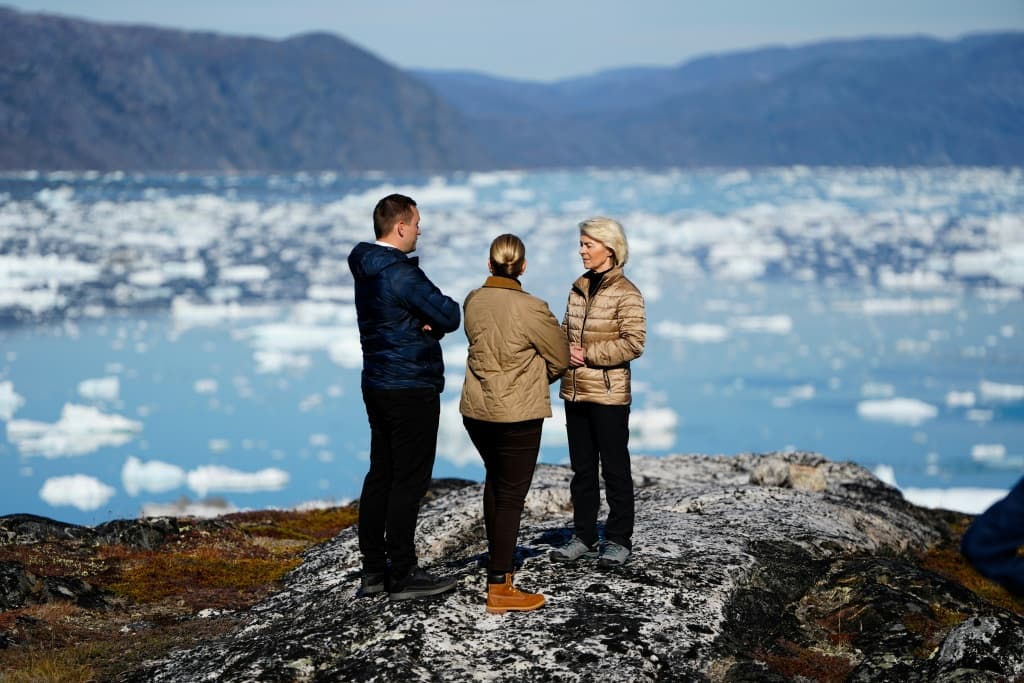
The European Union will present a plan on Tuesday to strengthen its presence in the Arctic amid growing pressure from Russia and the US in the strategically important region. This is reported by AFP, citing a draft document titled the 'Arctic strategy'. The strategy will be presented by European Commission President Ursula von der Leyen.
Goals and Rationale
'The new reality in the Arctic requires Europe to be a strong and reliable partner. This is exactly what we aim to achieve with our new strategy,' said European Commissioner for International Partnerships Jozef Síkela. According to him, the document responds to the region's most pressing challenges — from accelerating climate change to growing tensions in security and geopolitics. Competition in the Arctic is intensifying as sea ice melts: Russia, China and the US are stepping up their activity, competing for natural resources and new maritime routes. The EU has direct interests in the region — three of the bloc's 27 countries (Denmark, Finland and Sweden) are Arctic states.
The US on the Document's Periphery
Repeated threats by President Donald Trump to bring Greenland — a vast autonomous Danish territory — under US control have alarmed Europe. Although Trump's tone has softened since the beginning of the year, leading to the signing of a security agreement with Greenland and Denmark, many in Europe remain wary. According to AFP, the US is mentioned only a few times in the 20-page document — against nearly two dozen mentions of Canada. The strategy provides for cooperation with 'like-minded' partners outside the EU — Canada, Britain and Norway — and regular summits of 'Northern Neighbourhood' partners. The US is listed among possible participants but barely appears in the rest of the document. A number of initiatives, judging by the draft, are aimed at reducing dependence on Washington.
Cables, Satellites and Icebreakers
Brussels plans to lay a 'sovereign and secure' submarine cable connecting Greenland with mainland EU territory as part of the broader Pan-Arctic project, which will also link Canada, Japan and South Korea. The EU is also working to provide satellite communications in the Arctic through the IRIS² project, intended to compete with Elon Musk's Starlink. Separate attention is given to countering Russia: the document mentions hybrid threats such as 'drone incursions' and sabotage against submarine cables. The strategy provides for improved data sharing to monitor the so-called 'shadow fleet' of Russian oil tankers circumventing sanctions. In addition, Brussels intends to develop options for the joint procurement, pooling and shared use of polar vessels with allies to strengthen Europe's icebreaker fleet. Investments in renewable energy and critical raw materials projects are also envisaged, among a number of other plans.