The key facts
- The expedition to Nikumaroro Island resumed work after a three-day delay caused by a storm linked to El Niño
- The 'Taraia object' is being investigated — possible wreckage of Earhart's plane, visible in imagery since 1938
- The Air Force Museum of New Zealand has published previously unknown 1938 aerial photographs of the island
Search resumes after storm
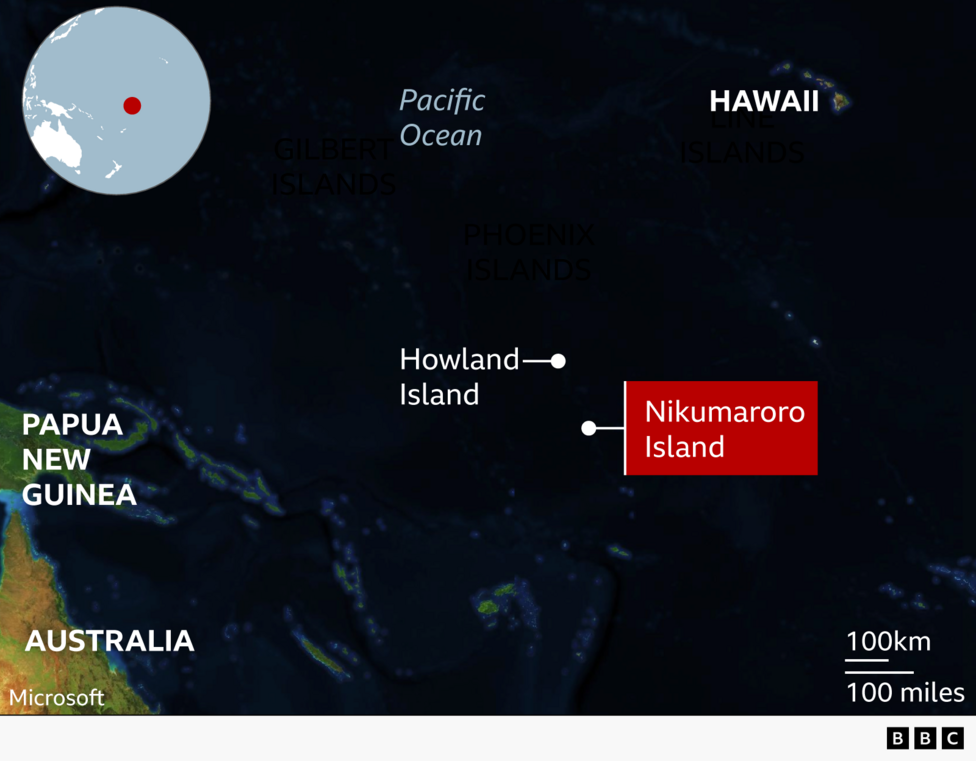
The search for possible wreckage of Amelia Earhart's plane on the uninhabited atoll of Nikumaroro, part of Kiribati, has resumed after severe weather forced researchers to suspend work for several days. The team arrived on the island last week and began an underwater survey of the area of interest, but heavy seas and wind forced them to remain aboard the vessel Marin Mainiku for three days — until Sunday, when the weather cleared. According to Purdue University, wind gusts reached 27 knots (about 31 mph), posing a risk for the transport boat passing through the narrow channel in the reef cut by the British in 1963 — the last time the island was inhabited.
The Taraia object and the work plan
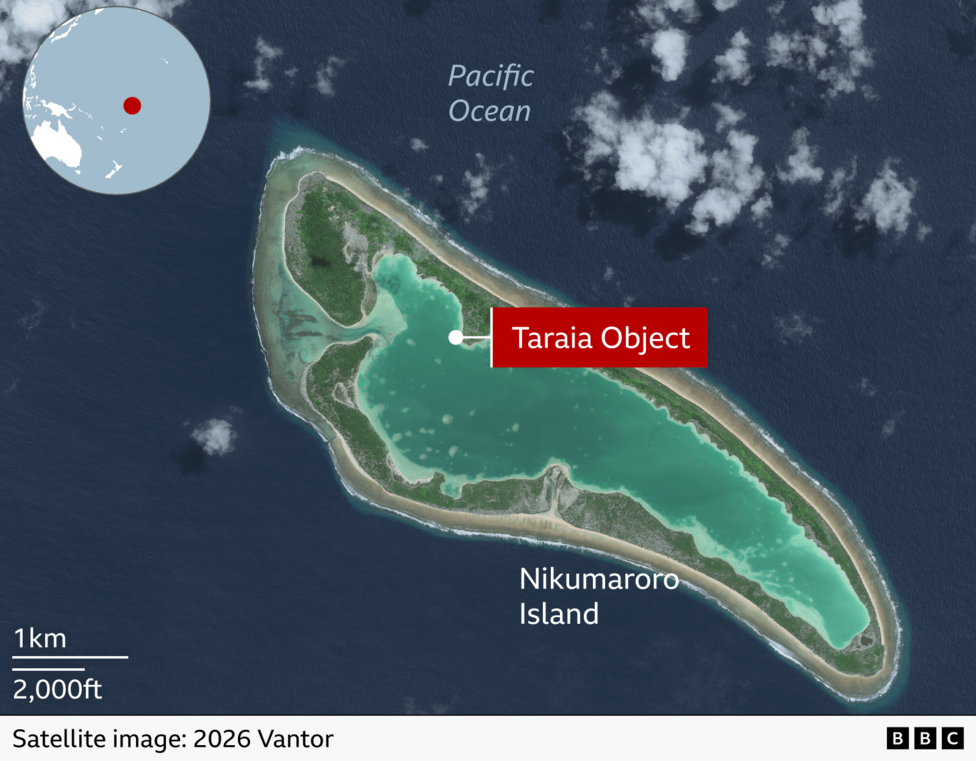
The expedition, led by Purdue University and the US-based Archaeological Legacy Institute (ALI), is investigating the so-called Taraia object — a spot in the atoll's lagoon that, according to Purdue, has been visible in aerial photographs since 1938. In the images it may look like the remains of a small aircraft in shallow water, although other researchers are skeptical of this version: some skeptics believe it is simply a tree that fell from the atoll into the lagoon. Due to the delay, the team has extended the expedition's timeline and has not yet reported whether any encouraging evidence has been found. Technology specialist Sirisha Bandla, an expedition member, said in a video message: 'We are finally getting off the ship and will be able to land on Nikumaroro.' The second of three phases of work, in which underwater objects will be probed to determine depth and seafloor sediments dredged, has not yet begun. 'We are working to get everything done today if we can. The team is very excited,' Bandla added. ALI director Rick Pettigrew said the team is aware of worldwide interest in the expedition and will share results 'as soon as we can.' Before the weather worsened, Purdue had expected the Taraia object to be identified within a few days.
Historical images and the castaway theory
Interest in the expedition prompted the Air Force Museum of New Zealand to publish, on Friday, previously unpublished reconnaissance images of Nikumaroro taken in 1938 from a seaplane. The Taraia object is not clearly visible on the black-and-white slides, but they captured the beached hull of the British merchant ship SS Norwich City, which ran aground during a storm in 1929; 11 people died at the time. Purdue noted that this incident demonstrates the island's danger, but may also indirectly support the researchers' hypothesis: according to the university, a 15-year-old teenager in Florida reported that shortly after the aviator's disappearance he heard her voice on his father's shortwave radio, repeating 'New York City.' Proponents of the castaway theory believe this could have been a distorted message from Earhart about her location near Norwich City.
Context of the disappearance and previous attempts
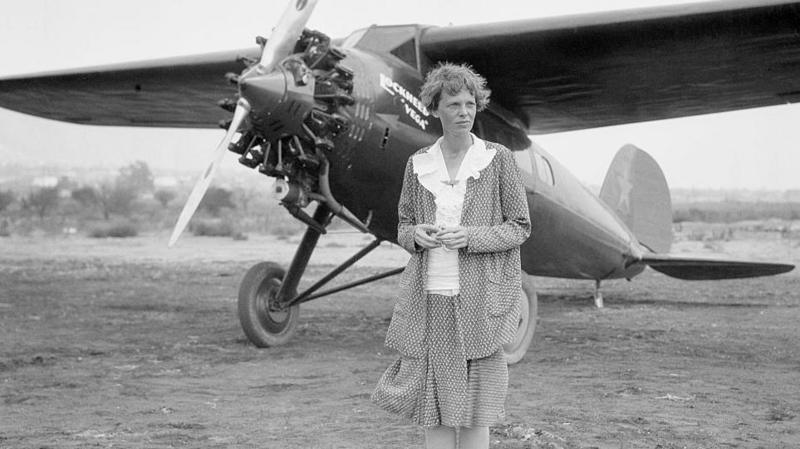
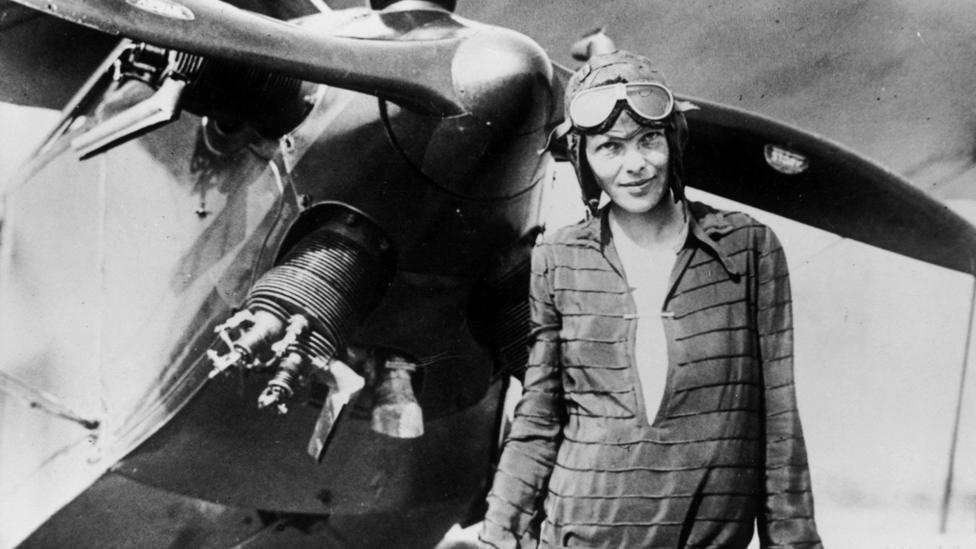
Amelia Earhart disappeared in 1937 while attempting to fly around the world. After completing a successful flight from California across South America, Africa and Asia in her twin-engine Lockheed Electra, she arrived in Lae (Papua New Guinea) on July 2, 1937. From there she and navigator Fred Noonan planned to fly to Hawaii and then back to California, but the plane vanished without a trace during an attempt to reach the uninhabited coral island of Howland to refuel. One theory holds that Earhart mistakenly navigated toward Nikumaroro, where she ditched the plane and died as a castaway. Previous attempts to find the Electra were unsuccessful: in 2024, a group of researchers reported that they may have found the plane using sonar at a depth of about 4,877 m (16,000 ft) near Howland Island, but the find later turned out to be a rock formation; a 2019 expedition that examined a photograph supposedly showing landing gear sticking out of the water near Nikumaroro also found nothing.
 Image source, Purdue University
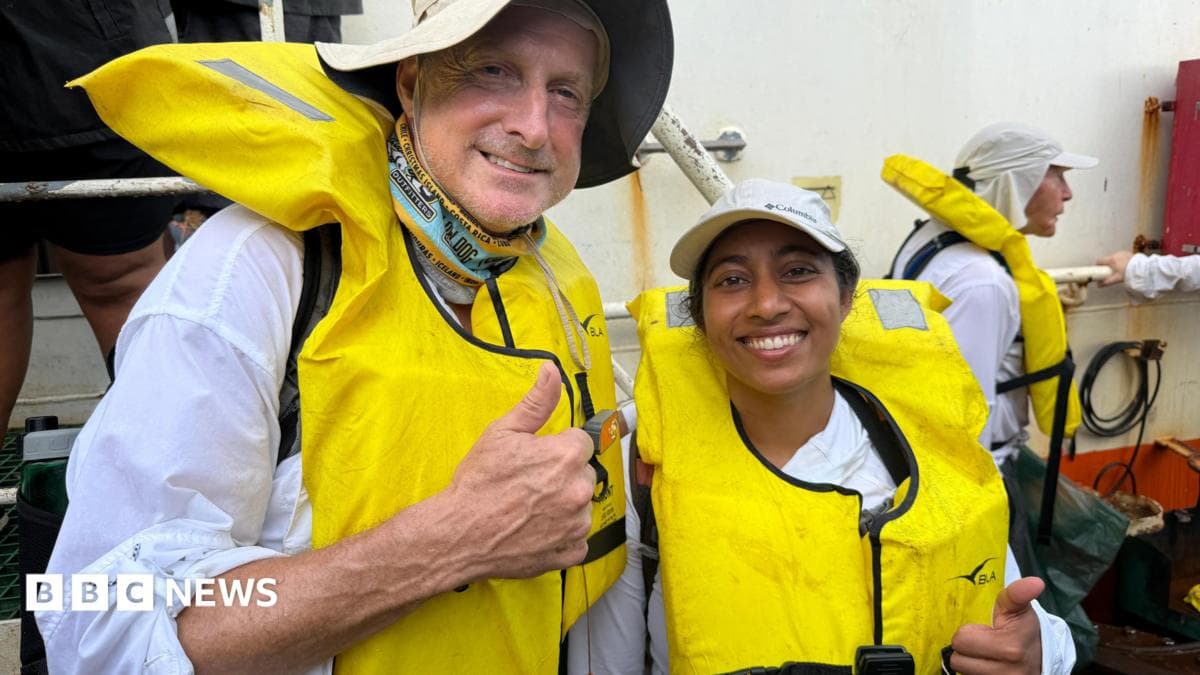
Sirisha Bandla (right), pictured with expedition lead Steve Schultz, said the crew was "really excited"
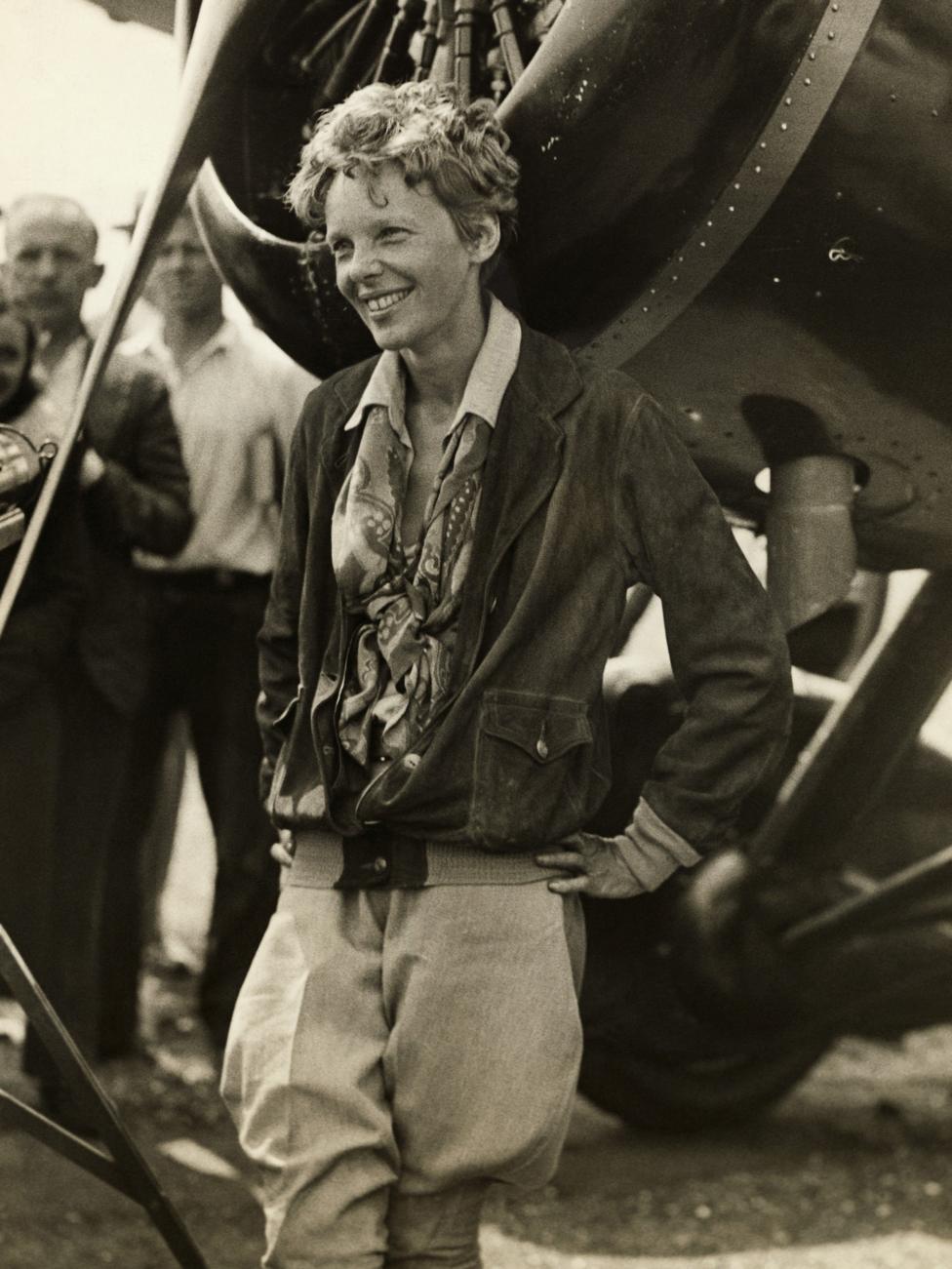 Image source, Getty Images
Amelia Earhart disappeared over the Pacific Ocean while piloting her Electra plane in 1937
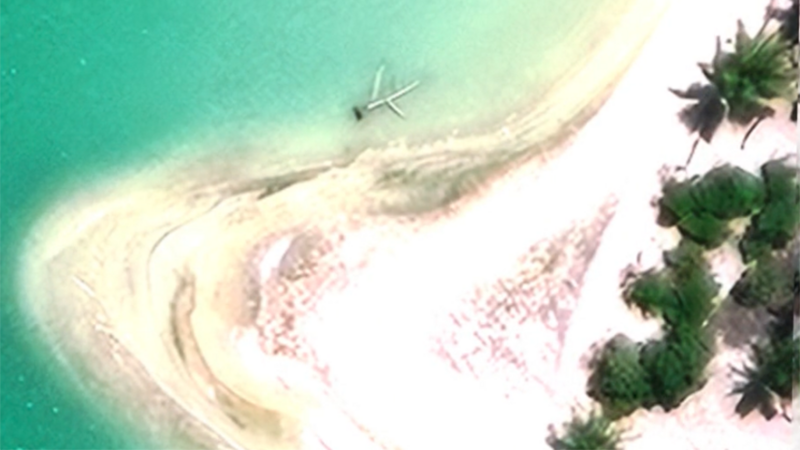 Image source, Archaeological Legacy Institute
A satellite image of the so-called Taraia Object in a lagoon on Nikumaroro
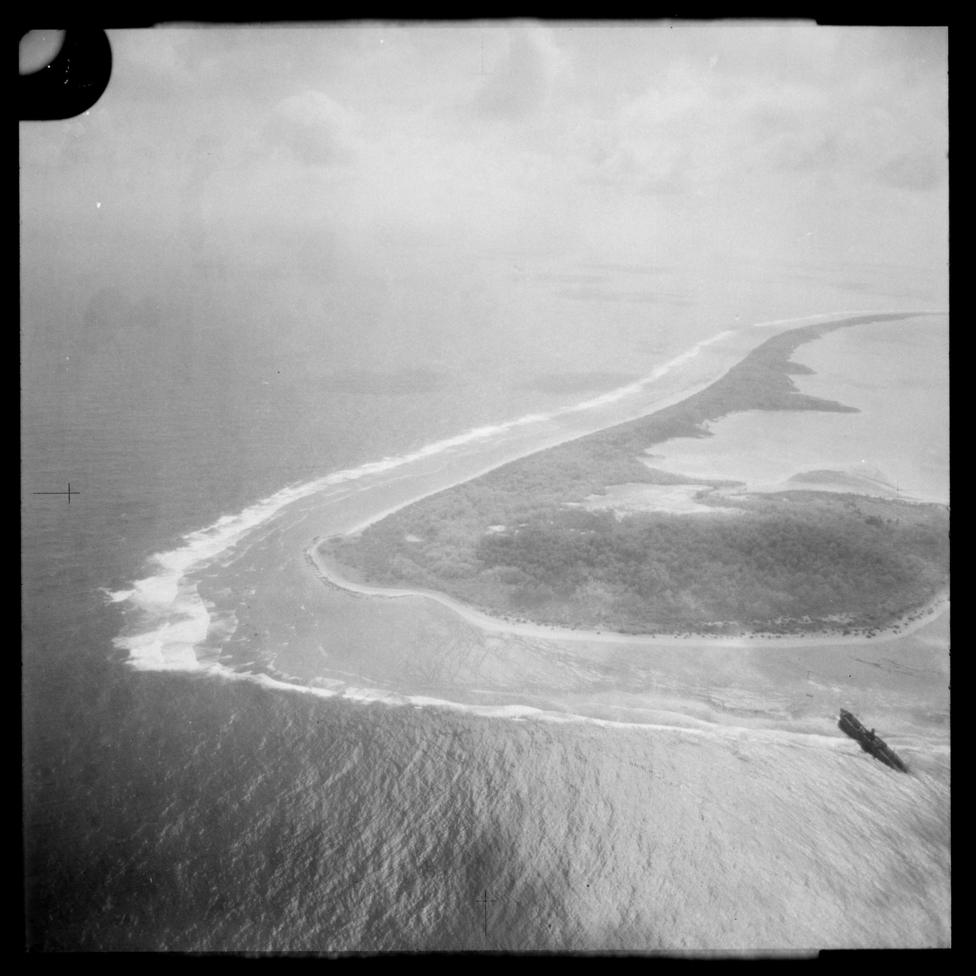 Image source, RNZAF
Images from 1938 released by the Air Force Museum of New Zealand this week show Nikumaroro - then Gardner Island - with the SS Norwich City wreck in the bottom right corner