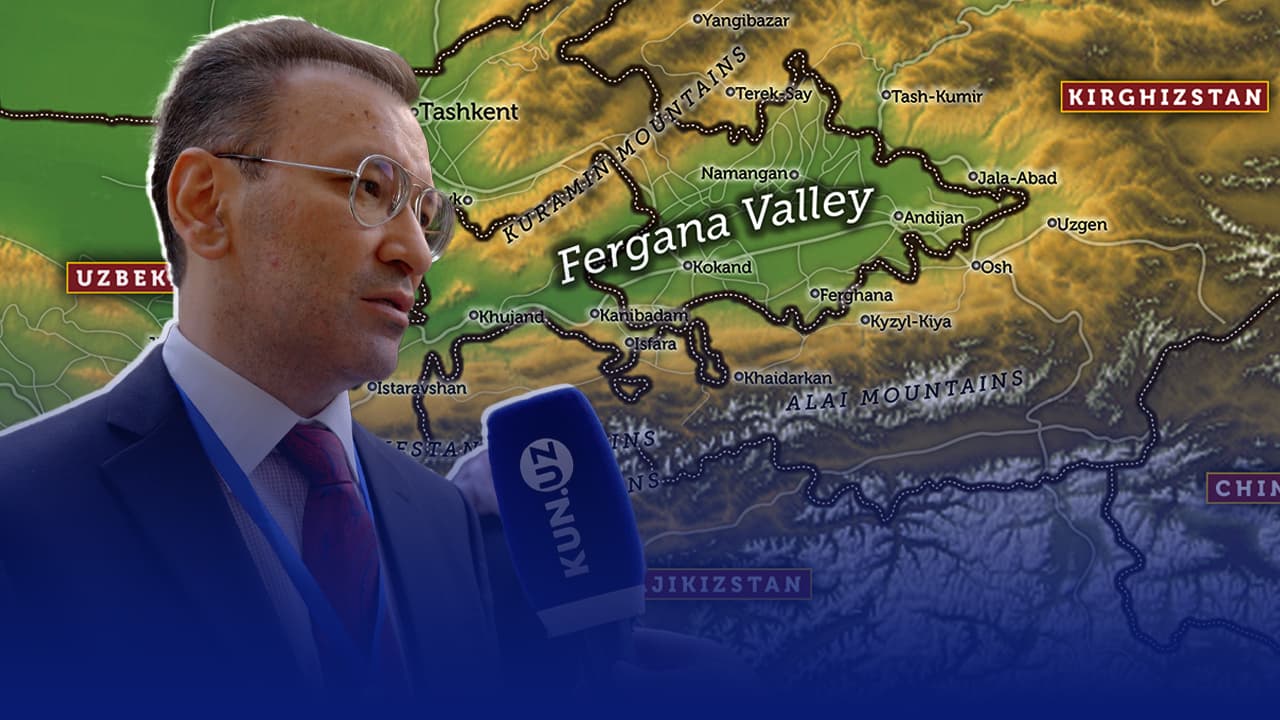
The key facts
- Uzbekistan's trade turnover with Central Asia over 10 years grew from $2.5 to almost $8.5 billion; the region's mutual trade turnover is almost $11 billion.
- The Fergana Valley, spanning Uzbekistan, Kyrgyzstan and Tajikistan, has about 18 million residents.
- Vahobov proposes combining the specialization of regions into unified production chains, including linking Sughd's metallurgy with Andijan's machine building.
Growth of regional trade
Over the past 10 years, Uzbekistan's trade turnover with Central Asian countries grew from $2.5 billion to almost $8.5 billion. The mutual trade turnover of the region's countries reached almost $11 billion. According to Javlon Vahobov, these figures point to opportunities for deepening economic cooperation, in particular strengthening ties between the seven regions of the Fergana Valley, producing value-added products and forming interconnected production chains.
The valley as a market and production base
About 18 million people live on the part of the Fergana Valley covering the territories of Uzbekistan, Kyrgyzstan and Tajikistan. Vahobov notes that this is a large market that also has significant potential for developing industrial cooperation, services and trade ties. In his view, viewing these territories only as a consumer market is insufficient: the main goal is to combine the goods and services produced in the regions into a single economic chain, and the economic specialization of the regions creates a basis for mutually beneficial cooperation.
Specialization of the regions
The Andijan Region stands out for its potential in machine building, manufacturing and heavy industry. The construction of the China–Kyrgyzstan–Uzbekistan railway may raise the region's role in regional transport links; in the future, Andijan has a chance to become a major transport hub. The Namangan Region specializes in light industry and textiles, while in the Fergana Region the chemical and petrochemical industries and entrepreneurship occupy an important place. Linking these industries with the production capabilities of neighboring territories could expand regional cooperation, with the specialization of each region becoming part of a common production cycle.
The role of the Sughd Region
The Sughd Region of Tajikistan, one of the country's industrially developed regions, stands out for its potential in metallurgy and other manufacturing industries. According to Vahobov, Sughd's industrial capabilities can be tied to the production needs of Uzbekistan's regions: given the demand for metallurgical products, there are prospects for cooperation between Sughd's enterprises and Andijan's machine-building industry. Such cooperation could go beyond supplying raw materials and finished products and also establish interconnected production processes.