The key facts
- Half of French high schools started the school year without at least one teacher; 7.5% of teaching hours were not delivered
- Police are investigating 36 complaints of violence, including the case of a 15-year-old who lost a hand to a stun grenade
- Only a quarter of students from low-income families enter higher education, compared with almost two-thirds from privileged backgrounds
Scale of the protests
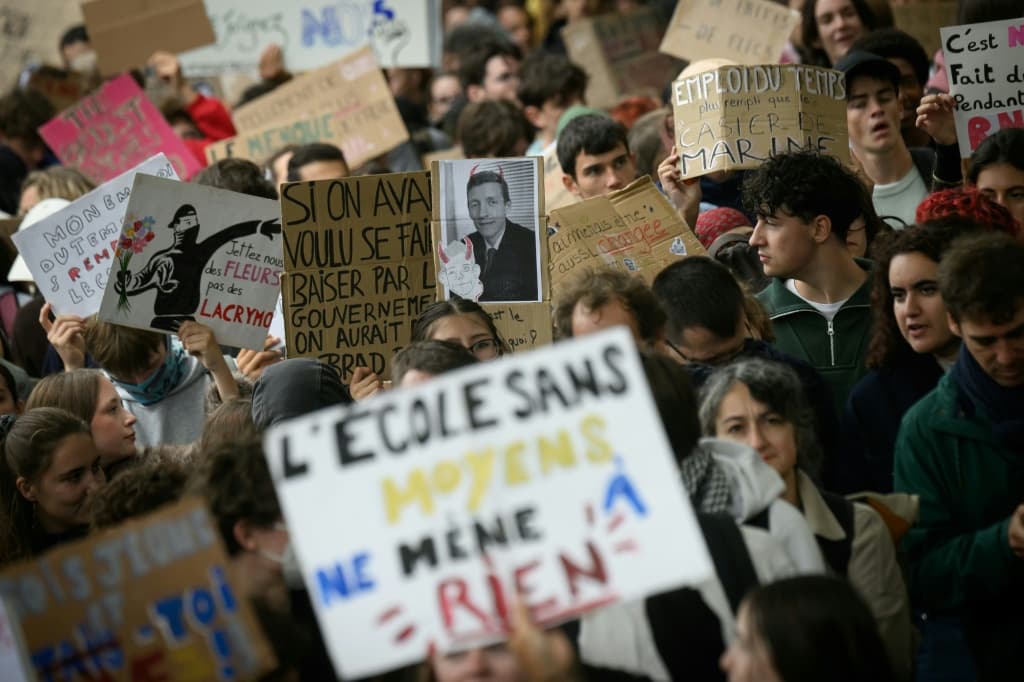
In recent weeks, students have blockaded the entrances of hundreds of lycées — schools for teenagers aged 15–18. Police units were deployed against the protesters, and clashes sometimes occurred. According to the Ministry of Justice, about 7,950 people, mostly minors, were detained. The Interior Ministry reports approximately 200 injured school students and nearly 900 injured police officers.
Teacher shortages and overcrowded classes
In France, about two million students attend roughly 3,700 lycées. According to the Ministry of Education, class sizes in secondary school (excluding vocational education) reached a record in 2025 — an average of 30.2 students. According to a survey by the Snes-FSU union covering more than 1,000 schools, half of the lycées began the school year in September without at least one teacher. In the 2024–2025 school year, 7.5% of teaching hours in public secondary schools were not delivered due to absent teachers not being replaced — that is 15.4 million hours. The government promised to send 3,000 substitute teachers to the 114 worst-affected lycées; as of Wednesday, 2,000 had been allocated.
Funding and salaries
France spends 24% more per upper-secondary student than the OECD average, but, according to a government report on the draft budget, almost a third of the education ministry's 2027 budget will go to pensions. According to the OECD, upper-secondary teachers last year earned on average about $69,000 a year including bonuses — several thousand less than colleagues in England and the United States and significantly less than German teachers of the same level (more than $114,000). Only 4% of French teachers believe the profession is valued by society, compared with an average of 22% across 38 OECD countries. At the same time, due to frequent holidays, French teachers teach 162 days a year versus 225 in Germany. A 2018 reform that expanded the choice of specialisations led, according to teachers, to a longer school day.
Inequality
According to a government study in 2023, only a quarter of students from low-income families enter higher education, compared with almost two-thirds from privileged backgrounds. Protesters speak of inequality, especially between Paris and working-class suburbs, in particular the Seine-Saint-Denis department, where the poverty rate is roughly twice the national average. In 2018, a researcher told the Senate that the best-funded collège in Seine-Saint-Denis receives less money than the worst one in Paris. In 2024, a viral TikTok video showed students and teachers of one lycée complaining about leaking ceilings and a shortage of chairs; a literature teacher at the Blaise Cendrars lycée in Sevran said she was not replaced for six months before important exams while on maternity leave. Île-de-France regional head Valérie Pécresse stated that €6.6 billion ($7.4 billion) has been spent on school repairs since 2015.
Investigations against the police
The police have opened internal investigations into 36 complaints of violence against demonstrators since the movement began last month, including four classified as 'debilitating injuries'. Among them is the case of a 15-year-old teenager who lost a hand last week in the explosion of a stun grenade.