The key facts
- Philippe Diallo officially announced his candidacy in the FIFA presidential election on March 18, 2027 in Rabat
- The European associations on the UEFA Executive Committee unanimously supported his candidacy
- Diallo criticized FIFA's decisions: the 'peace prize', the distribution of TV rights revenue in the USA, the red card shown to Balogun, and private investors
Diallo challenges Infantino
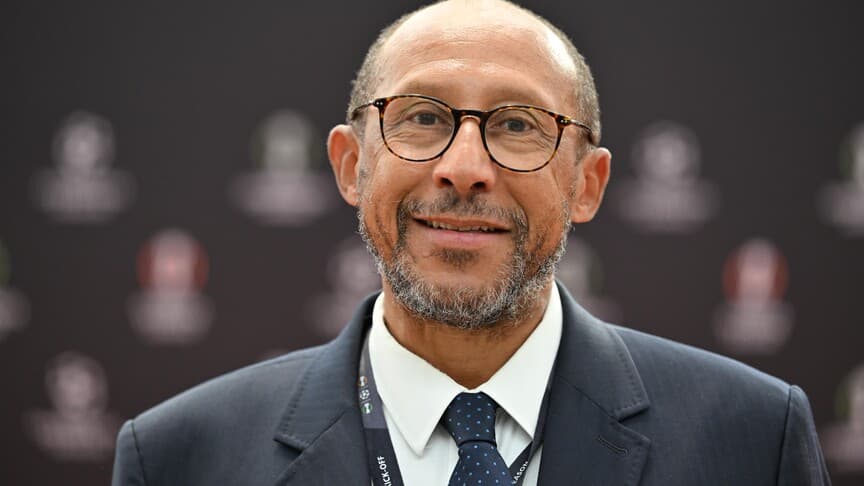
President of the French Football Federation (FFF) Philippe Diallo announced on Tuesday that he is running for the post of FIFA president, accompanying his statement with sharp criticism of the organization's current leadership. According to him, recent FIFA decisions havedamaged the image of football and injected the poison of discord. The election is scheduled for March 18, 2027, in Rabat (Morocco), where Gianni Infantino, who has led FIFA since 2016, will seek re-election.
Grievances against the FIFA leadership
The 63-year-old Diallo listed decisions that, in his view, 'deeply shocked the world of football' — fans, clubs, sponsors and federations: the 'peace prize', the distribution of television rights revenue in the USA, the red card shown to striker Folarin Balogun at the World Cup, the length of the half-time break in the final, and the attraction of private investors. He said these disputes had called Infantino's leadership into question and undermined trust in FIFA: 'This created a situation in which trust in FIFA and its president was destroyed.'
European support and the circumstances of his candidacy
Diallo stressed that he had not initially intended to run, but agreed after requests from European football officials: a few days ago, colleagues from the UEFA Executive Committee asked whether he was ready to 'carry this voice into the world of football'. The day before, UEFA announced that the European national associations represented on its Executive Committee and on the FIFA Council had unanimously backed Diallo's candidacy at a meeting chaired by the organization's president, Aleksander Ceferin. The associations expressed concern about FIFA's course and called for stronger governance, greater cooperation with football stakeholders, and the restoration of unity in the global football community.
What lies behind the challenge
Diallo's statement moves European football's discontent into the realm of a real election campaign: for the first time, the incumbent FIFA head, in office since 2016, will face a candidate publicly backed by the European associations. Diallo himself presented his candidacy as 'hope for change' and a 'worthy change' that, in his words, he represents. The outcome of the March 2027 election will determine whether this support from European structures can be converted into votes from other confederations.