The key facts
- The three attackers were sentenced to death by hanging under the 2006 anti-terrorism law
- Three attackers sentenced to death by hanging under the 2006 anti-terrorism law
- The October 23 attack at a funeral killed nine people and wounded 34
- Two men received six years each for selling weapons to the attackers
State Security Court verdict
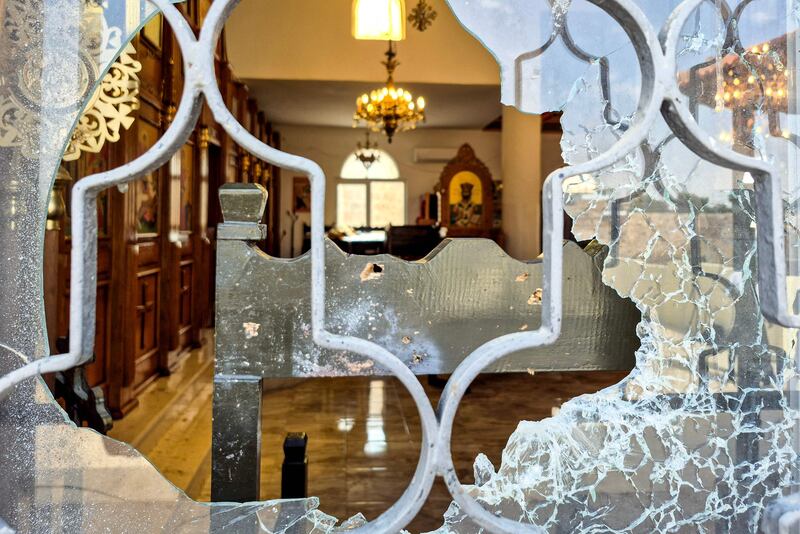
Jordan's State Security Court on Sunday sentenced three men to death by hanging for the attack on St. George's Church in the village of Humud, about 80 km south of Amman. This was reported by The National and the Petra news agency. The attack took place on October 23 during a funeral ceremony: three armed men opened fire on the gathered mourners, killing nine people and wounding 34. According to Kun.uz, about two hundred people were present at the ceremony.
Charges and details of the trial
After four hearings, the court found the three guilty on nine counts of 'premeditated murder with terrorist intent', possession of weapons for terrorist acts, conspiracy to commit terrorism, and 'spreading extremist ideology'. One of the defendants was additionally convicted of providing funds to finance terrorist acts. Amer Khalasa, the lawyer for the victims' families, said all three admitted in court to carrying out the attack and called the verdicts the harshest under the 2006 anti-terrorism law. The convicted men may file an appeal within 30 days with the Court of Cassation; Zamon.uz, citing Reuters, notes that the verdict will be mandatorily reviewed by that court. The court also sentenced two other men to six years in prison each for selling the attackers the weapons used in the assault.
Detention and identities of the attackers
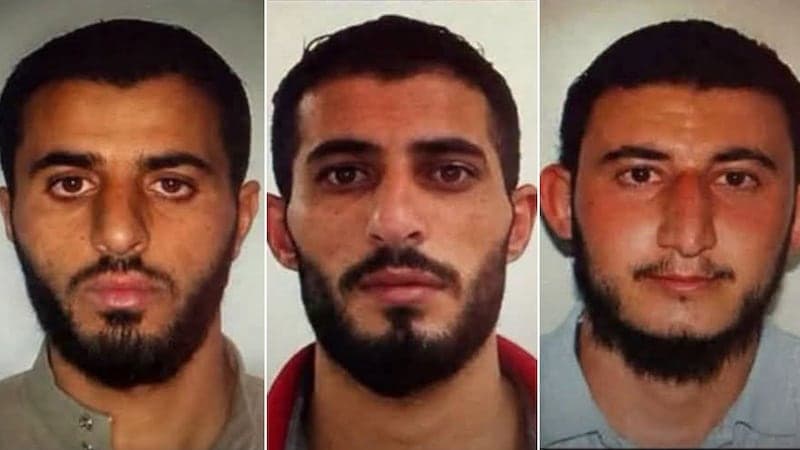
The authorities identified two of the attackers as brothers Hazza and Mishal Mohammad, and the third as their brother-in-law Ahmad Hussein; all three were from the Tneibat clan. They fled the scene and were arrested on October 25 in a village near Humud (according to the Public Security Directorate, which Anadolu reported on, the arrest took place on October 26 after the suspects, who were in an abandoned house in Karak, refused to surrender and opened fire; all three were wounded, and no security personnel were harmed). The BBC notes that the motive for choosing this particular church remains unclear, and the authorities have not disclosed the motive for the attack or details of the investigation.
Context: victims and consequences
All nine victims were men, most of them from the influential Christian Khalasa clan. The National describes the attack as the largest assault on the kingdom's Christian minority since the 1950s; Jordan is home to about 250,000 Christians out of a population of 11 million. King Abdullah II said after the attack that 'the terrorist attack against Karak will meet the harshest response'. On October 27, Jordan struck positions its military called 'terrorist organizations' in southern Syria: Damascus reported seven dead, including three children, a woman, and an elderly man, while Amman spoke of 'several terrorists'. The sides disagreed over whether the strikes were coordinated: Jordan said they had been coordinated with the Syrian government, while Syria denied receiving prior notification. Jordan later acknowledged the deaths of civilians, and on November 9 the two countries agreed to establish a joint security committee to investigate the incident.
What is known about the executions and subsequent events
The BBC recalls that executions in Jordan are carried out by hanging; the kingdom observed an unofficial moratorium on the death penalty from 2006 to 2014, and another pause from 2017 until June of this year. Two weeks after the attack, on November 5, a former inmate stabbed police corporal Jawad as-Salayta and wounded another officer near the Sri Lankan embassy in Amman; on Tuesday, the court charged the suspect with two counts of 'committing terrorist acts', one of which resulted in the policeman's death. The authorities have not disclosed the motive for the church attack; state media described the trial as swift and intended to demonstrate the government's zero tolerance for terrorism.