The key facts
- The declaration was signed by Aliyev and Burnham in Dublin at the EPC summit
- Priorities: defence and security, trade, energy, the Middle Corridor, education
- An annual strategic review of progress across the three strands is envisaged
Signing of the declaration in Dublin
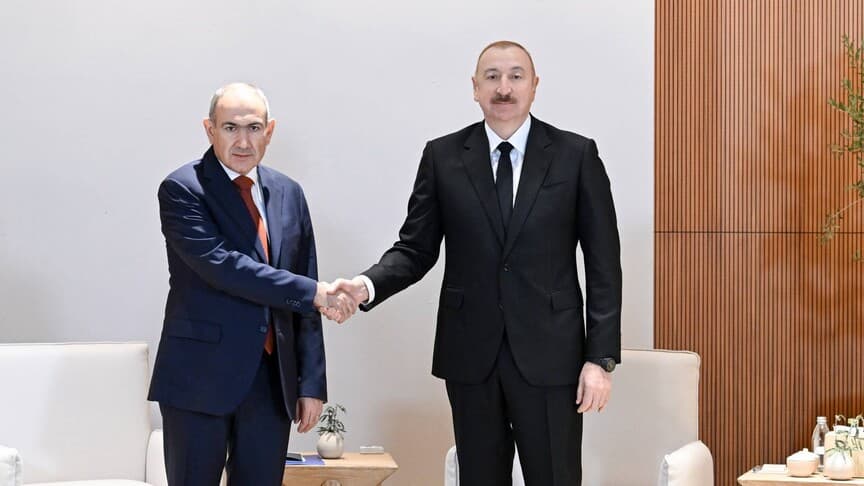
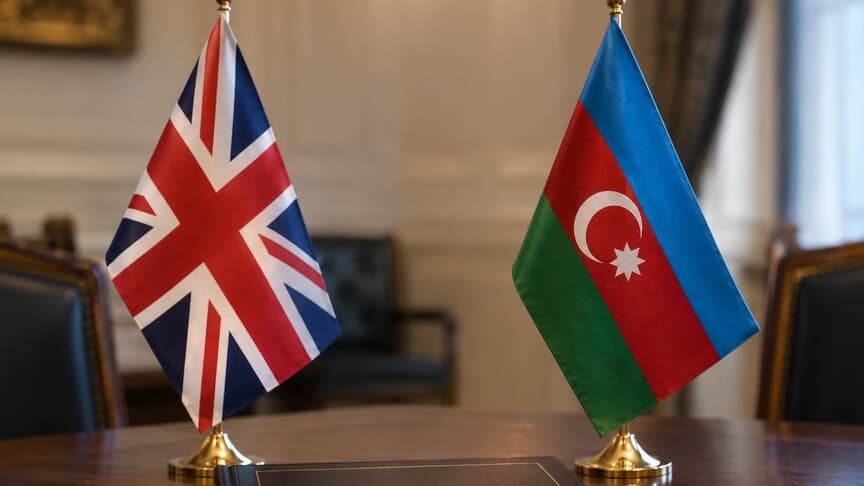
The United Kingdom and Azerbaijan signed a Joint Declaration on Strategic Partnership on Thursday on the sidelines of the ninth summit of the European Political Community (EPC) in Dublin. The document was signed by UK Prime Minister Andy Burnham and Azerbaijani President Ilham Aliyev.
Content of the document
According to the declaration, the parties expressed a long-term commitment to strengthening cooperation in defence and security in support of regional peace and stability, as well as to enhancing the ability to deter, prevent and respond to common threats. Defence cooperation will focus on personnel training, capacity building and interoperability, with the parties intending to explore opportunities for cooperation between their defence industries, including joint initiatives.
Economy and the Middle Corridor
The second block concerns trade and investment: the parties stated their intention to expand bilateral trade ties and promote sustainable, inclusive and diversified economic growth. Priority sectors named are renewable energy, infrastructure and services. The declaration separately underscores the importance of regional and international connectivity: the parties will support the development of the Middle Corridor, as well as transport, logistics and infrastructure projects that facilitate cross-border trade. The Intergovernmental Commission on Trade and Economic Cooperation is defined as the key mechanism — it will become the main platform for initiatives on investment, economic diversification, Middle Corridor development and energy cooperation.
Education and implementation mechanism
The third block covers education and skills development, including higher and vocational education, digital and technical competencies, as well as the training of executives and civil servants. To monitor implementation, the parties agreed to hold an annual strategic partnership meeting: it will assess progress on the three strands of the declaration, set priorities and agree on practical follow-up steps.
Summit context
The signing took place against the backdrop of active diplomacy by Baku in Dublin. According to the Azerbaijani presidential administration, Aliyev discussed long-term gas contracts with European Council President António Costa and stated that gas supplies to the EU had grown from 8 to 13 billion cubic metres — nearly half of Azerbaijan's exports — while the Baku–Italy gas pipeline is operating at full capacity. Costa called the resumption of negotiations on a new EU–Azerbaijan agreement 'good news for our citizens' and invited Aliyev to Brussels. In addition, Aliyev held meetings with Ukrainian President Volodymyr Zelensky (including contracts signed under the 'drone deal' and a €1.35 million emergency aid package for the power grid), Armenian Prime Minister Nikol Pashinyan on the peace process and the TRIPP project, as well as with the leaders of Greece, Moldova, Romania, Bulgaria and Czechia on energy and connectivity. The United Kingdom, meanwhile, remains the largest European investor in Azerbaijan's economy — historically primarily through BP's Caspian operations; according to British officials, relations between the two countries have reached a historic milestone, and the new framework covers, among other things, artificial intelligence and advanced technologies.