The key facts
- Hegseth announced the 'end of the era of subsidizing Europe's defense' and demanded a real distribution of the burden of responsibility
- The overhaul affects tenets of American policy that had been in place for about 80 years
- For NATO countries, this means the need to increase their own defense budgets
Washington announces a change in its model of relations with Europe
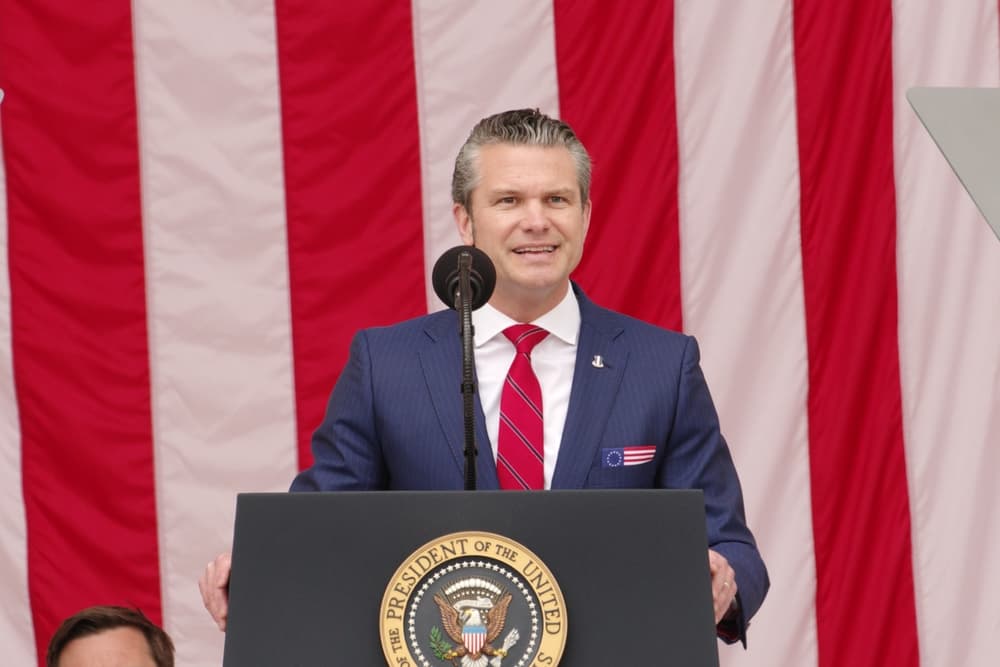
The United States no longer intends to pay for the security of its European allies on the previous scale and expects NATO countries to take on a significantly larger share of the costs of their own defense. This was stated by US War Secretary Pete Hegseth, speaking at the Naval War College in Newport, reports Life.ru.
The rationale: 'America First' and the 2026 strategy
According to the head of the Pentagon, this course corresponds to President Donald Trump's foreign policy concept of 'America First' and the provisions of the US National Defense Strategy for 2026. Hegseth emphasized that this is not about adjusting military spending, but about a fundamental change in relations between the United States and its European partners: the American side no longer wants to bear the financial burden for the security of its allies alone. 'We are rethinking our relationship with Europe, ending the era of subsidizing defense, and demanding that allies take real responsibility for their share of the burden,' Life.ru quoted him as saying. The new National Defense Strategy assumes that Europe must independently provide the bulk of its own security, while the United States will focus on its own strategic interests.
What this changes and what remains uncertain
Hegseth himself outlined the scale of the announced overhaul: according to him, under Trump, tenets that had shaped American state policy for roughly 80 years have been revised. In practical terms, for European NATO members this means the need to increase their own defense budgets and strengthen military capabilities — a shift from the previous model, in which the United States shouldered a significant share of the costs of defending European states, toward a more equal distribution of obligations. The publication does not report specific timelines, figures, or mechanisms for the new distribution of costs. The material is based on a report from a single outlet; the individual documents of the National Defense Strategy are not cited in the sources.
Context: delay in missiles for Ukraine
In the same piece, Life.ru recalls a situation with arms deliveries it previously described: according to the outlet, Hegseth is delaying approval of missile deliveries for American Patriot and NASAMS systems intended for Ukraine. Volodymyr Zelensky claimed that Kyiv has been waiting for almost a month for Washington's permission to transfer the munitions, and that this also concerns missiles located in warehouses of European allies; the Ukrainian leader instructed his representatives to raise this issue again with the US administration.