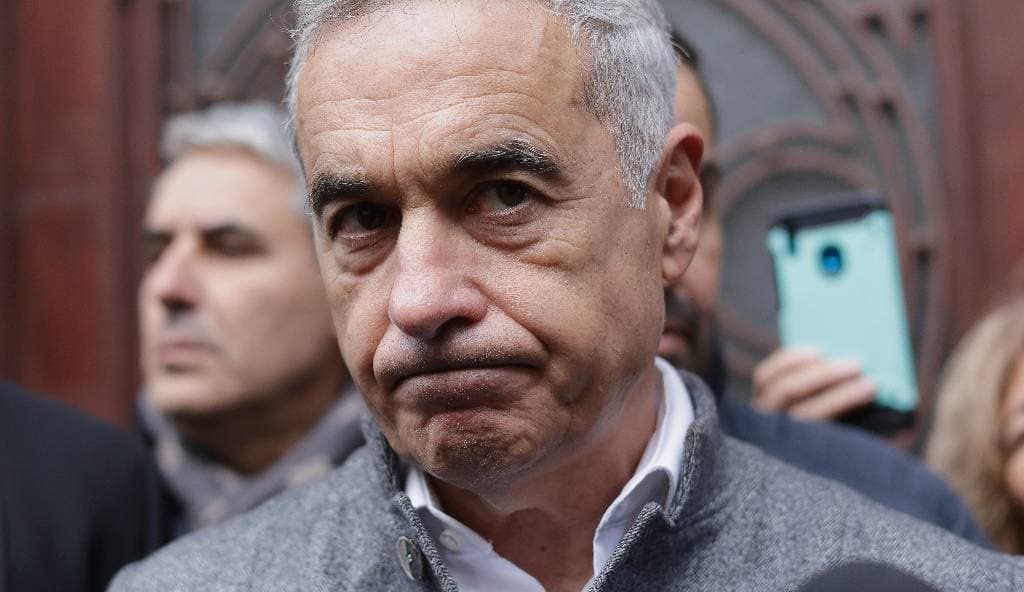
The key facts
- The Bucharest court granted the defense's motion for 30 days of house arrest
- The ruling has not entered into force: DIICOT plans to appeal
- Georgescu has been in pre-trial detention since September 29 in a case of alleged fraud amounting to 1.1 million euros
The court once again chose house arrest, but the politician remains in pre-trial detention
The Bucharest court has ruled to transfer former Romanian presidential candidate Călin Georgescu from a pre-trial detention facility to house arrest for 30 days, granting the defense's motion to ease the preventive measure. This was reported by the Romanian news agency Agerpres, which is cited by Life.ru. However, the politician will remain in custody for now: the ruling has not yet entered into legal force, and until that moment he will continue to be held in the central pre-trial detention facility of Bucharest.
Appeal and repeated ruling
Romania's Directorate for Investigating Organized Crime and Terrorism (DIICOT) intends to appeal the court's ruling. According to the ruling, Georgescu can be released home after the decision enters into force, provided he is not in custody in another criminal case. This is already the defense's second attempt to secure house arrest: the court made a similar ruling on October 13, but the prosecution successfully challenged it, and the Bucharest Court of Appeal kept the politician in custody.
The essence of the charges
Georgescu has been in pre-trial detention since September 29. He is accused of alleged fraud amounting to 1.1 million euros. According to the investigation, the politician and two of his alleged accomplices persuaded businessman Răzvan Leu to transfer money as a guarantee for obtaining a bank loan of six million euros; the loan, prosecutors claim, was never provided, and the funds paid were not returned. At the same time, according to the case materials, 100 thousand euros from the initial payment were intended to finance Georgescu's presidential campaign.
Context
Georgescu rose to prominence after winning the first round of Romania's presidential election in November 2024, but the country's Constitutional Court annulled the voting results amid reports of violations during the election campaign. Subsequently, the politician faced a series of charges and was barred from participating in the rerun election. The key question now is the consideration of DIICOT's appeal: until its outcome, Georgescu's detention regime will not change.