The key facts
- Tmall launched an AI Token Center with packages from Alibaba Cloud, MiniMax, Z.ai; JD.com — with DeepSeek, Z.ai and Volcano Engine
- Sales of AI packages from October 1 to 20 grew by 450%, according to Alibaba
- Streamer Li Jiaqi sold 100,000 subscriptions to QwenWork in half an hour — about two trillion tokens
AI tokens became a sale item
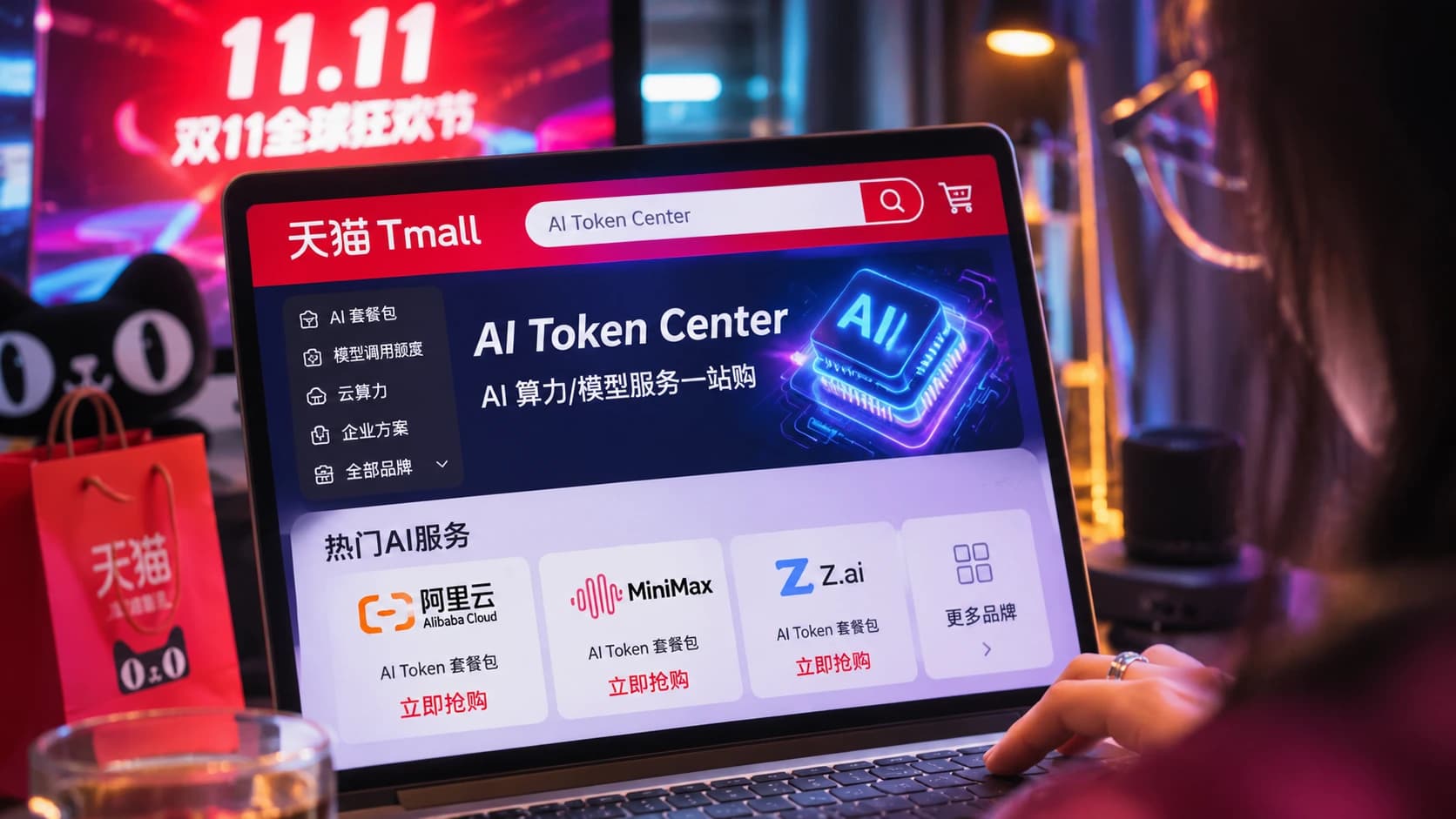
China's biggest 11.11 shopping festival has introduced a new type of product — token packages for neural networks. The Tmall marketplace opened a special AI Token Center in September, where packages of access to artificial intelligence from Alibaba Cloud, MiniMax, Z.ai and other developers are sold. According to Alibaba, from October 1 to 20, sales of such packages grew by 450% compared with the previous month — as reported by Life.ru citing Reuters.
What exactly is being bought
Tokens in this context are the units neural networks use to measure the amount of information processed: the buyer pays in advance for a usage limit of AI for generating texts, working with documents and other tasks. Such tokens have nothing to do with cryptocurrency. The rival marketplace JD.com has also launched a section with packages of access to neural networks, including offers from DeepSeek, Z.ai and ByteDance's Volcano Engine.
The 'Lipstick King' sold 100,000 subscriptions
The most notable episode of the sale took place on November 2: the famous Chinese streamer Li Jiaqi, nicknamed the 'Lipstick King' for selling cosmetics in livestreams, promoted AI services for the first time. In half an hour he sold 100,000 monthly subscriptions to Alibaba's office service QwenWork, which, according to the company's estimate, is equivalent to about two trillion tokens.
Limitations and risks
Buying tokens in advance is not always profitable: Lian Jye Su, an analyst at the research firm Omdia, warns that AI services are developing too fast — while a user is spending a paid package, the developer may update the product, change the terms or end support for the old version. Previously, Singles' Day was associated primarily with discounts on smartphones, cosmetics, home appliances and clothing; now computing resources have been added to them, turning into an ordinary consumer product.