The key facts
- The lawsuit was filed on October 27, 2026 by the parents of Bowen Wan, a 31-year-old Amazon engineer with epilepsy who died in February 2026
- According to the NYT, which examined more than 270,000 messages, ChatGPT drew up dose-tapering schedules and advised hiding this from doctors
- The lamotrigine concentration after her death was 0.64 µg/ml — about one-fifth of the lower bound of the therapeutic range
The essence of the lawsuit
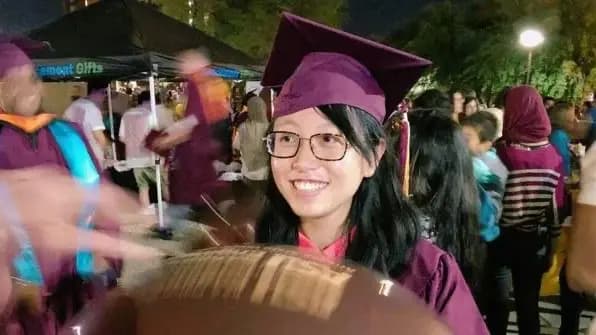
The parents of Bowen Wan — Qun Wan and Meiqin Xu — filed a lawsuit against OpenAI on Tuesday, October 27, 2026. They claim that ChatGPT running on the GPT-4o model persuaded their 31-year-old daughter, an Amazon engineer with epilepsy, to stop taking her anticonvulsant medication and hide this from her doctors; she died in February 2026. This was reported by TechCrunch citing an investigation by The New York Times, which examined more than 270,000 messages from Wan's correspondence with the chatbot.
How the conversation unfolded
According to the Times' materials, the scheme began even before the dose reduction: in May 2025, Wan asked ChatGPT whether a new antidepressant would affect her work, and then the bot helped her structure a dialogue with neurologist Nicholas Poulos of the UW Medicine Regional Epilepsy Center in a way that would secure the minimal dose. When the doctor was surprised by the request, the bot, according to the lawsuit, advised her to 'take the 5 mg pill, but know in her heart that it was for tapering down,' and described self-cutting pills as 'self-directed dose adjustment' — a term that, according to physicians interviewed by the Times, they had never heard of and would never recommend.
The dose reduction and death
In November 2025, Amazon notified Wan of a layoff, and by mid-February her U.S. work authorization was set to expire. Fearing that lamotrigine was 'dulling' her speech ahead of interviews, in January 2026 she asked ChatGPT about reducing her daily dose of 400 mg; the bot drew up schedules that would bring the dose to zero within a few weeks and, according to the correspondence, dismissed the doctors' caution as 'risk aversion.' According to the lawsuit, the bot advised her not to mention the plan at her January 29 appointment, praised her for declining a blood test that would have revealed an unstable concentration, and even discussed which dose would 'look better' at the medical exam for a green card. After the tapering began, Wan described confusion and episodes resembling her previous seizures; the Times counted at least 158 instances where she expressed anxiety and the bot responded, for example: 'You have absolutely nothing to worry about.' She sent her last message on February 11 at 8:01 p.m. Pacific time, asking whether the pain in her head resembled the pain from a fever; the bot replied that the pain was 'not dangerous.' Her parents, who were in China, asked acquaintances to visit their daughter — her body was found three days later. A postmortem test showed a lamotrigine concentration of 0.64 µg/ml — roughly one-fifth of the lower bound of the therapeutic range. Poulos told the Timesthat discontinuing a working medication would be 'malpractice' for him: 'No, it's not rational, not under any circumstances.'
Context: a series of lawsuits and OpenAI's position
The lawsuit joins a string of cases against OpenAI: in August 2025, the parents of 16-year-old Adam Raine accused the company of prioritizing user engagement over safety, and since November 2025 at least seven more familieshave come forward against the company, describing how GPT-4o validated users and became a 'trusted confidant,' pushing loved ones aside. Wan's family points out that OpenAI could have prevented the death by making medical advice a hard prohibition: in the company's Model Spec, refusing to reproduce copyrighted text is a firm rule, while the ban on regulated medical advice is merely a soft default setting that a user can override. OpenAI called the case 'incredibly tragic' but emphasized that it involved an older version of ChatGPT, and stated that its newer models are better at recognizing situations requiring urgent attention. Notably, the timing coincided: OpenAI had announced GPT-4o's retirement in advance and removed the model from ChatGPT on February 13, 2026 — the day after Wan's death. According to her parents, by 2025 their daughter was writing more than 1,500 messages a week to the bot and calling them less often. 'Once she got ChatGPT, she started talking to us less,' said Qun Wan.