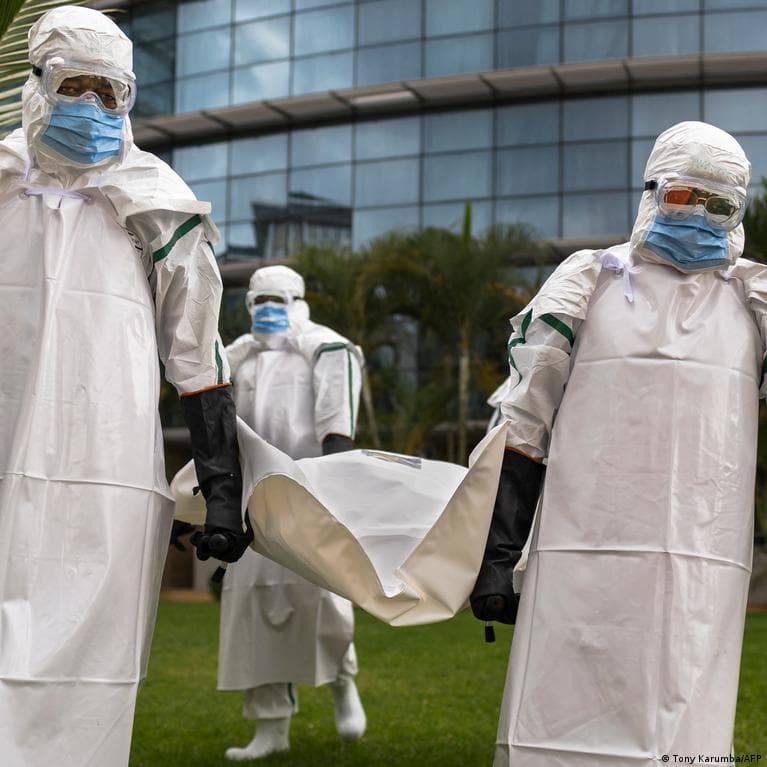
The key facts
- 10,060 cases and 4,887 deaths in the DRC since mid-May; the outbreak has been called the fastest-growing in history
- Bundibugyo virus: no approved vaccine or specific treatment; clinical trials have been underway since July
- Cases confirmed in Kenya (9, including 2 deaths) and Nigeria; Uganda has imposed a 21-day quarantine
The scale of the outbreak
The Ministry of Health of the Democratic Republic of the Congo reported, that the number of Ebola cases has reached 10,060, and the number of deaths — 4,887, since the outbreak was detected in mid-May. The Africa Centres for Disease Control and Prevention described it as the fastest-growing Ebola outbreak in history; the outlet Zamon.uz also calls it the deadliest in the country's history. The disease has been recorded in 66 health zones across eight provinces.
Why the outbreak is hard to contain
A particular difficulty is that the outbreak is caused by the Bundibugyo virus, for which there is neither an approved vaccine nor a specific treatment. According to the Congolese health ministry, about 80% of new cases are not part of known transmission chains tracked by health authorities — meaning a significant share of infections is being detected outside of control. The virus is transmitted through direct contact with the blood or other bodily fluids of a sick person, and early symptoms resemble malaria, which can delay isolation and treatment.
Spread beyond the Congo
Cases have been confirmed abroad. In Kenya, nine infections have been recorded, including two deaths, after a patient arrived from the DRC via Uganda to Nairobi. In Nigeria, the infection has been confirmed in a Swiss citizen, the wife of a Swiss diplomat, who fell ill after a trip to Uganda; authorities are trying to determine where the infection occurred, and the woman was evacuated to Switzerland. Uganda has imposed a 21-day quarantine for citizens returning from the DRC, and Nigeria has tightened screening at airports.
Vaccine and treatment trials
Clinical trials of two approaches to antiviral treatment have been underway since July. Two more studies are testing whether the Ervebo vaccine can protect against the Bundibugyo virus — at present it is approved and recommended only against the Ebola virus (formerly known as the Zaire ebolavirus). According to Zamon.uz, the WHO announced the start of the first clinical trials of a vaccine specifically against the Bundibugyo virus.