The key facts
- The 'Student List' received 52.7% of the vote and, according to preliminary data, 139 of 250 seats in parliament
- The Student List won 52.7% of the vote and, according to preliminary data, 139 of 250 seats in parliament
- Vucic conceded defeat after more than a decade of rule by his camp
- The movement has not named a candidate for prime minister; Ljilja Srdanovic and Dejan Soskic are being discussed
- The movement has not named a candidate for prime minister; Ljilja Srđanović and Dejan Šoškić are being discussed
Student movement wins the snap election
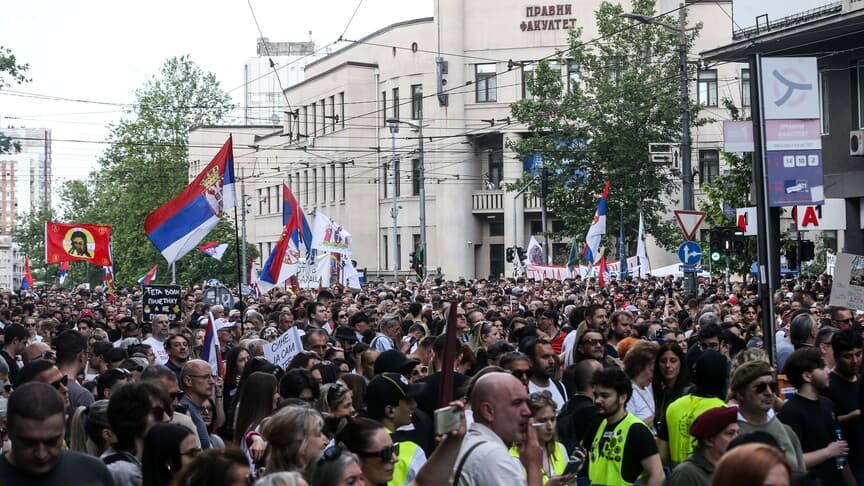
The student movement, which grew out of protests after the collapse of a canopy at the Novi Sad railway station, has won the snap parliamentary election in Serbia, challenging the camp of President Aleksandar Vucic, which had been in power for more than a decade. According to Anadolu, Vucic conceded defeat on Sunday after the vote, opening the way for the 'Student List' to form the next government. The movement united scholars, doctors, artists, farmers and activists under slogans of fighting corruption and restoring trust in state institutions. Notably, the students themselves, who organized the campaign and selected the candidates, did not run for parliament, and the movement has not yet announced who will lead the next government.
How the movement began
The protests began after a concrete canopy collapsed at the Novi Sad railway station on 1 November 2024, killing 16 people. The disaster at the recently renovated station triggered accusations of corruption, weak oversight and irregularities in public procurement. Tensions escalated after an attack on students and lecturers keeping a memorial vigil in Belgrade; four days later, students of the Faculty of Dramatic Arts began a blockade, which other universities joined. The students organized through plenums — assemblies where decisions were made by collective discussion and voting, without a single leader. Their initial demands included the publication of documents on the station's reconstruction, accountability for the attackers, dropping charges against detained students, and increased funding for universities. The movement spread beyond the campuses, gaining support from teachers, farmers and townspeople. Months of demonstrations led to the resignation of Prime Minister Milos Vucevic in January 2025, but the protests continued even after Djuro Macut formed a new government in April. One of the largest rallies took place in Belgrade on 15 March 2025: according to the independent Archive of Public Gatherings, between 275,000 and 325,000 people took part, while official estimates put the figure at 88,000 to 107,000. According to a CRTA poll published in January 2025, 61% of respondents supported the protests and blockades. By May 2025, the students were demanding snap parliamentary elections.
The 'Student List' and the results
Instead of an ordinary party, the movement created a civic list, with candidates selected over more than a year through assemblies and collective work. The list 'Student List — Students Win' included 250 candidates from various professions and regions; the students themselves were not on it, nor were former members of the ruling parties or former officials of the parliamentary opposition. The campaign relied on volunteers traveling across the country. According to preliminary data from the election commission, with almost 99% of the votes counted, the 'Student List' received 52.7%, against 39.2% for the alliance led by Vucic's Serbian Progressive Party — that is 139 seats in the 250-seat parliament.
Who could become prime minister
The movement has not publicly named a candidate for prime minister. Two people attract the most attention: cardiologist Ljilja Srdanovic, who heads the parliamentary list, and former central bank governor Dejan Soskic. Srdanovic is a professor at the Faculty of Medicine of the University of Novi Sad and has worked at the Institute of Cardiovascular Diseases of Vojvodina since 1997; he has advocated for improving healthcare, especially primary and secondary care, and after the election called for better relations with neighboring countries and the international community. Soskic is a professor of economics at the University of Belgrade, served as governor of the National Bank of Serbia in 2010–2012, and resigned over legislative changes that, in his view, threatened the central bank's independence. During the campaign, Vucic claimed that Soskic was the movement's preferred candidate for prime minister, but the movement has not confirmed this. Another candidate, Radomir Sajcic, said that deputies would decide the question of the prime minister in consultations with the student movement.
Notable candidates and the program
The list included figures from science, sports, culture and grassroots activism: former basketball star and current EuroLeague president Dejan Bodiroga (24th place, three-time EuroLeague champion, played for Real Madrid, Barcelona and Panathinaikos), professor of organic chemistry and member of the Serbian Academy of Sciences Radomir Sajicic (91st place), sociologist Jovo Bakic (76th place), farmer Zlatko Kokanovic (17th place) — an opponent of the Rio Tinto lithium-boron project in the Jadar valley, who pledged to push for a permanent ban on lithium and boron exploration and mining, playwright Zelko Hubac (3rd place) and actor Tihomir Stanic (8th place), as well as Rector of the University of Arts in Belgrade Mirjana Nikolic, civil engineer Sanja Fric, geological engineer Zoran Djajic and lawyer Sara El Sarag. After Vucic conceded defeat, Bakic said on N1 that he had expected a convincing victory for the students but had not expected Vucic to concede, and he called for action against organized crime. The movement's 11-point program includes protecting courts and prosecutors' offices from political interference, auditing officials' asset declarations and confiscating unlawfully acquired property, transparency in public procurement, audits of infrastructure projects, reform of state media and media regulators, appointments to state-owned enterprises based on professional merit, free school textbooks, affordable housing, support for farmers and domestic businesses, access to medicines and healthcare in rural areas, and reducing the maximum term of fixed-term employment contracts from 24 to 12 months.
How the government will be formed
Winning the election does not automatically give the movement control of the government. Under Serbia's constitution, the president, after consultations with elected parties and lists, nominates a candidate for prime minister; the candidate then presents the cabinet lineup and program to the National Assembly, where at least 126 of 250 votes are needed for approval. According to election-night projections, the Student List won enough seats to clear this threshold on its own, although the final distribution depends on the certified results. The new parliament must convene within 30 days of the official announcement of results; if no government is elected within 90 days of the parliament's first session, the parliament is dissolved. The process is complicated by the fact that Vucic resigned from the presidency on September 27in order to run for prime minister. Parliament Speaker Ana Brnabic, a close ally of Vucic, is serving as acting president until separate presidential elections, which must be held by the end of the year. As Anadolu notes, the Student List's parliamentary victory puts the movement in a strong position to challenge Vucic's camp for the presidency as well.