The key facts
- Erkinjon Turdimov banned summoning school directors to meetings without approval from the ministry
- The minister proposed abolishing ministry licensing of private schools and kindergartens
- 522 problematic issues related to construction documentation have been identified in Samarkand Region, five of them concerning private educational institutions
Ban on summoning directors to meetings
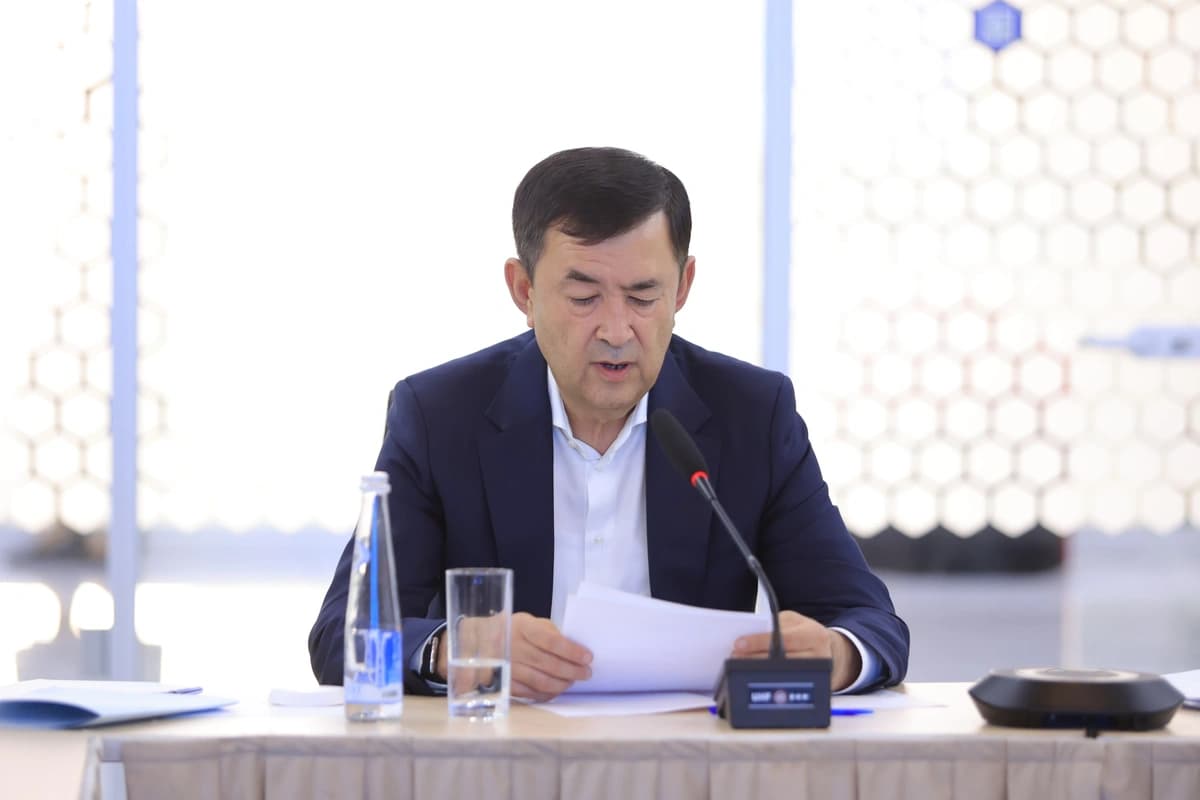
First Deputy Prime Minister — Minister of Preschool and School Education of Uzbekistan Erkinjon Turdimov announced a ban on summoning school directors to meetings without approval from the ministry. The statement was made at a meeting with education sector representatives in Samarkand, as reported by the Telegram channel Samarqand live, cites Gazeta. According to the minister, participation in any meeting, including at khokimiyats, is possible only after approval from the ministry. In his view, heads of educational institutions should focus on their direct duties rather than spending time on numerous gatherings: “A school should be engaged in education, a kindergarten in raising children. They should not attend meetings. If someone needs to be invited to a meeting, there is the caretaker. Why summon a school director to the khokimiyat at all?” Turdimov stressed that the ban must be observed regardless of who invites school heads.
An example from the minister’s experience
As an example, Turdimov cited a case from his work at a khokimiyat: he repeatedly forbade one head of an educational institution from attending meetings, yet the man kept coming, citing instructions from other officials. “I told him: ‘I’ll break your legs if you go to the meeting’… And he still went. I ask: ‘Why did you come?’ He replies: ‘I was told to come’… I tell him: ‘Are my words, like, medicine to you? Then take out your phone, turn on the recorder and record. I’ll explain everything to you in detail,’” the minister recounted.
Proposal to abolish licensing of private schools and kindergartens
At the meeting, the minister also announced plans to implement two major projects in education, in particular in higher and preschool education; details of the initiatives were not disclosed. After hearing proposals from entrepreneurs working in private education, Turdimov called for revising the licensing procedure for non-state schools and kindergartens. In his view, the need for a separate license from the ministry raises questions if the facility has already passed inspections by authorized bodies: “If the sanitary-epidemiological service, construction, fire and other relevant authorities have checked everything and issued permits, on what basis does the ministry issue a license? What exactly does it check? In general, licensing by the ministry should be abolished when opening private kindergartens and schools.” He also criticized officials who failed to solve the problems of private educational institutions and warned that ministry employees who fail to fulfill their duties may lose their positions.
Criticism of the construction department and a new platform
The work of the Construction Department of Samarkand Region also came in for separate criticism at the meeting. Later, the head of the department clarified that the region has 522 problematic issues related to construction documentation, five of which concern private educational institutions. In addition, the minister announced plans to launch a separate electronic platform for receiving appeals from educational organizations. Earlier, Turdimov statedthat improving the efficiency of the system does not require adopting new laws or inventing innovations: the necessary conditions have already been created, and the main task is to establish discipline and raise standards of demand.
Context and significance
The minister’s statements concern the daily work of thousands of school and kindergarten heads who, according to the practice described by Turdimov, were regularly pulled away from their core duties for meetings at khokimiyats. In practical terms, this means that a director’s participation in any meeting now requires prior approval from the ministry, while for private educational institutions the abolition of a separate ministry license is being discussed where permits from specialized bodies already exist. At the same time, publications do not report details of the two announced major projects, or in what form the ban and the revision of licensing will be formalized — these questions remain open.