The key facts
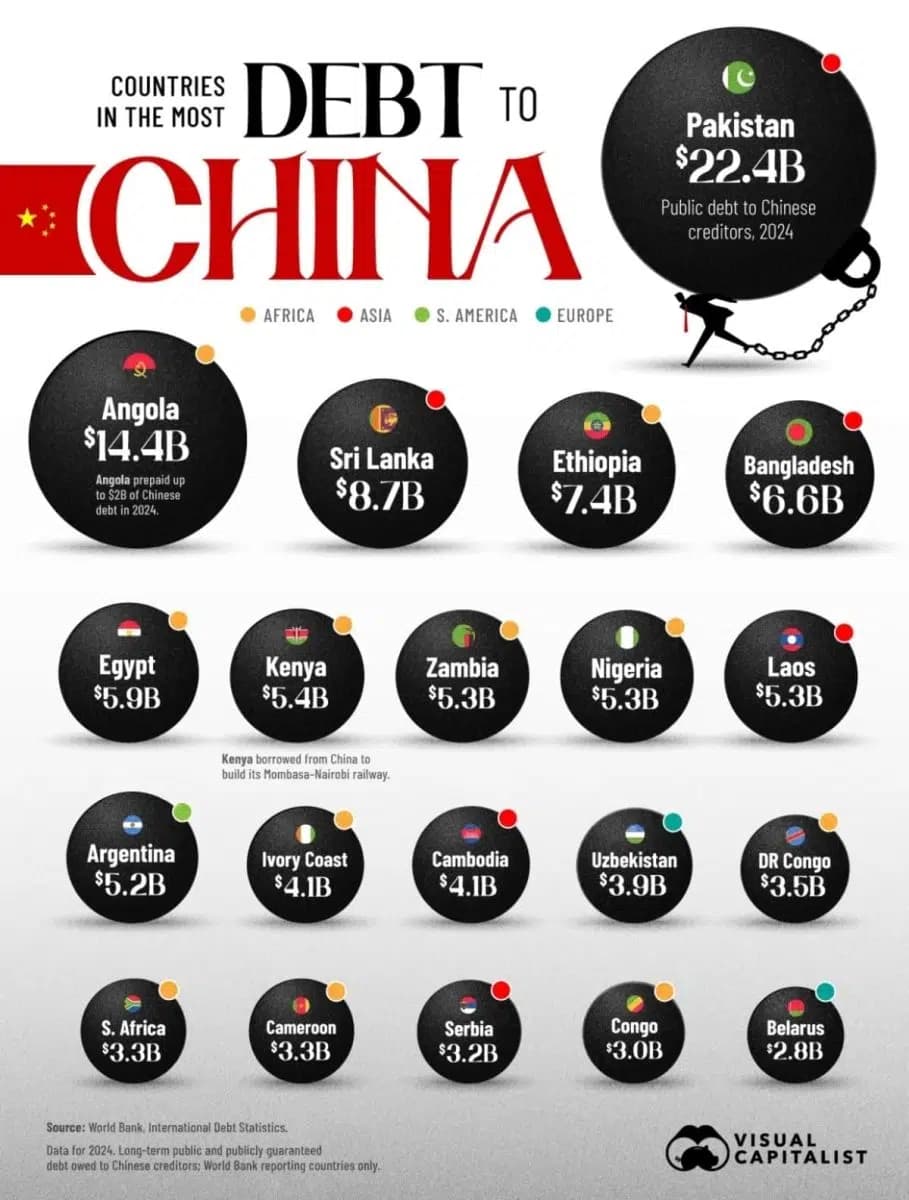
- The ranking covers outstanding long-term public debts and state-guaranteed obligations to China
- Pakistan is the leader, its debt is almost $8 billion larger than Angola's
- In 2023–2024 Angola reduced its obligations by about a fifth
Basis of the ranking
The infographic prepared by Visual Capitalist is based on World Bank International Debt Statistics data and includes countries that report within this system. The ranking does not take into account all types of debt to China, but specifically outstanding long-term public debts and state-guaranteed obligations.
Leaders of the list
Pakistan has the largest debt to China — almost $8 billion more than Angola. Islamabad and Beijing have maintained close military and economic ties for decades; Chinese funds were directed to major projects in power generation and transport infrastructure. Sri Lanka's debt to Chinese creditors stood at $8.69 billion; the Hambantota port project is often mentioned in discussions about Chinese lending.
Angola reduces its debt
Angola's cooperation with Chinese creditors expanded during the post-war reconstruction period: in 2004 it was granted a $2 billion credit line, and the volume of financing grew as the reconstruction work continued. In 2023–2024, Angola's obligations to China decreased by about a fifth, but the possibility of early loan repayment largely depends on world oil prices.
Kenya and Congo
Kenya's debt to Chinese creditors is $5.37 billion. Chinese loans covered almost 90% of the cost of the Mombasa–Nairobi railway, which connects the capital with the country's main seaport. The railway, like the Addis Ababa–Djibouti line, was built by Chinese contractors, who also participated in equipment supplies and infrastructure operation. The Republic of the Congo's debt to China is $2.97 billion — more than a tenth of its nominal annual GDP.
The 'debt trap' debate
China's lending policy has become the subject of debates about a 'debt trap': proponents of this view argue that large infrastructure loans can make borrower countries financially dependent and strengthen Beijing's strategic influence.