The key facts
- The protests have lasted almost five months; the fiercest clashes with police occurred last week
- Rama calls the protests a 'hybrid war' and blames Greece, Russia, Iran and 'antifa'
- Researcher Redion Qirjazi: there is no evidence of an organized Antifa structure existing in Albania
The protests continue
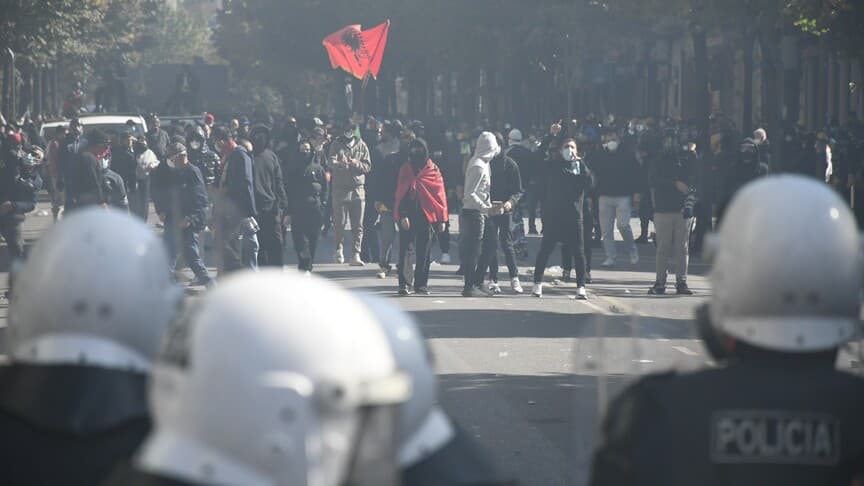
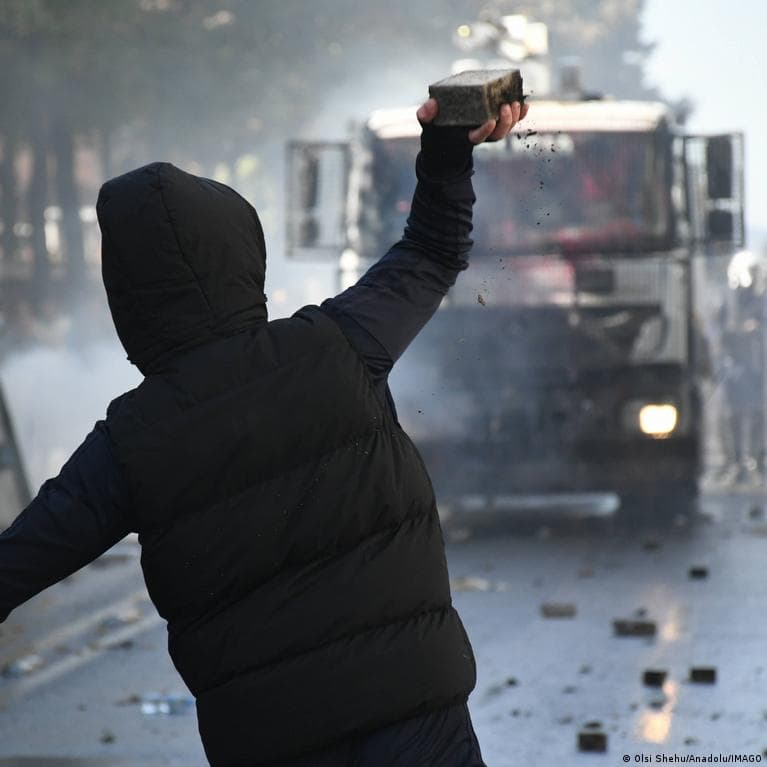
The aftermath of the October 13 protests is still visible in Tirana: broken windows of the Ministry of Education building have not been replaced, and the walls are blackened by fires. On Tuesday, students and lecturers of Tirana University gathered again outside the ministry. For almost five months, peaceful anti-government protests have been taking place in the country, which began after the plans of Jared Kushner — the son-in-law of US President Donald Trump — and his partners to build a luxury hotel complex on the territory of a nature reserve became known. Since then, the protests have escalated: university and school students clash with police almost daily, with the fiercest clashes occurring last week.
The protesters' demands
The demonstrators condemn corruption, poor management of universities and the rising cost of education, demanding the resignation of Prime Minister Edi Rama, who has led the government since 2013. A protester who gave her name as Sara out of fear of consequences told DW that protesters communicate 'only via text messages'. The interview had to be interrupted when some protesters began throwing stones at the ministry; police dispersed the crowd with water cannons.
Organization via social media
According to Albanian cybersecurity specialist Besmir Semanaj, young people are no longer organized through traditional structures such as parties and associations, but coordinate via social media: Instagram, WhatsApp groups for academic cohorts and dormitories, Telegram channels and TikTok; for security, some participants use Signal. He noted that this is a horizontal structure without leaders or central command, which makes it difficult for the government to control the situation. Telegram, he said, allows instantly reaching tens of thousands of people, and external control there is harder to establish.
Rama's reaction and expert assessments
Rama called the protests a 'hybrid war' and said the participants allegedly want to 'make Albania better through TikTok'. Over five months, he has successively blamed the governments of Greece, Russia and Iran for organizing the protests, and now 'antifa', calling it a force that the US President declared a terrorist organization. Security researcher Redion Qirjazi told DW that this is a serious accusation requiring evidence, but 'so far no verifiable evidence has been presented of the existence of an organized Antifa structure in Albania, let alone its involvement in coordinating the protests'. According to him, Antifa is not a single international organization but an umbrella term for anti-fascist movements. Sara herself rejected the label of 'terrorists': she is against violence and leaves when it begins.
'A distraction?'
Arlind Kori, chairman of the opposition social-democratic 'Movement Together', believes that young people took to the streets out of dissatisfaction with socio-economic conditions: poverty, parents' emigration, the degradation of education and the lack of prospects. The central demand is Rama's resignation, 'not a socialist revolution'. Qirjazi suggested that the accusations of foreign interference may be a strategy: attributing ties between protesters and extremism and foreign influence makes it possible to delegitimize the protests, weaken their public support and justify harsher measures. Semanaj added that this is a common tactic: the protests are portrayed as violence, young people as manipulated, and the legitimate problems — conditions in universities, tuition fees, corruption and the lack of prospects — disappear from the news agenda.