The key facts
- Third round of talks in Caracas: six working sessions and 15 technical meetings across four groups.
- The parties agreed to review the law on the Office of the Comptroller General regarding political bans; María Corina Machado remains banned.
- A joint commission is being created to coordinate with British institutions on unfreezing gold held at the Bank of England.
Outcomes of the Third Round
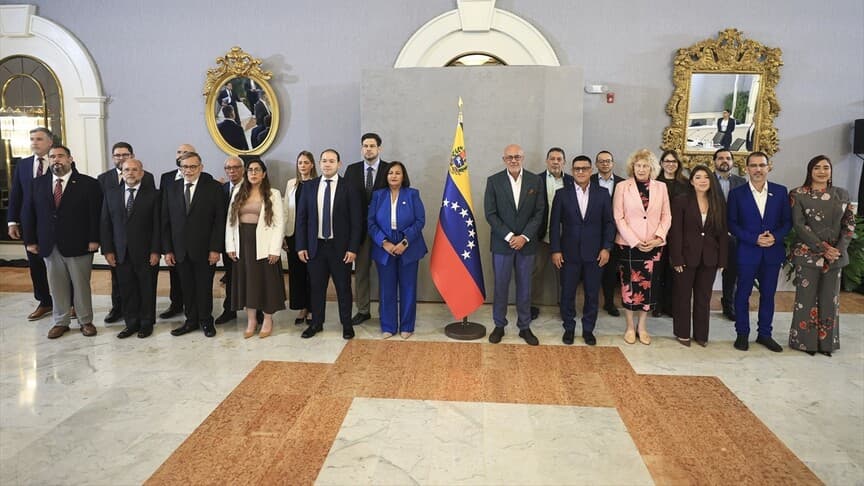
Representatives of the Venezuelan government and the opposition, in the person of the National Assembly elected in 2015, on Wednesday officially concluded the third round of talks on national transition, reaching key agreements on political bans and frozen foreign assets. According to the joint statement signed by Jorge Rodríguez, head of the pro-government parliament, and Dinorah Figuera, head of the delegation of the 2015 assembly, the parties agreed to review the Organic Law of the Office of the Comptroller General, in particular the administrative procedures for political bans on opposition leaders. The best-known politician under an administrative ban remains Nobel Peace Prize laureate María Corina Machado.
Frozen Assets
The delegations also agreed to create a joint commission to coordinate with British institutions in order to secure the release of Venezuelan gold reserves frozen at the Bank of England.
Course of the Talks
The third round of talks began a week ago in Caracas and included six working sessions, including two plenary ones, and 15 technical meetings within four working groups. The first round laid the groundwork on emergency aid to the population, protection of foreign assets, strengthening of institutions, and guarantees of political participation and freedom of expression. The second concerned judicial reform and democratic re-institutionalization: a framework scheme for evaluating candidates for the Supreme Court (TSJ) was created and steps were outlined for reorganizing the radio frequency spectrum. The third round consolidated the electoral and legal roadmap, completing the technical work on political bans and the return of assets.
Next Steps
Announcing the conclusion of the session on Wednesday, Rodríguez specified that on October 22 the National Assembly will officially swear in the nomination committee for evaluating candidates for TSJ judgeships. The panel will include 12 representatives of civil society and 11 legislators; it will draw up the final list of principal and alternate judges. Upon completion of the plenary cycle, both delegations confirmed their intention to continue the work of structured technical groups to advance institutional guarantees ahead of future electoral stages.