The key facts
- Merz's government identified six priority sectors: AI, quantum computing, microelectronics, biotech, clean energy and climate-neutral mobility.
- According to the Made for Germany initiative (147 companies and investors), new technologies could attract up to €4.1 trillion in investment by 2035.
- The AfD is polling as the country's first party; its growth is linked to economic problems.
Economy under pressure, AfD at its peak
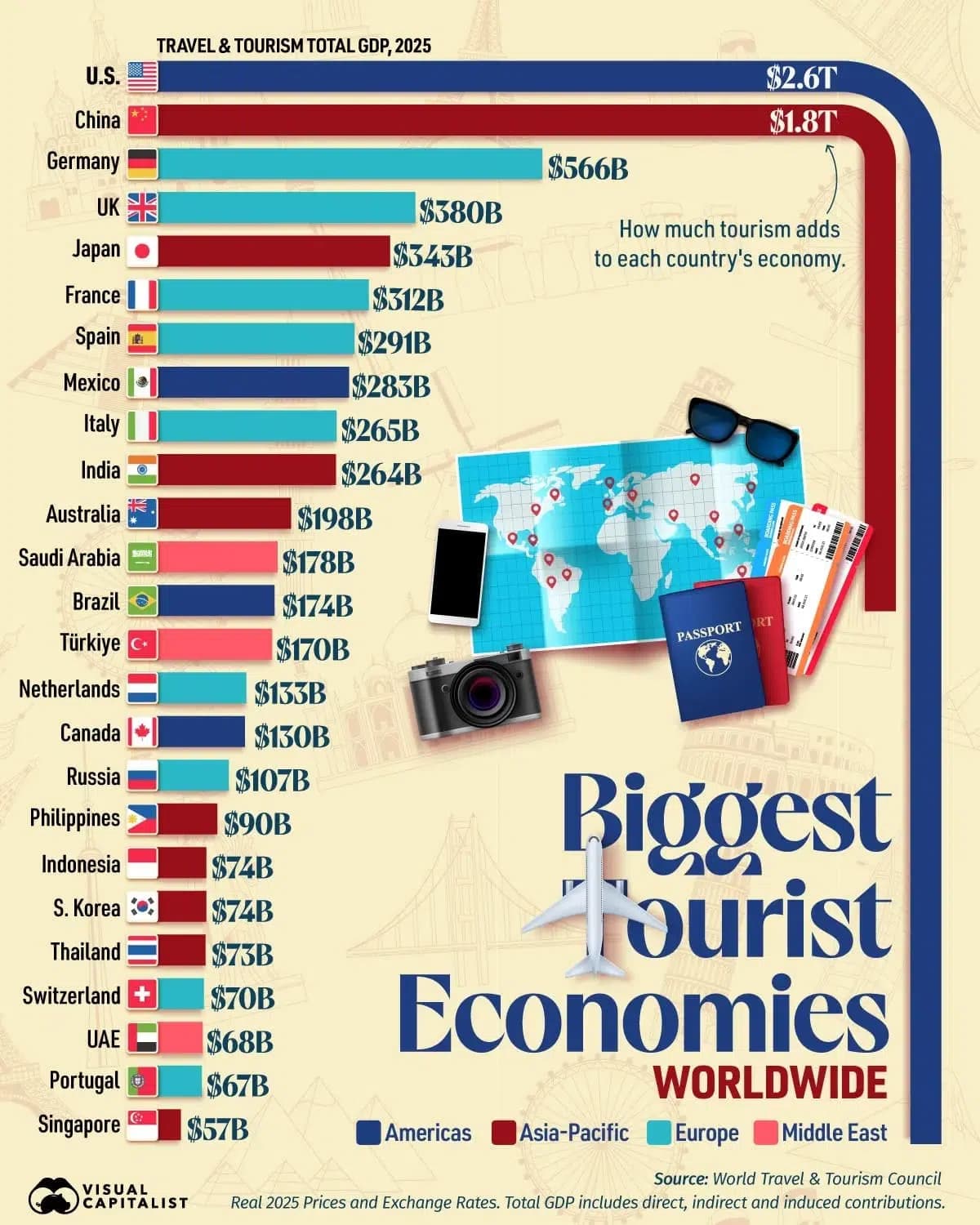
Germany's export-oriented economic model is facing unprecedented pressure amid record support for the far-right party 'Alternative for Germany' (AfD). According to the Federal Statistical Office Destatis, after two years of contraction, real GDP grew by only 0.2% last year. Exports to China fell by 9.7% in 2025, and deliveries of cars and components shrank by about a third. Chinese competitors are taking market share from major German industrial companies; DW cites high energy prices, expensive labor and excessive bureaucracy as additional crisis factors. The government forecasts GDP growth of 1.3% in 2026 — modest compared to pre-pandemic years, although, according to DW, there are signs of a turnaround. The AfD is now polling ahead of all other parties; economic difficulties are cited as one of the main factors behind its growth. Germany's domestic intelligence sees reliable signs that the party as a whole is right-wing extremist. The AfD promises to return the economy to growth by abandoning the transition to renewable energy, cutting taxes, revising EU treaties, reforming welfare and severely restricting immigration.
The government's high-tech agenda
Chancellor Friedrich Merz's coalition is looking for a new growth strategy and has presented a high-tech agenda with six priority sectors: artificial intelligence, quantum computing, microelectronics, biotechnology, clean energy (including nuclear fusion) and climate-neutral mobility. Irene Bertschek, head of the digital economy research group at the ZEW Centre for European Economic Research, notes that German research in these 'key cross-cutting technologies' is very strong, especially in climate-neutral technologies, but the results are often commercialized abroad: the US leads in AI, while China is rapidly closing the gap.
Trillions in investment and a bet on startups
A report by the Made for Germany initiative — which unites 147 companies and investors — published on Monday, builds on the government's plan and estimates that new technologies could attract up to €4.1 trillion ($4.6 trillion) in investment by 2035. Oliver Falk, director of the ifo Center for the Economics of Innovation and Digital Transformation, believes that the new fields will be developed primarily not by corporations like Volkswagen, Siemens and BASF, but by startups; the task is to create the right conditions: proximity to leading universities, access to private capital and freedom to experiment. He advocates public funding at the early stage of the 'valley of death' — the risky phase between research and commercial viability. Data from Deutsche Bank and the startupdetector platform show that in the first half of 2026, more than 3,000 startups were founded in Germany — 88% more than a year earlier; a third of them are related to AI. Venture investment grew by 44% to €5.8 billion; recipients include Neura Robotics, drone makers Stark and Quantum Systems. Meanwhile, American investors are increasingly buying up the German Mittelstand for its specialized technologies. Bertschek, who also heads the government's expert commission on research and innovation (EFI), believes that small and medium-sized enterprises should make more active use of production data and collaborate with AI startups.
Special economic zones and the defense impulse
Sven Gabor Jansky, head of the Leipzig futurology institute 2b AHEAD, proposes creating special economic zones in Germany with reduced regulation, the attraction of ambitious staff and an influx of money — modeled on Silicon Valley, Shenzhen and Shanghai's Pudong district, as well as the conditions that restored the German economy after World War II. In his view, the zones would help Germany become a first mover in new fields. 'EU regulations may try to ban this step, but Germany will have to overcome them in order to grow again,' he told DW. Rising defense spending will also support high-tech sectors: according to the International Institute for Strategic Studies (IISS), the defense budget will reach about €120 billion in 2026 — roughly 2.6% of GDP — and the government wants to raise it to 3.5% by 2029. Procurement will give a boost to the production of drones, sensors, communications systems and other dual-use technologies.
Can Germany compete with China
China benefits from significantly lower energy and labor costs and huge state subsidies, so Germany will continue to face price disadvantages when exporting new high-tech products. However, in Falk's view, this does not necessarily mean failure: 'Take the semiconductor industry. It is probably unrealistic to strive for leadership across the entire value chain. But it is enough to lead in individual narrow segments.' That is exactly where, he notes, Germany is strong — as a supplier of equipment for modern chip fabs and as a supplier of power semiconductors for the world's AI gigafactories. First-mover advantage, decades of accumulated high-quality production data and specialization in niches allow Germany to remain a major force in advanced industrial technologies.