The key facts
- The 'celebrity' shark Bukhang-i was first spotted in the Busan canal on 18 September; more than 1.6 million people saw it
- The third operation with a net on pontoons began at 10:00 on Wednesday; in the evening the oceans ministry said the shark had left the waterway
- Environmentalists call the shark's appearance a warning about the climate crisis
The shark left the canal
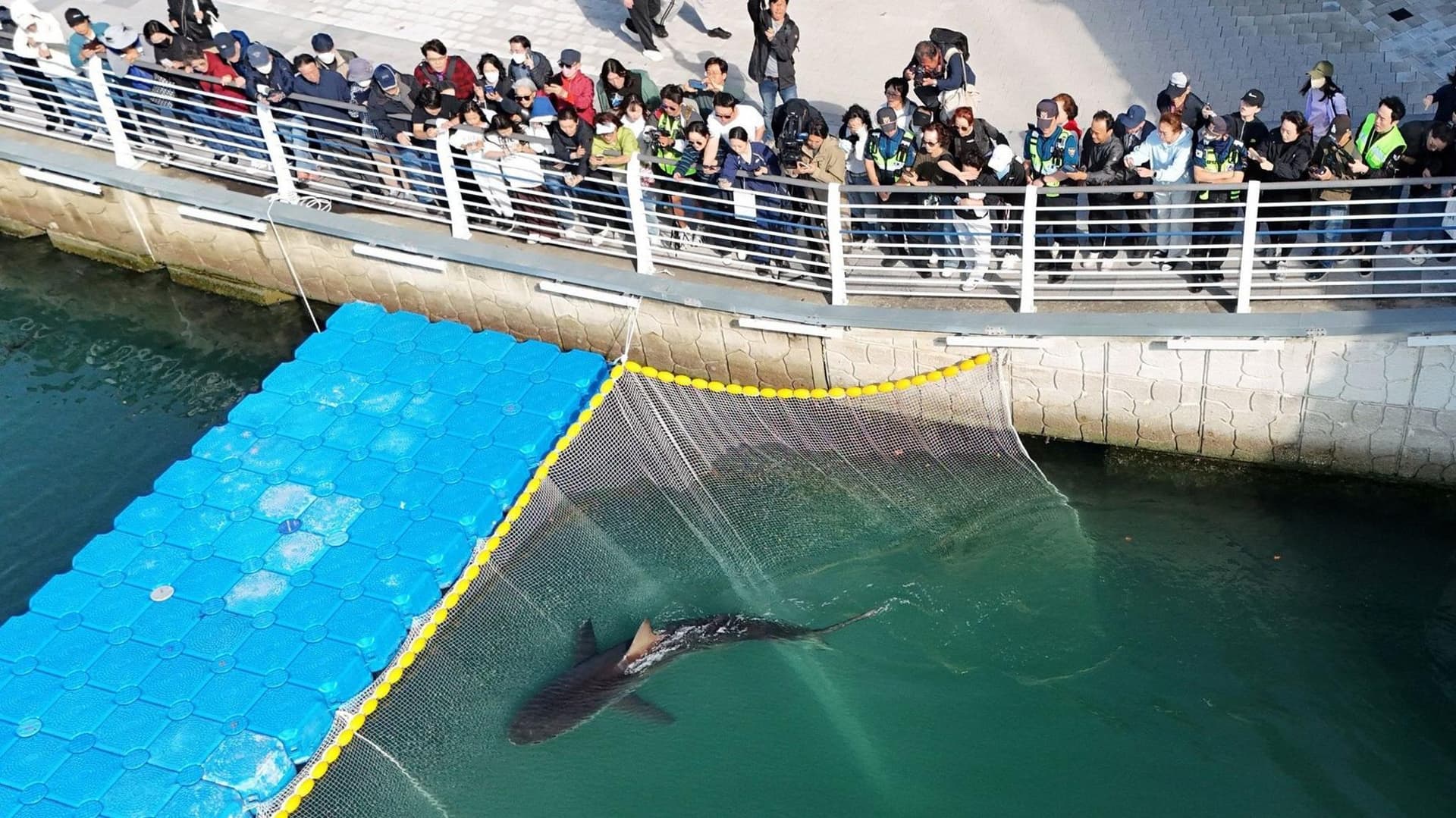
The authorities of South Korea on Wednesday, 21 October, removed the shark that had been stuck for a month in an artificial water canal in Busan, the oceans ministry reported. According to the Yonhap agency, the shark nicknamed Bukhang-i (Bukang-i) was first spotted in the canal on 18 September. On Wednesday evening, a ministry official told AFP that 'the shark has left the waterway', without giving details. According to Anadolu, citing Yonhap, a team of city hall and coast guard staff guided the shark toward the Marina bridge, after which it was spotted in waters outside the canal near a pier. However, these waters are not considered open sea, and the authorities hope the shark will eventually move into open waters. AFP noted that it remained unclear whether the shark had also swum out of the harbour into which the canal flows. By late Wednesday evening, according to euronews, it was unclear whether the operation had succeeded.
The third attempt and its reasons
This was the third attempt to return the shark to the sea: earlier, the authorities had twice unsuccessfully tried to guide it back, first using water jets, then nets. An official spokesperson for the oceans ministry told AFP that the operation began at 10:00 in the morning, and it was not known in advance when it would end. Initially, the authorities decided to wait for the shark to leave on its own, but growing concern for its wellbeing prompted a new attempt. In a separate statement, the ministry also pointed to the limited depth of the artificial waterway. According to Anadolu, the fear that the shark could die as water temperatures continued to fall was also a reason for the third attempt.
The animal's condition and the course of the operation
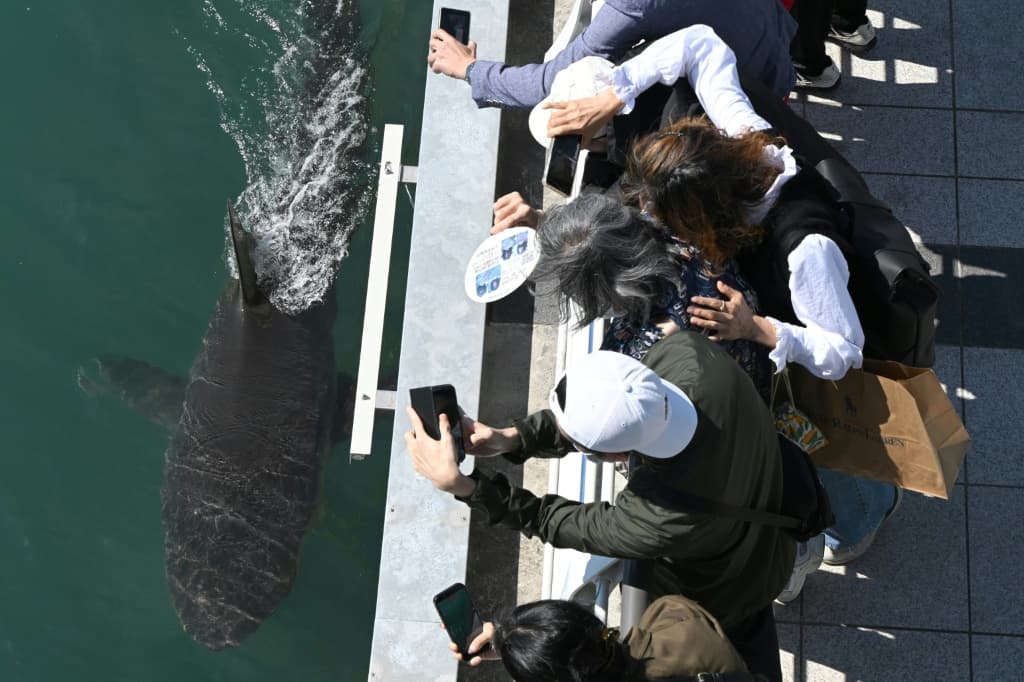
A representative of the oceans ministry told AFP that experts were concerned about the shark's health, since it 'had not been seen feeding and appeared to have difficulty maintaining balance while swimming'. 'These were abnormal signs, and experts believed its condition was deteriorating,' the official source added. During the operation, rescuers secured nets on floating pontoons, which were gradually moved as the shark made its way toward the open sea; after it passed, the nets were to block a return to the canal. City hall and coast guard staff monitored the waters from the shore and from a temporary bridge, and divers worked in the water. At various moments, the shark was seen swimming close to the shore. The city broadcast the operation live, and spectators gathered along the canal.
Viral popularity and economic effect
The three-metre dusky shark — a species that usually lives in a tropical climate — became a viral sensation and attracted, according to AFP, more than 1.6 million people to the Busan canal, bringing unexpected benefits to the local economy. Busan Mayor Park Heong-joon — Chong Jae Su — thanked the shark for the fame it created, which, according to him, would otherwise have cost 'trillions' (of won). According to Anadolu, the figure of 1.6 million visitors was recorded by Sunday.
The climate aspect
Environmental groups link the shark's appearance to climate change and believe it should be perceived as a warning about the climate crisis rather than a spectacle or an economic bonus. In their view, the warming of the seas is shifting warm-water fish northward, and subtropical sharks follow them.