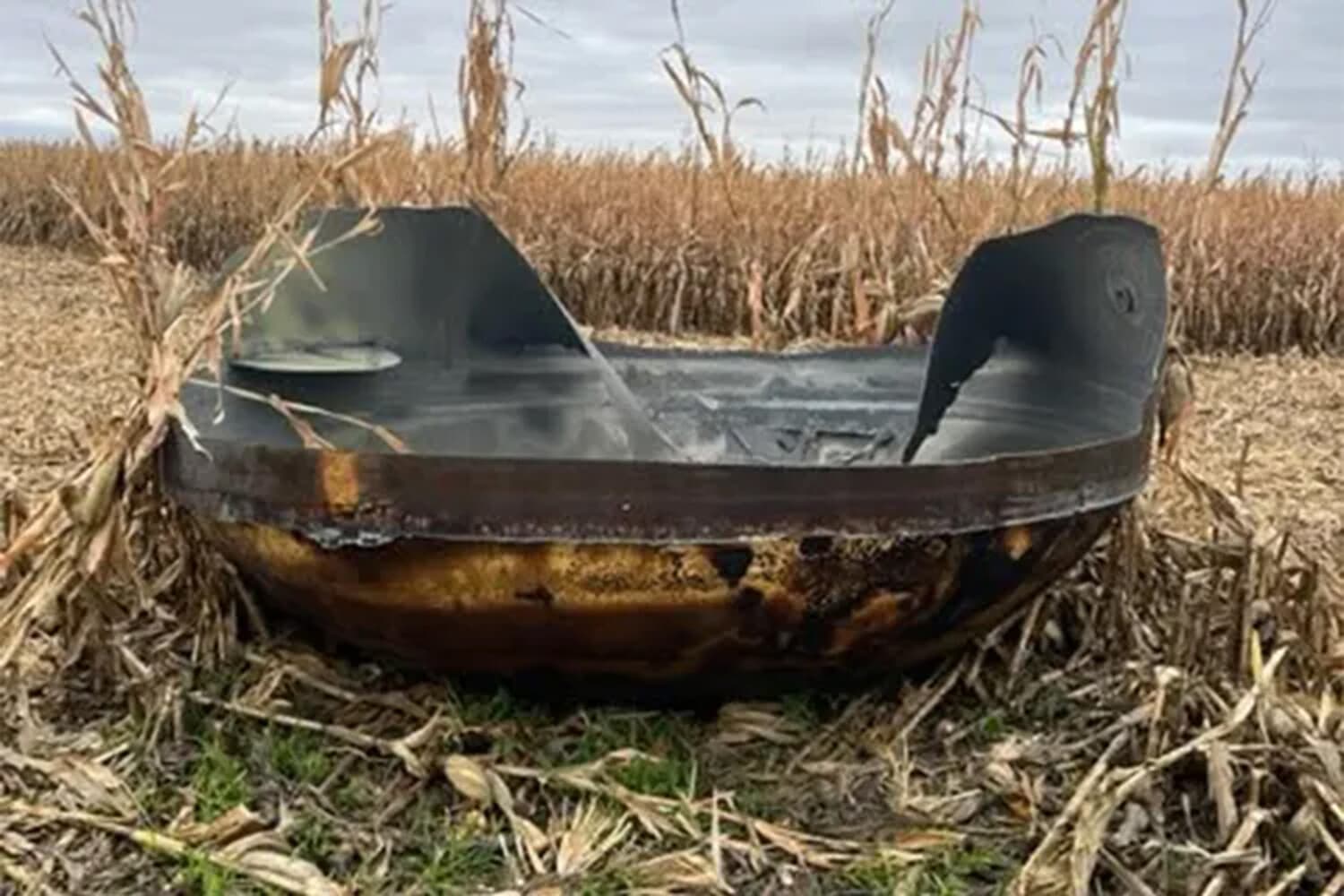
The key facts
- On October 14 at around 3:30 p.m., the Stevens County sheriff's office received a report of a large metallic object in a cornfield in Scott Township
- The object is round, about 11 feet (3.4 meters) in diameter; it is presumed to be space debris
- Authorities state the find is not dangerous; the owner is being identified to arrange its removal
A find in a cornfield
In the state of Minnesota, a large round metallic object about 11 feet (3.4 meters) in diameter was discovered in a cornfield in Scott Township. A report of the foreign object came in to the Stevens County sheriff's office at around 3:30 p.m. on October 14. Deputies who arrived confirmed the object's presence in the field. The Minnesota state duty officer was notified of the find, and federal agencies also joined the inspection.
Assumption of space debris
According to the preliminary version, the object is space debris. The Stevens County sheriff's office said specialists are trying to determine who owns the item in order to notify the owner and arrange its removal from the field. Local authorities stated that the object poses no danger to the public.
Context: the space debris problem
Space debris includes defunct satellites, spent rocket stages, and fragments of destroyed spacecraft. According to estimates by the National Environmental Satellite, Data, and Information Service (NESDIS), there are more than 170 million such particles in orbit; most are smaller than a millimeter, but about 30,000 objects are larger than a softball. On average, 200–400 tracked objects enter Earth's atmosphere each year: most burn up, and surviving fragments more often fall into the ocean or sparsely populated areas, so finds of large wreckage on land are comparatively rare. At the same time, even small fragments, due to their high speed, are dangerous to satellites, and collisions have already led to the appearance of thousands of new pieces of debris in orbit.