The key facts
- Roman Krastelev (LDPR) believes that shutting down platforms will not eliminate recruiters — they will find other ways to communicate.
- The recruitment scheme: gaining trust, easy money, then threats and blackmail.
- According to the Interior Ministry (as cited by Life.ru), children are lured with gaming bonuses and then intimidated with criminal prosecution and forced to hand over savings to couriers.
Banning platforms will not solve the problem, the politician believes
Roman Krastelev, coordinator of the Moscow branch of the LDPR, told RuNews24.ru that banning messengers and social networks will not fully protect teenagers from being drawn into criminal activity. According to him, criminals will find other ways to contact potential victims. “By closing a platform, we will not eliminate those who draw teenagers into crimes: they will look for other ways to communicate,” he warned. The politician called for fighting primarily the organizers of recruitment, not digital platforms.
The principle of the schemes has not changed
Krastelev noted that criminals exploited human weaknesses long before the internet appeared: they sought out vulnerable people, promised money, recognition and support, and pressured personal grievances. Social networks, in his view, merely simplified the search for victims but did not change the very principle of criminal schemes.
How the entanglement happens and what should alert parents
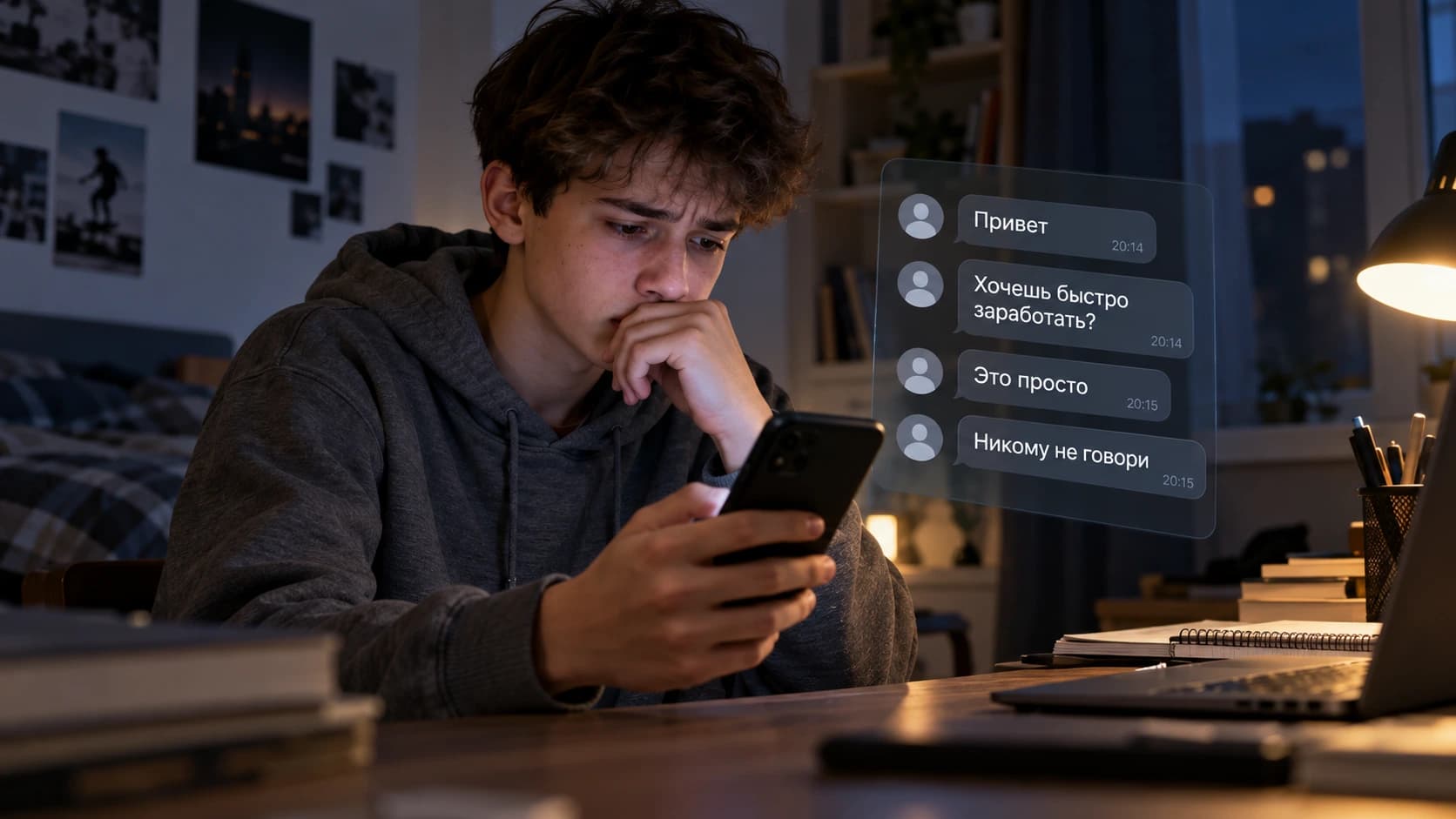
The politician sees particular danger in the gradual entanglement of minors: first the criminal wins the child's trust, then offers easy money for an allegedly harmless errand, and later resorts to threats and blackmail, because of which the teenager is afraid to refuse. Parents should be alerted by requests to hide correspondence, urgently go to a specific place, hand over an unknown object, or perform an action for a reward.
The role of the family and recommendations
Krastelev believes that trusting relationships in the family play a crucial role in protecting children: a teenager, even one who has already agreed to a suspicious proposal or faced threats, must know that loved ones will help. He also recommends keeping suspicious correspondence and handing it over to law enforcement. In his view, the state should focus its efforts on identifying recruiters, scheme organizers and their financiers — restricting communication channels will not replace this.
Interior Ministry data on schemes via online games
Earlier, Life.ru, citing the Interior Ministry, reported how fraudsters use online games and social networks to draw children into criminal schemes. According to a representative of the agency, schoolchildren are first promised free gaming bonuses, and then, posing as law enforcement officers, they threaten criminal prosecution of the children and their parents. Intimidated teenagers are forced to conduct “remote searches” at home, look for family savings and valuables, and hand them over to the criminals' couriers.