The key facts
- On October 3 the DPRK launched a missile, claiming a 1,000 km flight and AI maneuvering; Seoul estimated the range at 700+ km, Tokyo at about 680 km
- On October 8 South Korea conducted the first test flight of its own hypersonic glider in the presence of President Lee Jae-myung
- On October 12 the DPRK launched several ballistic missiles, one of which flew more than 900 km, according to ROK military data
From a Mine Explosion to Missile Tests
The escalation began on September 21 with a mine explosion during a South Korean army operation near the Military Demarcation Line in the DMZ; three South Korean servicemen were wounded. The ROK Joint Chiefs of Staff accused Pyongyang of planting anti-personnel mines south of the dividing line and demanded an apology. A joint investigation involving the UN Command, according to Yonhap, found an active North Korean mine on the southern side — a violation of the 1953 armistice agreement. The DPRK rejected the accusations: Kim Yo-jong, sister of leader Kim Jong-un, claimed that Seoul had falsified evidence and warned that retaliatory measures were unacceptable.
The Hypersonic Race
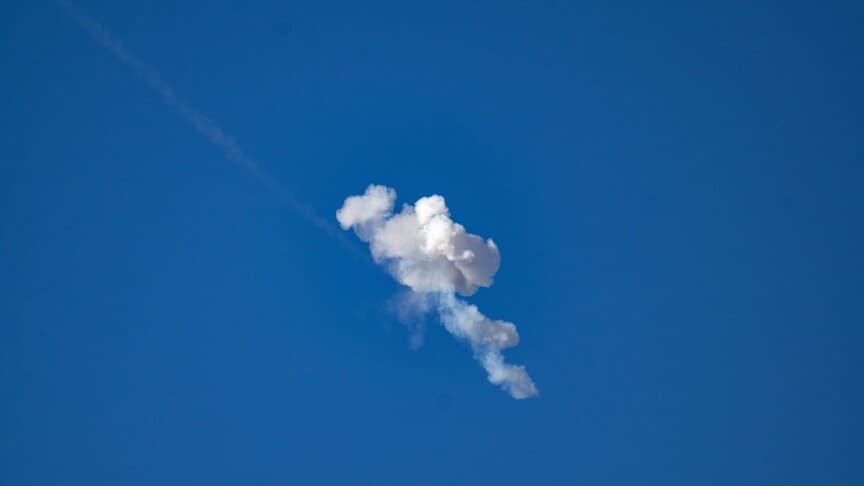
On October 3 the DPRK launched an intermediate-range strategic missile from the Wonsan area toward the Sea of Japan. According to a statement by Kim Yo-jong released by KCNA, the missile is capable of changing its trajectory at low altitude using AI technologies. Pyongyang claimed a range of 1,000 km, Seoul estimated more than 700 km, and Tokyo about 680 km; the claims of AI maneuvering have not been independently confirmed. Five days later, ROK President Lee Jae-myung personally observed the first test flight of a domestically developed hypersonic glider: according to the presidential office, the vehicle successfully separated from the booster, maneuvered at hypersonic speed and followed the designated trajectory; heat-shield materials, guidance systems and low-altitude maneuvering were being tested. Lee called it a milestone in strengthening independent defense capability. Seoul is also investing in AI, advanced engines and high-power lasers.
New Launches and the Role of the US and Japan
On October 12 the DPRK launched several ballistic missiles, one of which, according to the South Korean military, flew more than 900 km; Pyongyang described the launches as tests of components of tactical missile systems. After that, diplomats from South Korea, the US and Japan held consultations to exchange assessments and coordinate responses. The US maintains a military presence in the ROK and provides extended deterrence, including nuclear; Seoul is seeking the transfer of wartime operational control and the development of its own strike capabilities. For Tokyo, North Korean missiles pose a direct threat to its territory and American bases.
Context and Risks
Relations between the two Koreas have been deteriorating for years: since 2024, Pyongyang has been reinforcing border defenses by installing barriers and mines, diplomacy is frozen, and the South is increasingly characterized as a hostile state. President Lee Jae-myung is trying to restore communication but is running into Pyongyang's resistance, and the border incident has complicated these efforts. Analysts note that successful tests prove neither the full combat readiness of hypersonic weapons nor the ability to reliably penetrate modern missile defenses. The Korean War ended with an armistice in 1953, not a peace treaty, so the peninsula formally remains in a state of war; with diplomacy frozen and maneuvering missiles emerging, the risk lies not only in deliberate confrontation but also in miscalculation, when an incident could provoke a military response before the other side's intentions are understood.