The key facts
- Eurozone inflation in September 2026 stood at 3.8% (Eurostat), with Spain (5%), Belgium (4.69%) and Italy (4.2%) hit hardest
- Energy inflation in the eurozone reached 18.8%; about 40 million Europeans cannot adequately heat their homes
- The EC proposed the Affordable Housing Act in September; protests over the cost of living and education swept France, Italy, Ireland, Portugal, Greece and Belgium
Inflation accelerates, countries suffer unevenly
Annual inflation in the eurozone in September 2026 stood, according to a preliminary Eurostat estimate, at 3.8%, up from 3.2% in August. Price growth hit Spain hardest, where surges in energy prices pushed the figure to 5%. Belgium reached 4.69% — its highest since 2023 — and Italy 4.2%. France remained at 3.4%, below most of its neighbours, while Germany rose to 3.3%. The main drivers were a sharp rise in prices for natural gas, electricity and motor fuel, as well as the strengthening of the US dollar in late summer, which made imports denominated in dollars more expensive.
Food: butter is 50% more expensive, 'shrinkflation' at work
According to the European Commission's Consumer Conditions Scoreboard, 35% of citizens worry about whether they can afford food. Inflation on food and household goods ranges from 3% to 7% depending on the country. The war in the Middle East and energy shocks keep supermarket bills above pre-pandemic levels: fuel and gas raise the cost of production, transportation and fertilizers. Butter has become 50% more expensive than before the pandemic, milk 40%. Coffee, tea, cocoa, sugar and confectionery have suffered from extreme weather and poor harvests. Prices for beef, poultry and pork are 30% above 2019 levels due to more expensive feed. Summer heatwaves and droughts raised prices for fresh vegetables and fruit by 25–30%. Packaged goods, including baby food, are affected by 'shrinkflation' — reducing package volume while keeping the price (for example, an 800 g jar of formula replaced with a 750 g one). In response, the EU introduced rules requiring the price per kilogram to be displayed so consumers can compare products. The ECB fights overall inflation by raising rates, although this does not solve supply problems, while farmers are covered by EFSCM mechanisms, emergency CAP instruments and Horizon Europe funding.
Energy: 35 million Europeans in energy poverty
According to Eurostat, at least 35 million Europeans are in energy poverty, and energy inflation in the eurozone reached 18.8%. Nearly 40 million people cannot adequately heat their homes, and 15% of households have utility arrears. In Bulgaria (16.1%), Greece (18.1%) and Portugal, about 30% of the population economizes on winter heating. According to the publication, the trigger was the US war with Iran: 20% of the world's oil passes through the Strait of Hormuz, its closure removed an average of 14 million barrels per day from the market, and daily ship passages fell from 129 to 3–5. Earlier this month, Euronews reports, US President Donald Trump, bypassing Western sanctions, concluded an 'energy truce' with Putin, agreeing on imports of cheap Russian diesel ahead of the US midterm elections. This leaves the EU alone facing the closure of the strait: the bloc has to outbid Asian buyers for alternative supplies and use longer routes. The EU is accelerating a coordinated plan to protect citizens from price spikes, manage strategic reserves and provide emergency assistance; a new energy demand task force and the EU Energy and Raw Materials Platform (formerly AggregateEU) have been created. At the national level, bans on energy disconnections, emergency tariff protections and energy vouchers are being applied. The EU is also examining flexibility in strategic stock requirements, including a possible reduction to 80% for individual countries.
Housing: prices rising faster than rents in 19 countries
Rising housing costs are one of the main drivers of the cost-of-living protests that have swept Spain, France, Portugal, Greece and Italy in recent weeks. According to Eurostat, compared with the 2025 annual average, house prices rose faster than rents in 19 EU countries: Portugal leads (+10.3%), followed by Bulgaria (+9.4%) and Slovakia (+9.1%). Rents rose everywhere except Slovenia (-0.9%) and Finland (unchanged); the largest increases were in Croatia (+21.9%), Bulgaria (+6.4%) and Greece (+5.0%). Urbanization, population growth and migration have outpaced supply: according to the EC estimate, Europe will need more than 2 million new homes annually by 2035, while construction costs rose 56% between 2010 and 2024. According to the IMF, over the decade workers skipped about a million job moves within the EU because they could not relocate closer to work. In September the EC proposed the Affordable Housing Act: a 'housing stress zone' is defined as an area where an average home costs at least eight years of disposable income; there, authorities will be able to restrict short-term rentals and the use of second homes, and reserve affordable housing for first-time buyers and low- and middle-income families. The Act builds on the 2025 plan: as of September 2026, cohesion policy added €4.7 billion to the already allocated €10.4 billion for energy-efficient and social housing; investment will continue under the MFF 2028–2034.
Education: student protests across Europe
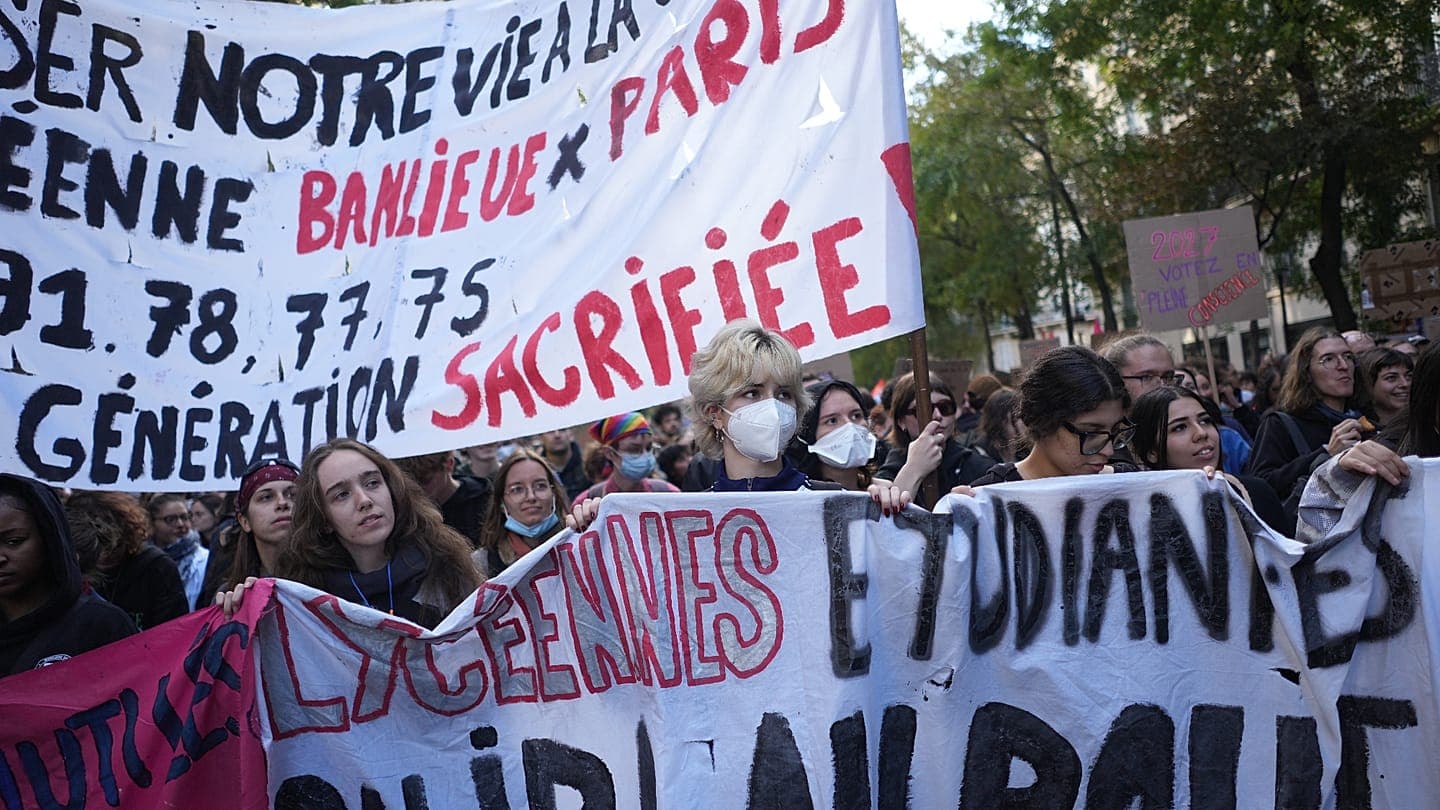
According to the EU report 'Investing in Education' (2026), investment in education in 2024 remained at 9.7% of total public spending, but is still more than 0.3% below the pre-pandemic level. Debt pressure is pushing governments to cut spending, and funds are being reallocated to defence and energy. In mid-September, French students took to the streets over teacher shortages, overcrowded classrooms and poor infrastructure; the protests spread to Ireland, Portugal, Greece and Belgium. Over the past weekend, actions in France and Italy turned violent — there were clashes with police and hundreds of arrests after weeks of school occupations and vandalism. The cost of student housing rose 11% in 2024 (ICEF Monitor), and according to the Erasmus Student Network, scholarships are insufficient to cover living expenses for 35.63% of students. The current 2021–2027 budget instruments include Erasmus+ (€26 billion), the European Solidarity Corps (€1.01 billion), Horizon Europe (€93.5 billion), the European Social Fund+ (€95 billion) and Creative Europe (€2.53 billion). The EC proposed €40.8 billion for Erasmus+ in the 2028–2034 budget, including support for student housing; the European Parliament is pushing for an increase to €47.39 billion and support mechanisms accounting for differences in the cost of living between countries. The new AgoraEU programme will support culture, media and civil society, merging Creative Europe and CERV.