The key facts
- The COMPASS project studied 11 low-mass protostars with ALMA; the results were published in Astronomy & Astrophysics.
- Methanol was found in all disks; IRAS 4A2 also shows a rare deuterated version.
- Methanol masers were detected in more than half of the protostars — for the first time around quiet Sun-like stars.
Observations and key findings
A team of more than 30 astronomers led by University of Bern physicist Maria Drozdovskaya, as part of the COMPASS project, observed 11 nearby low-mass protostars using the Chilean ALMA antenna network in the Atacama Desert. In the gas-and-dust disks — the 'construction sites' of future planets — methanol was detected, the most abundant complex organic molecule in interstellar space. In the star IRAS 4A2 in the Perseus molecular cloud, about 1000 light-years from Earth, a rare version with deuterium, a 'heavy' isotope of hydrogen, was also found. The composition of molecules can reveal the conditions of planet formation. The results were published in the journal Astronomy & Astrophysics.
Unexpected masers
In more than half of the protostars, methanol acts as a natural 'microwave laser' (maser), amplifying radiation through collisions of excited molecules. Such emission had previously been observed only around violent massive stars, and now around quiet stars resembling the young Sun. 'The fact that masers have been found in a low-mass protostar shows that extreme conditions typical of massive stars may prevail there, and it forces a revision of previous ideas about the formation of Sun-like stars,' Drozdovskaya noted. Apparently, masers are a common property of planet-forming disks: an outburst on a growing protostar, sending shock waves into the disk, can ignite the 'microwave laser'.
Differences and further work
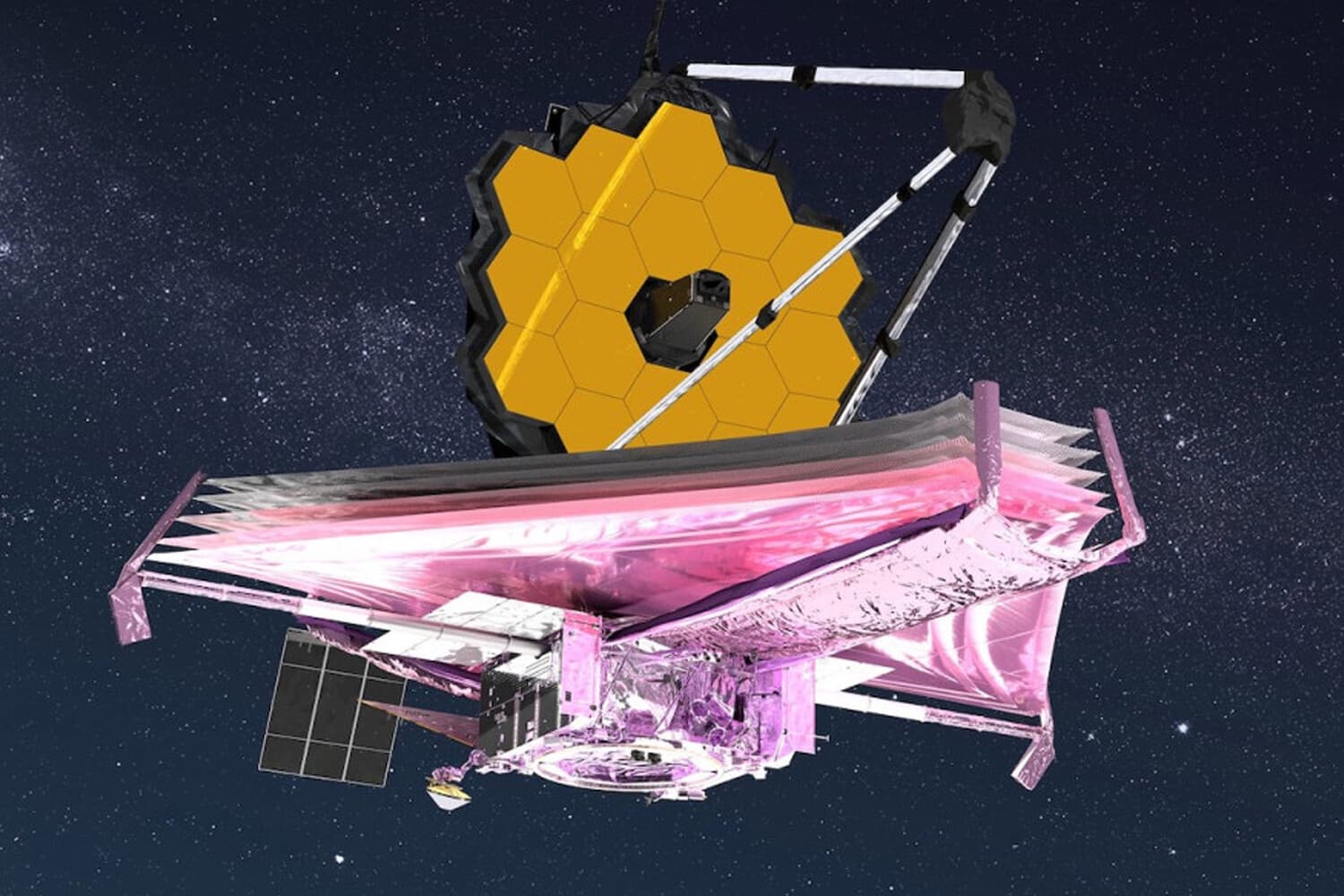
Each star has its own set of molecules: the studied systems differ in the content of oxygen- and nitrogen-bearing compounds. The first COMPASS results were published in seven papers at once, but exactly how the chemistry of young systems arises and how it affects their evolution remains unclear. The team is preparing new observations with the James Webb telescope, and the analysis of already collected data will take several more years. It is noted that such molecules by themselves do not guarantee the emergence of life — they are merely building blocks from which, under suitable conditions, something greater may assemble. It was previously reported that a rarest 'heavy' form of alcohol was detected in space for the first time.