The key facts
- Protests in Albania have been ongoing since October 13, starting with student demands on education and economic prospects
- In Tirana, clashes occurred near the Ministry of Education, the Court of Appeal and the Ministry of Interior; police used tear gas and water cannons, 5 detained, 15 wanted
- Rama offers dialogue 'at any time, in any place, without conditions,' but rejects resignation and negotiations with those involved in violence
Seventh day of protests and clashes in Tirana
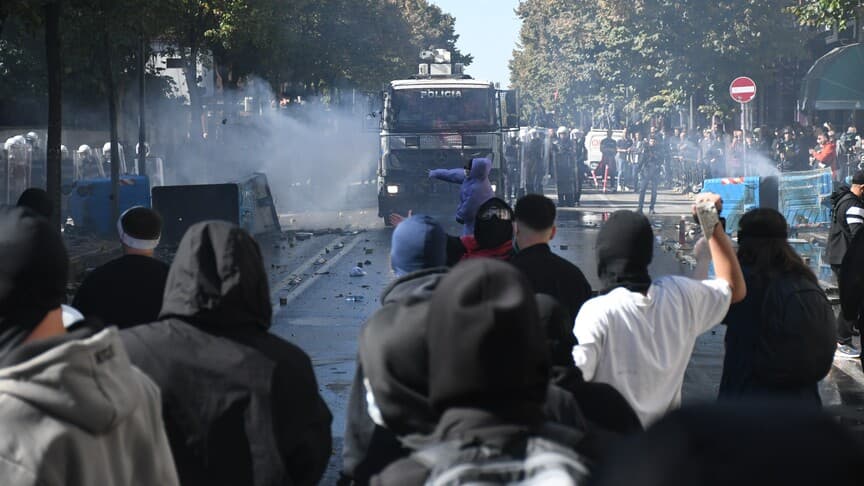
Anti-government protests in Albania continued on Monday for the seventh consecutive day amid clashes between demonstrators and police in the capital, local media report. Protesters gathered outside the Ministry of Education, again demanding the resignation of Prime Minister Edi Rama and his government. Later, clashes with police broke out outside the Court of Appeal, where demonstrators threw stones and pyrotechnics, smashing windows. At Rinia Park, police dispersed protesters with tear gas and water cannons, while outside the Ministry of Interior stones, pyrotechnics and Molotov cocktails were thrown at police. According to authorities, five people were detained and another 15 are being sought.
Protests spread to other cities
Student actions also continued in Lezha, Vlora, Elbasan and Shkodra, where some students boycotted classes and marched through the streets.
Rama offers dialogue but rejects resignation
Prime Minister Edi Rama repeated his offer of dialogue, stating that the government is ready to meet with protesters 'at any time, in any place, without conditions.' He called on the organizers of the actions to distance themselves from violence, including stone-throwing and arson, and not to involve minors in the clashes. According to Rama, peaceful protest is a right, while violence is a crime; he called for protecting people's lives and dignity. At the same time, Rama rejected demands for his resignation and said he would not negotiate with those involved in violence.
Appeal from civil society
The prime minister's offer followed an appeal by civil society and media organizations calling for an end to violence, restraint from political leaders, and respect for the right to peaceful protest. The groups also urged the authorities to facilitate the holding of demonstrations and to ensure the legality, necessity and proportionality of any use of force by police.
Origins of the protests
The current wave of protests began on October 13 and was initially linked to students' concerns about the cost of education, conditions at universities and economic prospects. Subsequently, the protesters raised broader grievances concerning corruption and the cost of living.