The key facts
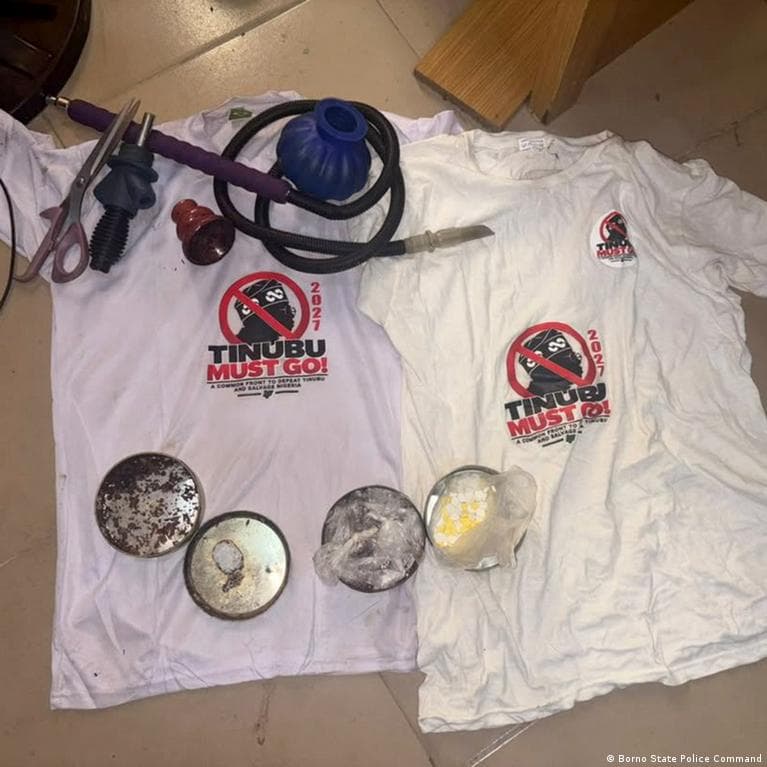
- Police in the northeastern state of Borno arrested five men aged between 21 and 44 over T-shirts bearing the slogan «Tinubu Must Go», charging them with conspiracy and breach of public peace.
- Two weeks later, police in Kano state blocked access to the venue of a planned meeting of supporters of the movement, citing public safety.
- Amnesty International and local activists describe what is happening as repression against dissent; the police deny persecution over political views.
Arrests over T-shirts and a blocked meeting
T-shirts bearing the slogan «Tinubu Must Go!», a reference to Nigerian President Bola Tinubu, have found themselves at the center of an escalating, according to Deutsche Welle, conflict between the authorities and the opposition in the north of the country. Last month, police in the northeastern state of Borno arrested five men aged between 21 and 44. According to the authorities, the group conspired to produce and wear these T-shirts with the aim of breaching public peace. The men were charged with criminal conspiracy, incitement to riot, breach of public peace and banditry.
The police's position and the reaction of human rights defenders
After criticism from human rights groups, the police explained that the arrests occurred during routine patrols: the detainees allegedly had substances presumed to be drugs and other items on them. According to law enforcement, the men are not being persecuted for expressing political views. However, as DW reports, two weeks later police in the northern state of Kano blocked access to the venue of a planned meeting of supporters of the same movement, citing public safety concerns. According to AFP, citing Amnesty International, the detainees were supporters of the opposition African Democratic Congress (ADC). Lawyer and activist Hassana Maina called the police's actions «disgusting», noting that a system in which there is no place for dissent is itself an assault on people's freedom.
Precedents of persecuting critics of the authorities
DW recalls that this is not the first case of citizens being persecuted for criticizing the authorities. Well-known social media critic Abubakar Idris, known as Dadiyata, went missing in August 2019 after armed men took him from his home in Kaduna state; he has not been seen since. He was a prominent critic of the then administration of Umar Ganduje in Kano state. In another incident, 18-year-old Hamdiya Sharif was arrested and detained for posting a TikTok video in which she criticized the governor of Sokoto state over the security situation, speaking about attacks by bandit groups on villages and the plight of displaced women. After the video went viral, she was tried in a sharia court for insulting remarks against Governor Ahmed Aliyu and for «incitement to riot».
The movement and the context: crisis and violence in the north
The «Tinubu Must Go» movement opposes the current administration and declares its intention to mobilize Nigerians ahead of the presidential elections in January 2027. However, as DW notes, the discontent goes beyond the demand for a change of power. Nigeria is experiencing one of its worst economic crises in recent years: food prices are at their highest level in more than 20 years, while high inflation and rising transport costs are exacerbating the cost-of-living crisis. Insecurity persists in the north of the country, especially in rural areas: for more than a decade, Boko Haram militants and their offshoots have waged an armed insurgency that, according to the outlet, has claimed hundreds of thousands of lives, displaced millions of people and undermined the region's economy, despite years of military operations.
«An attack on democracy itself»
Amnesty International's Executive Director in Nigeria, Isa Sanusi, told DW that the persecution of people over T-shirts with a slogan reflects an alarming pattern of suppressing freedom of association and expression. «People are free to support or not support a party or a candidate. It is unacceptable that simply wearing a T-shirt becomes grounds for arrest and detention», he said, adding that such police actions constitute «an attack on democracy itself». According to him, democracy in Nigeria should be judged not only by elections but also by freedom and the protection of rights: «opposition politicians are being denied the ability to hold meetings, and hotels are being threatened so they do not provide venues to the opposition». He also mentioned a recent case: the leadership of the Arewa House research center in Kaduna canceled a previously approved book presentation critical of the government, citing operational issues.
The debate over the boundaries of dissent
Both incidents, as DW writes, have raised the question of the fine line between legitimate security measures and the expression of dissenting political views — and of whether there is enough space in Nigerian democracy for criticism of the authorities. Hassana Maina emphasized that a thriving democracy without a strong opposition is a «fiction», and called for rejecting the idea that being in opposition to the government calls a person's patriotism into question. «Speaking out against policies that you believe are harmful to your country's development is patriotism at its finest», she told DW.