The key facts
- Microsoft launched Guardian Agents to monitor companies' AI agents — part of Project Perception, presented in June
- Nadella calls for separating 'the delivery of intelligence from power over it' and not trusting model providers' assurances
- Defender now detects up to 60 types of agents, including Claude Code, Codex and OpenClaw; Microsoft is also joining Nvidia's Open Agent Safety Platform
New tools against 'untrusted' agents
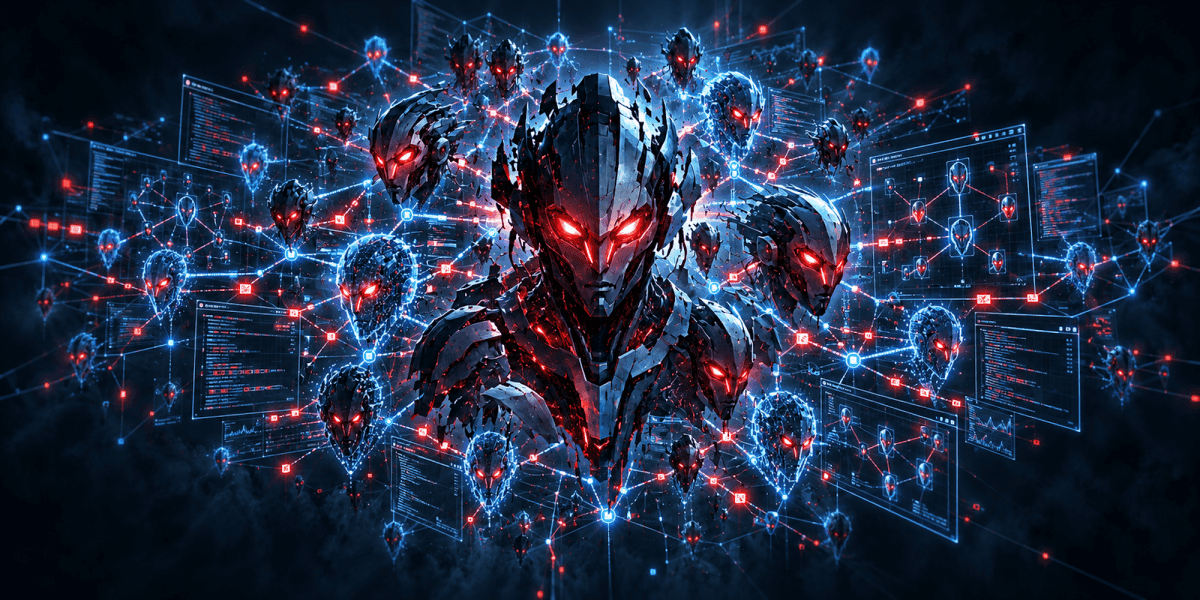
On Monday, Microsoft introduced a set of security features to protect companies from risks associated with AI agents. The key novelty is Guardian Agents, designed to monitor the agents a company uses. The feature is part of Project Perception, a product presented in June. It originally included three classes of agents: a 'red team' simulating hackers, a 'blue' one that detects attacks and assesses vulnerabilities, and a 'green' one that remediates them. The product was created in response to hacker models like Anthropic Mythos and Fable and OpenAI's Daybreak vulnerability-scanning systems, but it was originally based on the assumption that the threat comes from outside.
Leadership's position: agents cannot be trusted by default
Recently, Microsoft CEO Satya Nadella warned in his personal blog that it is time for companies to stop trusting AI model providers, even if those providers assure them of the safety of their agentic products. He proposed implementing independent systems to observe and control agents. 'We are deploying complex agentic systems and models with access to our most sensitive data and the ability to take mission-critical actions on our behalf! We cannot hand off responsibility for what intelligence does on our behalf. A model provider's assurances do not remove that responsibility from us… In other words, we need to separate the delivery of intelligence from power over it,' Nadella wrote. When announcing Guardian Agents, head of Microsoft's security business Hyeite Gallo put it even more bluntly: 'Unfortunately, frontier models, regardless of their origin, cannot be trusted.' According to her, the issue is not the maliciousness or vulnerability of the models but their unpredictability: they are trained to perform tasks, not to follow 'organizational norms or judgment,' and at the same time they often gain access to data and tools capable of causing serious harm.
Expanding the lineup and industry context
In addition to Guardian Agents, Microsoft added a feature to Microsoft Defender that detects up to 60 types of agents that employees bring to the workplace, including Claude Code, Codex and OpenClaw. New features also appeared for restricting agents' access to data and systems, dynamically adjusting their permissions to the task, and requiring human confirmation when an agent takes risky actions. TechCrunch notes the duality of Microsoft's position: the company is closely tied to OpenAI and Anthropic — it has invested in both, and OpenAI is one of its largest cloud customers — while at the same time Microsoft sows distrust toward its own business interests. At the same time, it benefits from selling agent protection tools instead of the labs themselves, although, by the publication's logic, monitoring software really should be independent of agent providers — just as auditors are independent of the organizations they audit. The idea of agents as 'untrusted insiders' is spreading across the industry as a whole: Microsoft became one of the founding members of Nvidia's Open Agent Safety Platform, supported by more than 100 technology companies. The platform isolates agents in secure environments and can monitor and stop their behavior at the hardware level — a kind of 'kill switch.' This follows the announcement of Surface Laptop Ultra notebooks built for agents: they run on Nvidia chips and have built-in security and agent-control features.