The key facts
- Trump waived new sanctions under the Graham-named law and temporarily lifted restrictions on Russian diesel, linking this to fuel prices ahead of the November 3 midterm elections
- Zelensky called a possible US shift to Russia's side a 'historic mistake' and said intelligence sharing resumed after a three-day pause
- Ukraine carried out the largest drone strike on Saint Petersburg since 2022: a refinery burned, one person died, 144 drones were shot down
Trump Justifies Lifting Sanctions
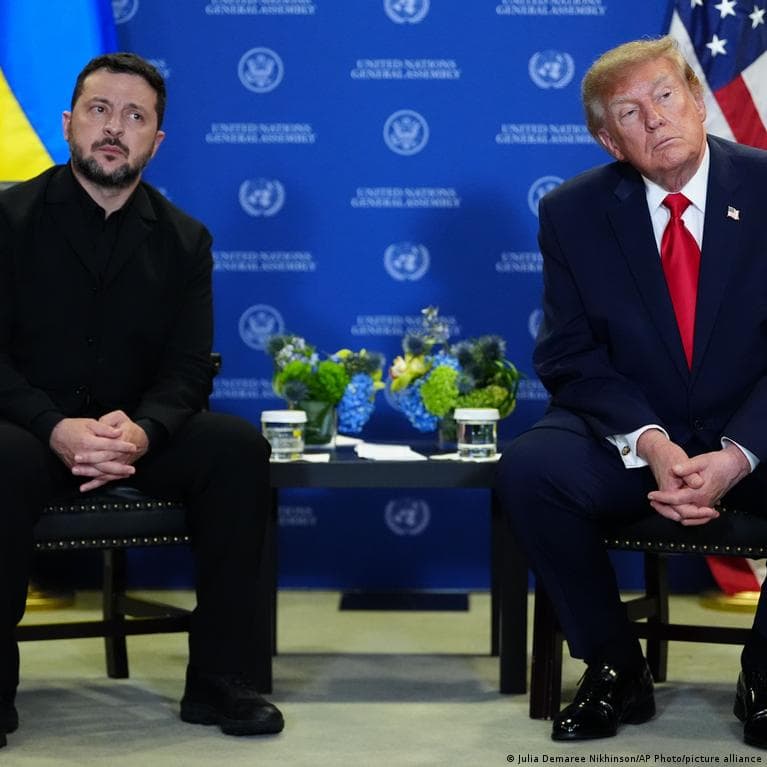
US President Donald Trump on Sunday defended his decision to lift part of the sanctions against Russia, blaming Volodymyr Zelensky for not wanting to end the war. On Truth Social he wrote that he is 'in the process of negotiating peace' and does not want to 'stupidly push Russia away from the negotiating table.' According to him, Zelensky 'doesn't care' about peace and, 'given all the money that Europe is giving and that Biden gave,' 'doesn't want to end this war and probably never did.' Late on Friday, Trump signed an executive order waiving new sanctions provided for by legislation named after Senator Lindsey Graham, a supporter of Ukraine. He also temporarily lifted sanctions on Russian diesel to increase supplies to the world market and lower fuel prices ahead of the November 3 midterm elections. Polls predict possible losses for Republicans amid rising fuel prices after the start of the war with Iran in late February. Most economists believe the lifting of sanctions will have little effect on prices in the US. Trump again claimed that Ukraine is attacking Russian refineries to harm Republicans before the elections.
Kyiv's Reaction and Zelensky's Warning
Zelensky warned on NBC that Ukraine would lose the defensive fight if the US sides with Russia: 'If the US takes Russia's side, we will certainly not survive.' He called a US withdrawal of support 'a historic mistake and a great tragedy' and expressed hope that Trump would 'change his decisions.' He said intelligence sharing resumed after being 'blocked for some time,' and that Ukraine had gone three days without critically important data on ballistic missile strikes. Secretary of State Marco Rubio defended Trump's decision, saying he wants to assess the impact of sanctions on the global and American economy.
Talks with Witkoff and Kushner
Zelensky held talks with US envoys Steve Witkoff and Jared Kushner amid mutual strikes on energy infrastructure. After the meeting he said that 'much depends' on the US position, that 'this war must be ended,' and that Ukraine is ready to work 'constructively' and 'honestly,' expecting the same from European and American partners. He also discussed deliveries of American Patriot systems, as Kyiv is struggling to intercept Russian missiles. American mediation has not yet produced a breakthrough; Trump has expressed frustration with both Zelensky and Putin.
Energy Strikes and the Attack on Saint Petersburg
Zelensky accused Moscow of 76 violations of Trump's 'energy truce' and warned that Russia plans to deprive Ukrainians of heat and electricity before winter. Russian strikes left 'tens of thousands' of people without electricity, and Ukrainian authorities reported three dead. On Sunday evening, Ukrainian drones attacked Saint Petersburg — Putin's home city. According to Moscow, an oil refinery was burning and one person died. City Governor Alexander Beglov reported one dead and five hospitalized; an oil terminal, the 'Ruchi' oil storage facility and industrial warehouses were on fire. The strike also hit a VKontakte data center and an Ozon logistics center. Leningrad Region Governor Alexander Drozdenko said air defenses shot down 144 drones; state media called it the largest attack on the city since the start of the war. The Kremlin said attacks on Russian cities will not change the goals of the war. According to AFP, Ukrainian drone strikes earlier this year caused fuel shortages across Russia.