The key facts
- Nusantara Atlas: 1,916,588 hectares burned from January to the end of September — the estimate is conservative, the actual area may be higher
- The area is 38% larger than by the end of September 2019; the project's founder suggests the year may be comparable to the 2015 crisis
- Singapore: 15 consecutive days of 'unhealthy' air versus 8 in 2015; Indonesia declined Malaysia's offer of help
Estimating the burned area
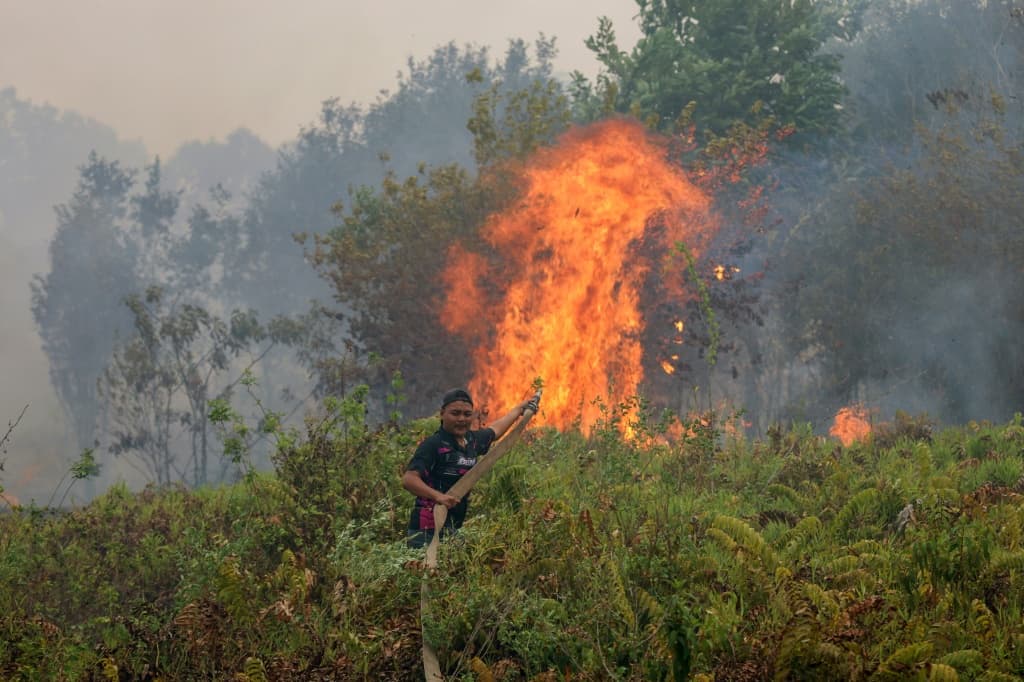
Fires in Indonesia have burned more than 1.9 million hectares from January to the end of September this year, the Nusantara Atlas monitoring project, which analyzes satellite imagery, said on Monday. Project founder David Gaveau called the figure of 1,916,588 hectares conservative: individual burned patches smaller than 6.25 hectares were excluded from the calculation, and the methodology is geared toward avoiding false detections. In addition, heavy haze at times hampered satellite verification this year. 'Thus, the stated total burned area underestimates the real one,' Gaveau said. The Indonesian government has not published official figures since announcing 202,000 burned hectares at the end of July. The Ministry of Forestry did not respond to AFP's request for comment.
Comparison with previous years
According to Nusantara Atlas, the area burned by the end of September is 38% larger than on the same date in 2019. A direct comparison with the 2015 fires is impossible because the satellites currently in use were not available then, but Gaveau considers it likely that this year is comparable in scale: 'My intuition tells me it is probably just as bad. If you look at the sheer number of hotspots, the trend is still going up.' Most of the burning occurred from June, when the drought began, exacerbated by a strong El Niño cycle.
A regional haze crisis
The fires have caused a regional haze crisis: hundreds of thousands of people in Indonesia have fallen ill, and air pollution has risen in neighboring countries. Schools were closed in Malaysia and East Timor because of the haze, and the smoke reached Singapore and the Philippines. Singapore's National Environment Agency (NEA) confirmed that the number of consecutive days with 'unhealthy' air quality has exceeded the 2015 level, when the region experienced its worst haze crisis. According to NEA deputy director Jason Evan Tan, as of Monday there had been 15 consecutive 'unhealthy' days on the local PSI scale (a day is considered 'unhealthy' if the PSI exceeds 100 at any point), compared with eight in 2015. AFP's own analysis of the data also showed that Monday was the 15th consecutive such day, although the overall haze level was lower than last week.
The authorities' response
On Monday, the NEA issued warnings to three more companies demanding they take measures against the fires; earlier, on Friday, seven Indonesian companies received notices instructing them to deploy firefighting teams, stop the burning and submit action plans. 'Since then, there are indications that smoke from fires on concession lands in Kalimantan belonging to three more Indonesian companies may have moved into Singapore,' the agency said. Indonesian officials, meanwhile, rejected calls to declare the fires a national disaster and turned down Malaysia's renewed offer of assistance. 'It is not a matter of whether assistance is available,' said Coordinating Minister for Political and Security Affairs Dudung Abdurahman. 'But at this point we are still able to handle the situation ourselves.'